Home, Air & Renovation
Is MDF Toxic? Formaldehyde in Furniture Explained (UK)
Quick answer
MDF, chipboard and plywood are glued with resins that release formaldehyde, a Group 1 carcinogen at high, mostly workplace, exposures. In homes the main proven effect is eye and nose irritation. Emissions are highest when furniture is new and fall over months. Ventilate, choose solid wood or low-emission boards, and avoid unlabelled cheap imports.
Our picks
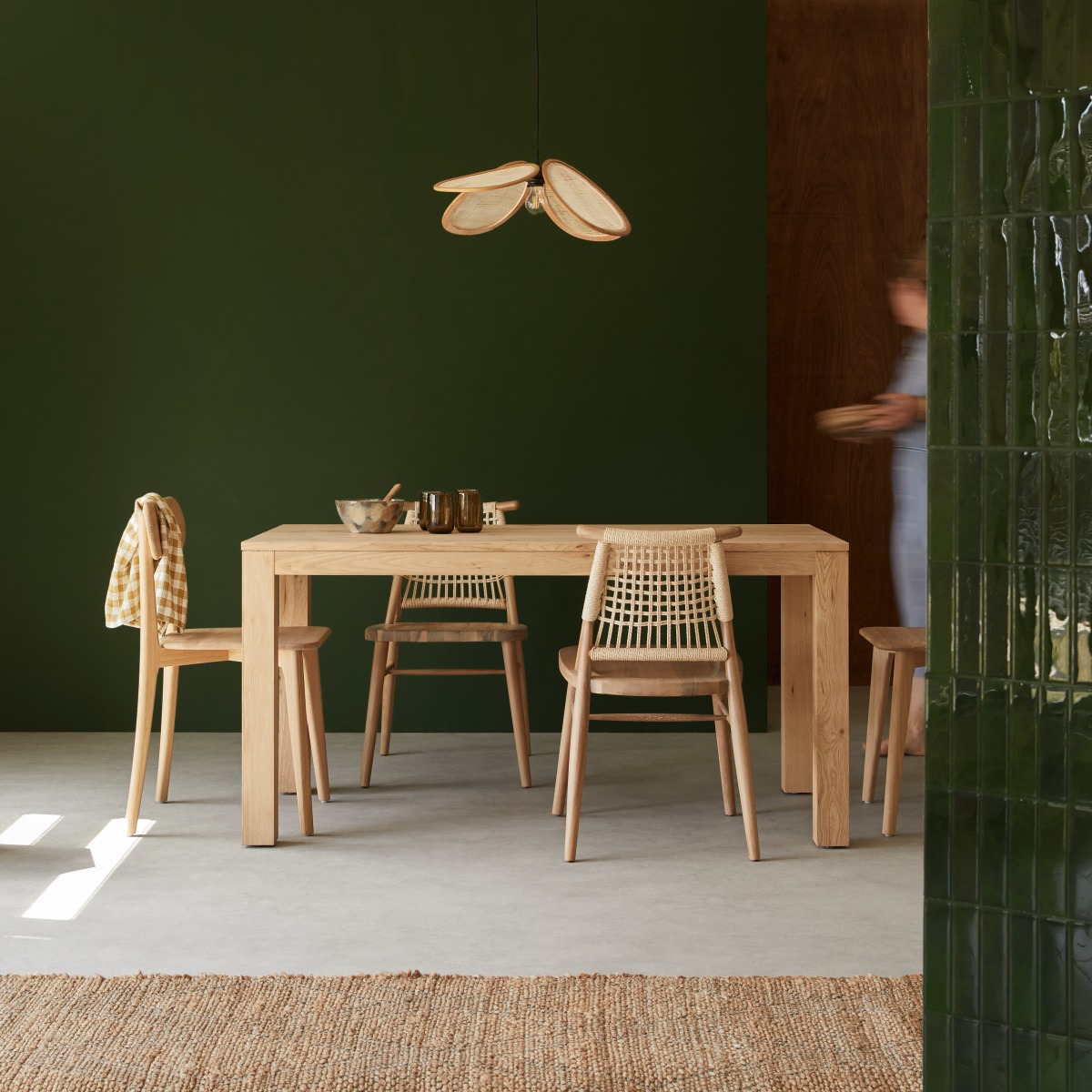
Tikamoon Eden Solid Oak Dining Table (4 to 6 seats)
Tikamoon
- • Solid oak, 0% composite materials
- • Oiled finish
Honest caveat: Tikamoon does not publish an emissions test or name the oil used. Oiled tops need re-oiling and mark more easily than lacquer. Delivery is from France and costs extra.
£699
tikamoon.co.uk

IKEA IVAR Shelving Unit, Pine, 80x30x83 cm
IKEA
- • Side units and shelves: solid pine
- • Sold untreated (no factory finish)
Honest caveat: Untreated pine marks and stains easily. If you finish it, the finish you choose decides the emissions, so pick a water-based or natural oil product and air the room. There is no product-level emissions test for this unit.
£59
ikea.com
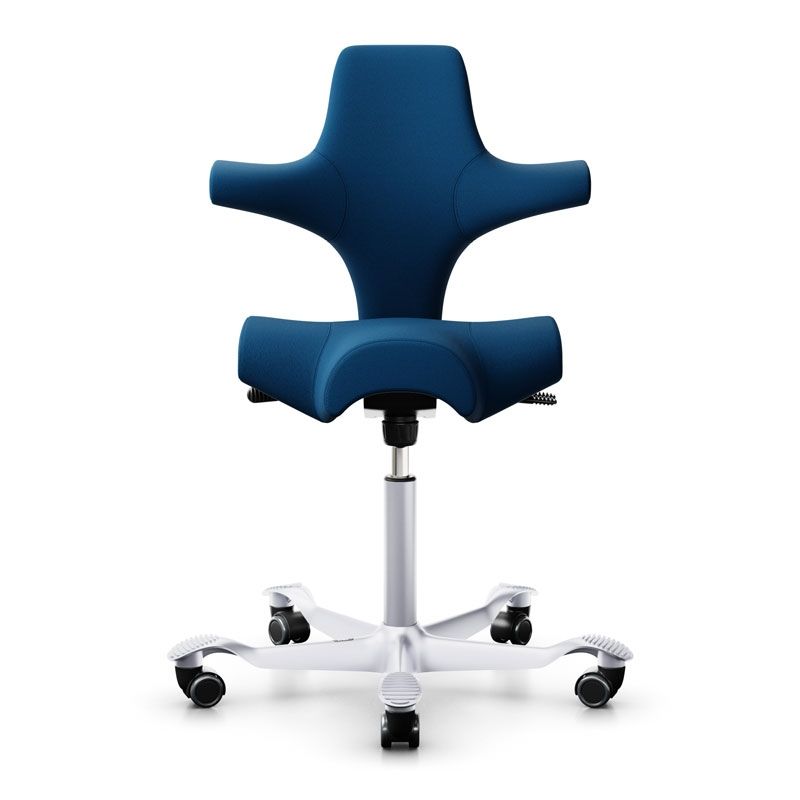
HÅG Capisco 8106 Office Chair
HÅG (Flokk)
- • Nordic Swan Ecolabel (per maker factsheet)
- • GREENGUARD certified (per maker factsheet)
Honest caveat: Standard foam is not combustion-modified; Flokk says CMHR foam must be specified for domestic use, and that foam usually relies on flame retardants. Check which version you are buying and that the certificate covers your configuration. Price varies by fabric.
£1,287
back2.co.uk
We may earn a commission if you buy through our links. How we choose ›
How strong is the research? What our grades mean ›
- Strong research
- Independent certification or lab data for the specific claim.
- Promising research
- The material is well supported, but there is no product-level testing.
- Early research
- Little independent research.
- Mixed research
- Research findings disagree.
- £
- Under £20
- ££
- £20 to £79
- £££
- £80+
What is formaldehyde and why is it in furniture?
Formaldehyde is a gas used to make the urea-formaldehyde and similar resins that glue wood fibres, chips and veneers together. That is why medium-density fibreboard (MDF), chipboard (particleboard), plywood and many laminated or veneered panels can release it, a process people call off-gassing. Solid wood releases a little naturally, but far less than glued boards.
The UK Health and Safety Executive's 2026 report on formaldehyde in indoor air in Great Britain lists engineered wood boards and articles such as furnishings, carpets and textiles as continuous sources, with combustion (wood burners, candles, gas hobs, smoking) as the biggest short bursts.
Is MDF toxic, or is that overblown?
Both things are partly true.
- The hazard is real. The International Agency for Research on Cancer classifies formaldehyde as Group 1, carcinogenic to humans. That rating is based mainly on long-term, high workplace exposure, for example in resin and board factories.
- Home levels are much lower. HSE's pooled data from homes in England show a typical (geometric mean) level of about 23 µg/m³, with most homes between roughly 7 and 59 µg/m³.
- The best-supported effect at home levels is irritation. HSE and UKHSA describe sensory irritation of the eyes and nose as the most sensitive, consistent effect, and say it fades when exposure stops. Some studies link indoor formaldehyde with worse asthma in children, but HSE concludes the evidence does not show a clear dose-response or cause and effect (HSE, 2026; see also a review of indoor emissions and children's respiratory health).
UKHSA's indoor air guidelines set 100 µg/m³ over 30 minutes and 10 µg/m³ as a long-term average. Many UK homes sit above that long-term figure, so lowering sources is sensible even though no single wardrobe is likely to matter much on its own.
What the evidence shows
| Claim | Evidence grade | Best evidence |
|---|---|---|
| Board furniture releases formaldehyde, most when new | Strong | HSE 2026, Brown 1999 chamber study |
| Formaldehyde irritates eyes and nose at indoor levels | Strong | HSE 2026 |
| New particleboard furniture is linked to higher home levels | Promising | HSE 2026 (England and Germany surveys) |
| Typical home exposure raises cancer risk | Mixed research | IARC (workplace data); HSE treats nasal effects as threshold-based |
| Home formaldehyde worsens childhood asthma | Mixed research | Mendell 2007 review, HSE 2026 |
What are the UK and EU limits on formaldehyde in furniture?
E1 (the long-standing European baseline). E1 boards produce no more than 0.124 mg/m³ (124 µg/m³) of formaldehyde in a standard chamber test when new. HSE reports that most EU and all GB board producers already supply E1 boards, and that 98 to 99% of chipboard and 83% of MDF sold in GB comes from GB or EU mills. The gap is finished furniture: HSE has no data on where imported flat-pack comes from.
EU REACH entry 77 (from 6 August 2026). Regulation (EU) 2023/1464 caps emissions from furniture and wood-based articles placed on the EU market at 0.062 mg/m³, half the E1 value (CATAS). Other articles are capped at 0.080 mg/m³, car interiors follow from August 2027, and second-hand items are exempt. Industry often calls this level "E0.5" or "half E1".
Great Britain. UK REACH has not adopted entry 77. HSE published its evidence report on formaldehyde in indoor air in March 2026 as a first step, but there is no GB restriction yet. Northern Ireland follows EU rules on goods under the Windsor Framework. In practice, big retailers that also sell in the EU are likely to source to the tighter limit, but nothing obliges a GB-only seller to.
US CARB Phase 2 / TSCA Title VI. The US sets panel limits of 0.05 ppm for hardwood plywood, 0.09 ppm for particleboard and 0.11 ppm for MDF, with third-party certified mills (US EPA). A "CARB2" or "TSCA Title VI" label on a product is a useful sign of tested panels, though test methods differ from Europe's, so numbers are not directly comparable.
NAF and ULEF. "No added formaldehyde" (NAF) boards use other glues, such as MDI or soy-based resins. They still emit the small amount wood releases naturally.
How long does furniture off-gas formaldehyde?
Faster than people fear, slower than "a few days". HSE describes two phases: an early drop driven by evaporation, then a long tail after about three months driven by humidity and heat slowly breaking down resin. A classic Australian chamber study found other VOCs from boards fell to low levels within about two weeks, but formaldehyde took several months to reach low-emission levels. Warm, humid rooms release more.
How to lower formaldehyde from furniture
- Ventilate, especially in the first weeks. NICE guidance on indoor air at home recommends ventilating when bringing in new products. Unbox flat-pack in a spare room or garage, then keep a window on trickle vent for a few weeks.
- Prioritise bedrooms and nurseries. That is where you spend the most hours. If you have to buy board furniture, put it in rooms you use less.
- Choose solid wood for the big items. Beds, wardrobes and desks have the largest board area. Look for "0% composite", "solid" for every listed part, and a natural oil, wax or water-based finish.
- Ask for the board class. E1 is the minimum; ask for "E0.5", "half E1", CARB2/TSCA Title VI or NAF. Big retailers' product pages often list materials part by part.
- Seal raw edges. Unsealed MDF edges and backs emit more. Paint or edge-band any cut edges with a water-based product.
- Cut other sources. HSE notes combustion sources can briefly reach levels ten times higher than furniture. Wood burners, candles and incense matter too.
- Do not panic about old furniture. Pieces several years old emit far less than new ones, and second-hand furniture is a low-emission choice.
For sofas and mattresses, which add foam and flame retardants to the picture, see our non-toxic sofa guide and non-toxic mattress guide.
If you want to buy: what to look for
- Solid wood (oak, beech, ash, pine) for structural parts, with little or no board
- A named oil, wax or water-based finish, or untreated wood
- Third-party emissions labels on the finished item: GREENGUARD Gold, Nordic Swan Ecolabel, Blue Angel or EU Ecolabel (see our guide to low-emission furniture labels)
- Board class stated: E0.5, CARB2/TSCA Title VI or NAF
- FSC is good for forests but tells you nothing about emissions
Our picks at a glance
| Product | Best for | Material/key feature | Price | Evidence grade |
|---|---|---|---|---|
| Tikamoon Eden Solid Oak Dining Table | Board-free dining | Solid oak, 0% composite, oiled | £699 | Promising |
| IKEA IVAR Shelving Unit, Pine | Budget storage | Untreated solid pine | £59 | Promising |
| Office chairHÅG Capisco 8106 Office Chair | Certified emissions | Nordic Swan and GREENGUARD | £1,287 | Strong |
How we chose
We looked for furniture where the retailer lists every part as solid wood or where the finished product holds an independent emissions label, and we checked each page for finish type, hidden board and UK availability. No brand paid to be included.
Tikamoon Eden Solid Oak Dining Table
Tikamoon lists this table as FSC solid oak with an oiled finish and "0% composite materials", so the glued boards that drive most furniture formaldehyde are absent. It seats four to six. Caveat: there is no published emissions test and the oil is not named; oiled tops need occasional re-oiling.
IKEA IVAR Shelving Unit, Pine
IVAR's sides and shelves are solid pine, sold untreated, at £59 for the 80 x 30 x 83 cm unit. It is one of the cheapest ways to get board-free storage. Caveat: if you oil or paint it, the product you choose decides what it emits, so pick a water-based or natural oil finish and air the room.
HÅG Capisco 8106 Office Chair
If you want an independent emissions certificate rather than relying on material choice, the Capisco carries Nordic Swan and GREENGUARD certificates according to Flokk's factsheet. Caveat: for home use Flokk says you must specify combustion-modified foam, which usually contains flame retardants; see our office chair and desk guide.
Who should be most careful?
People with asthma or sensitive eyes and noses, babies and young children (who spend long hours in one room), and anyone moving into a new-build or freshly renovated, airtight home. HSE notes homes built after 1982 have around three times the formaldehyde of pre-1919 homes, largely from more board and tighter construction.
Bottom line
MDF and chipboard are not dangerous to sit near, but new board furniture adds formaldehyde to air that in many UK homes is already above UKHSA's long-term guideline. Buy solid wood for big bedroom pieces where you can, ask for E0.5 or CARB2 boards where you cannot, ventilate hard for the first few weeks, and remember that wood burners and candles may matter more than your bookcase.
Frequently asked questions
Is MDF safe in a bedroom?
+
Modern E1 MDF releases small amounts of formaldehyde, most in the first weeks and months. For most people the main effect, if any, is mild eye or nose irritation. In a bedroom or nursery it is worth choosing solid wood or low-emission (E0.5, CARB2 or NAF) board, sealing raw edges and ventilating well while it is new.
How long does new furniture off-gas formaldehyde?
+
Most other VOCs drop within about two weeks, but formaldehyde from boards falls more slowly. HSE describes a fast early drop, then a long tail after about three months that rises in warm, humid weather. Air new pieces for several weeks and keep trickle vents open in the room.
What is the formaldehyde limit for furniture in the UK?
+
Great Britain has no specific legal limit for finished furniture. Most boards sold here meet E1 (0.124 mg/m3 in a chamber test). The EU's new REACH limit of 0.062 mg/m3 for furniture applies from 6 August 2026 in the EU and Northern Ireland, but GB has not adopted it.
Does painting MDF stop formaldehyde?
+
Sealing all faces and cut edges with paint or laminate reduces emissions but does not stop them completely. Use a low-VOC, water-based paint so you are not adding solvent emissions, cover the back and underside as well as the front, and ventilate the room well while it cures over the following week.
Is solid wood furniture free of formaldehyde?
+
Not entirely. Wood releases a little formaldehyde naturally, and glued joints, laminated slats or finishes can add some. Solid wood with an oil, wax or water-based finish is still a much lower source than board furniture, and it is the simplest swap for big pieces such as beds and wardrobes.
Is IKEA furniture high in formaldehyde?
+
IKEA sells much of the same range in the EU and says board ranges such as BILLY and PAX test below the E1 limit. Many IKEA pieces use chipboard or fibreboard, though, so emissions are higher than for its untreated solid pine ranges such as IVAR, TARVA and RAST.
Last updated