Home, Air & Renovation
Non-Toxic Sofa Guide UK (2026): Flame Retardants, PFAS and What to Buy
Quick answer
Most UK sofas use chemical flame retardants to pass the strict 1988 fire regulations. The government is reforming those rules, with a 2026 consultation on a smoulder test aimed at cutting chemical use. Until then, a few UK makers such as Slow, Schplendid and Cottonsafe use wool and natural fillings instead. Always ask for fire test evidence.
Our picks

Slow Laraber Sofa
Slow
- • No foam: horsehair, coir, organic wool, natural latex
- • FSC beech and eco-ply frame
Honest caveat: The no-retardant claim is the maker’s, and the page does not name a fire test, so ask for evidence. The sample velvet is 40% acrylic and 15% polyester; choose a natural fabric if that matters to you. Delivery is £175 extra.
£2,045
slowsofa.co.uk

Schplendid Wee Bonnie Two Seater Sofa
Schplendid
- • Wool interliner in place of chemical treatment (brand claim)
- • Hand-tied coil springs, beech and plywood frame
Honest caveat: Evidence is the brand’s statement reported in trade press, not a published test report. Cushions are 80% goose down and 20% feather. Two-seater starts at £2,820; the £960 ’from’ price on the page is the footstool.
£2,820
schplendid.com
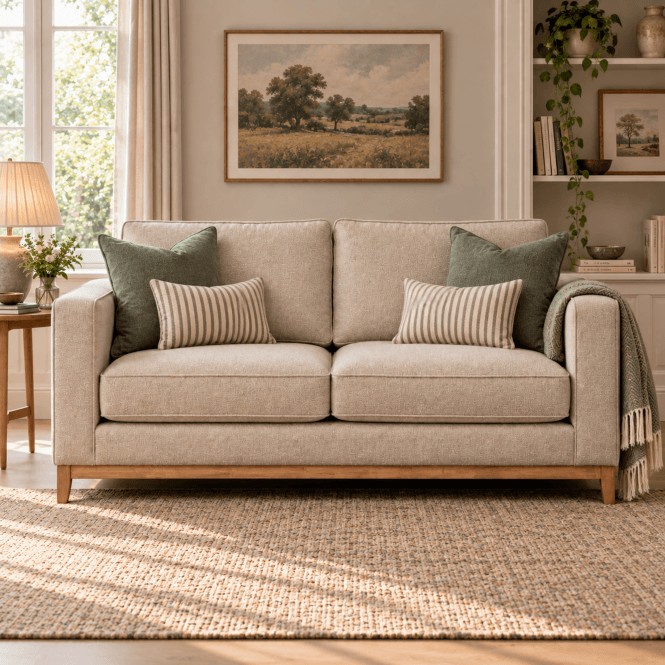
Cottonsafe The Budleigh Medium Sofa
Cottonsafe
- • PEFC solid beech frame
- • Coconut fibre, hairlock and needled wool upholstery
Honest caveat: The ’no added fire retardants’ claim is the maker’s own; the page does not explain how the sofa meets UK fire rules, so ask for the test evidence in writing. Handmade to order (about 8 weeks).
£3,595.83
cottonsafenaturalmattress.co.uk
We may earn a commission if you buy through our links. How we choose ›
How strong is the research? What our grades mean ›
- Strong research
- Independent certification or lab data for the specific claim.
- Promising research
- The material is well supported, but there is no product-level testing.
- Early research
- Little independent research.
- Mixed research
- Research findings disagree.
- £
- Under £20
- ££
- £20 to £79
- £££
- £80+
Do UK sofas contain flame retardants?
Very often, yes. Since 1989 every new upholstered sofa sold in the UK has had to meet the Furniture and Furnishings (Fire) (Safety) Regulations 1988. These set some of the strictest ignition tests in the world: filling foams must pass a flame test, and cover fabrics must pass a match test, either on their own or with a fire-resistant barrier underneath. The cheapest and most common way to pass has been to treat foams and fabrics with chemical flame retardants (CFRs).
These rules have helped reduce furniture fire deaths, and that matters. But the UK government itself now says the regulations are "out of step with modern approaches to product safety" and points to an "increasing body of evidence to support action to reduce the volume of chemical flame retardants" (OPSS policy paper, January 2025).
What is changing in the UK rules?
| Date | What happened | Source |
|---|---|---|
| January 2025 | Government policy paper commits to reform, aiming to keep fire safety high while reducing chemical flame retardant use | GOV.UK |
| 30 October 2025 | Amendment Regulations in force: some baby and young children's products removed from scope, permanent display labels no longer required on new furniture | GOV.UK guidance |
| 31 March to 23 June 2026 | Final consultation on full reform, including new requirements based on a smoulder test and testing routes to help innovation | GOV.UK consultation |
The new approach has not yet replaced the 1988 rules, and any change will come with a transition period. For now, every new sofa on sale must still comply with the current tests. One practical effect of the 2025 change: the familiar display label that used to say "Carefully" or "Resistant" is no longer required on new furniture, so you may need to ask the retailer how a sofa complies.
Why are people worried about flame retardants?
Flame retardants are not one chemical but hundreds. Some older brominated types were phased out after building up in people and the environment. Others, such as organophosphate flame retardants, are now common. The concerns are about long-term, low-level exposure:
- They migrate out of foam and fabric into house dust, and studies have linked furniture flame retardant use to dust levels and residents' blood levels.
- Skin contact with treated fabric is a meaningful exposure route for some flame retardants, including organophosphate types.
- An international expert group has argued that flame retardants often add little fire safety benefit in furniture while raising health and environmental concerns.
What the evidence does not show is that sitting on a UK sofa makes you ill. Most studies measure exposure and association, not direct harm. We grade the main concern as Promising evidence of exposure, with health effects in humans still Mixed research.
| Claim | Evidence grade | Best evidence |
|---|---|---|
| UK sofas often contain chemical flame retardants | Strong | OPSS policy paper |
| Flame retardants move into dust and onto skin | Promising | Environ Int 2017, Environ Int 2018 |
| Furniture flame retardants harm human health | Mixed research | Environ Int 2023 consensus |
What about PFAS stain-proofing?
Many "easy clean" or "stain-resistant" sofa fabrics have been treated with PFAS (per- and polyfluoroalkyl substances) to repel spills. PFAS are very persistent, and the UK HSE has recommended restricting several PFAS uses. Fluorine-free stain treatments are becoming more common, but labels rarely say which chemistry is used. If a fabric is sold as stain-proof or "performance", ask whether the treatment is PFAS-free, or choose an untreated fabric and a washable loose cover.
How do sofas pass UK fire rules without chemicals?
There are a few established routes, mostly borrowed from traditional upholstery:
- Wool. Wool is naturally hard to ignite and chars rather than melts. A wool interliner (barrier cloth) under the cover can let an untreated fabric pass the match test.
- Natural fillings. Horsehair, coir (coconut fibre), wool and feather replace polyurethane foam.
- Graphite latex. Natural latex blended with graphite can pass the foam test without added retardant.
- Inherently resistant fabrics. Some heavy wools and wool blends pass on their own.
Our picks at a glance
| Product | Best for | Material/key feature | Price | Evidence grade |
|---|---|---|---|---|
| SofaSlow Laraber Sofa | Best value foam-free | Horsehair, coir, organic wool, latex | £2,045 | Early |
| Schplendid Wee Bonnie Two Seater | High-street style | Wool interliner, down cushions | £2,820 | Early |
| Cottonsafe Budleigh Medium Sofa | All-natural build | Coir, hairlock, wool, graphite latex | £3,595.83 | Early |
How we chose
We searched for UK-made sofas sold online with a price where the maker states it does not add chemical flame retardants, and read each product page for materials. All three are graded Early because the "no added retardants" claims come from the makers; none publishes a full test report on the product page. We still think they are the best-documented options available, and we explain exactly what to ask for.
Which UK sofas have no added flame retardants?
Slow Laraber Sofa
Handmade in the Yorkshire Dales with a beech frame and rubberised horsehair, coir, organic wool, cotton and natural latex, with no foam. Slow says it adds no fire retardant treatments. From £2,045 plus £175 delivery. Caveat: some of its 70+ fabrics contain acrylic or polyester, so pick a natural fabric if that matters, and ask how the sofa passes the fire tests.
Schplendid Wee Bonnie Two Seater Sofa
From the founder of sofa.com, with hand-tied springs, coconut husk and wool upholstery and down cushions. Schplendid says it uses a 100% wool interliner tested by a UKAS-accredited lab in place of chemically treated fabric. Two-seater from £2,820. Caveat: down and feather cushions are not vegan, and the test evidence is reported, not published.
Cottonsafe The Budleigh Medium Sofa
Built from PEFC beech, coconut fibre, hairlock and needled wool with graphite latex cushions, in natural cotton, hemp, linen or wool-flax fabric. Cottonsafe says it contains no added fire retardants or solvents. From £3,595.83 when we checked, made to order in about eight weeks. Caveat: the most expensive pick, and the page does not explain its fire compliance.
What should you ask before buying a sofa?
- "How does this sofa comply with the Furniture and Furnishings (Fire) (Safety) Regulations?" Ask for the test certificate.
- "Are any chemical flame retardants used in the foam, interliner or fabric?"
- "Is the fabric treated for stain resistance, and is that treatment PFAS-free?"
- "What are the fillings?" Look for wool, coir, horsehair, feather or natural latex rather than polyurethane foam.
- "Can I have a loose, washable cover?"
What to avoid
- "Stain-proof" or "performance" fabrics with no information on the chemistry.
- Imported sofas sold online with no UK fire compliance information, which can be a genuine fire risk.
- Removing labels or treated layers yourself: never strip fire barriers from furniture.
Bottom line
Most UK sofas pass fire rules with chemical flame retardants, and the government is now consulting on a smoulder-test-based system designed to cut their use. Until that arrives, a handful of UK makers use wool, natural fillings and graphite latex instead. Slow is the best-value foam-free option we found, but always ask for written evidence of fire compliance before you buy.
Frequently asked questions
Are flame retardants required in UK sofas?
+
Flame retardants are not legally required as such, but every new sofa must pass the ignition tests in the Furniture and Furnishings (Fire) (Safety) Regulations 1988. Chemical flame retardants have been the cheapest way to pass. Some makers pass using wool barriers, natural fillings and graphite latex instead.
Is the UK changing its sofa fire safety rules?
+
Yes. Small changes came into force on 30 October 2025, including removing the need for permanent display labels. The government consulted from March to June 2026 on a full reform based on a smoulder test, aiming to keep fire safety high while reducing chemical flame retardant use. The 1988 rules still apply until new regulations are made.
How can I tell if my sofa has flame retardants?
+
You usually cannot tell by looking. Older sofas may have a display label saying the cover is match resistant, which often means treated fabric or a treated interliner. Newer sofas may not have this label. Ask the retailer or maker directly which flame retardants, if any, are used in foam, fabric and barrier layers.
Are sofas without flame retardants a fire risk?
+
A sofa sold legally in the UK must pass the same ignition tests whether or not it uses chemicals. Wool, horsehair and graphite latex can meet these tests. Always ask for evidence of compliance, and be wary of imported sofas sold online without UK fire information, which may not have been tested.
What is PFAS stain-proofing on sofas?
+
Some stain-resistant or easy-clean fabrics have been treated with PFAS, chemicals that repel water and oil and persist in the environment for a very long time. Fluorine-free alternatives exist. Labels rarely say which is used, so ask the retailer, or choose untreated fabric with a removable washable cover.
Do flame retardants in sofas affect health?
+
Studies show some flame retardants move from furniture into house dust and onto skin, and are found in people's blood. Some types have been linked to health concerns in research, but direct evidence of harm from sofas is mixed. Dusting with a damp cloth, vacuuming with a HEPA filter and handwashing can reduce dust exposure.
Last updated


