New Baby & Nursery
Solid Wood Cot Beds and Low-VOC Nursery Furniture (UK Guide)
Our top pick
Best untreated cot bed
Buy now at mokee.co.ukBudget: IKEA SNIGLAR Cot, Beech · £59 ›Premium: Stokke Sleepi Bed, Mattress & Sheet · £699 ›
Quick answer
For a lower-emission nursery, choose a cot or cot bed made from solid wood (beech or pine) that is untreated or has a water-based finish, check it meets BS EN 716, and avoid MDF and particleboard where possible. Set the nursery up a few weeks early and ventilate. GREENGUARD-certified cots exist but are rare and pricey.
Our picks
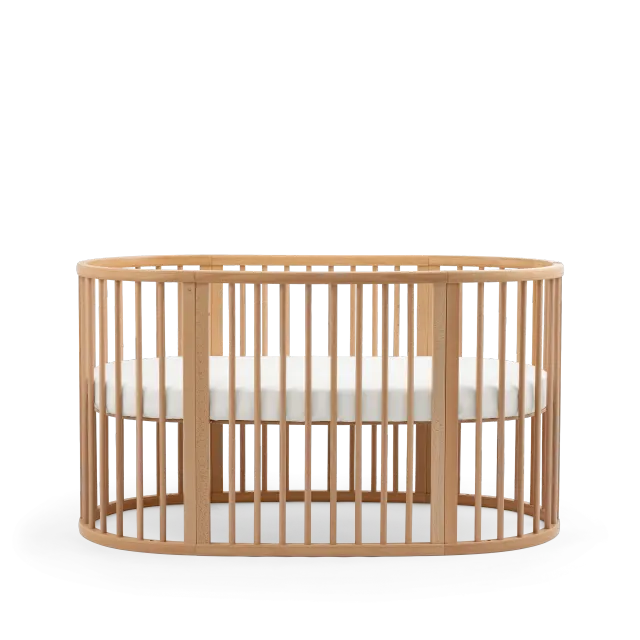
Stokke Sleepi Bed, Mattress & Sheet
Stokke
- • Solid FSC beech frame
- • UL GREENGUARD and OEKO-TEX (maker claim)
Honest caveat: The oval shape needs Stokke’s own mattress and sheets, which adds to running costs. Check the GREENGUARD level and certificate date for your version. The bundle mattress uses synthetic fibres.
£699
stokke.com
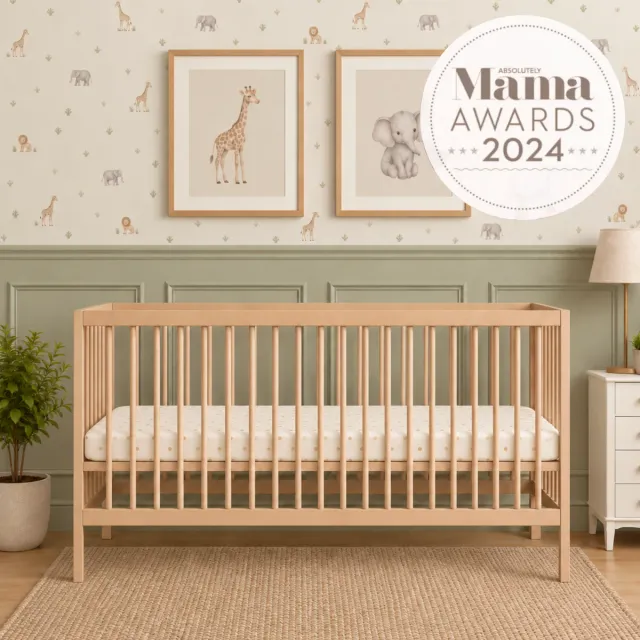
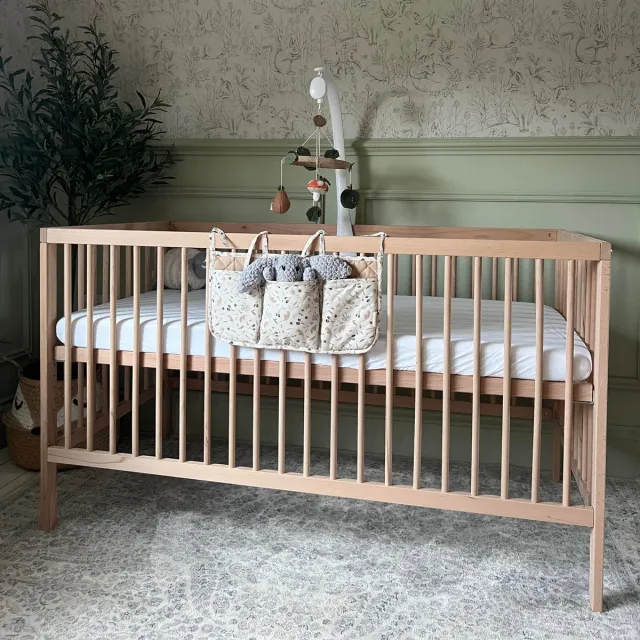
Mokee Midi Cot Bed, Beech (Untreated Solid Beechwood)
Mokee
- • Untreated solid beech (FSC)
- • EN 716-1, EN 716-2, BS 8509
Honest caveat: No emissions test is published. Untreated wood marks easily and teething babies may chew the rails. The page also mentions EN 71-3 paint, which applies to painted versions, so check you are ordering the natural one.
£299
mokee.co.uk
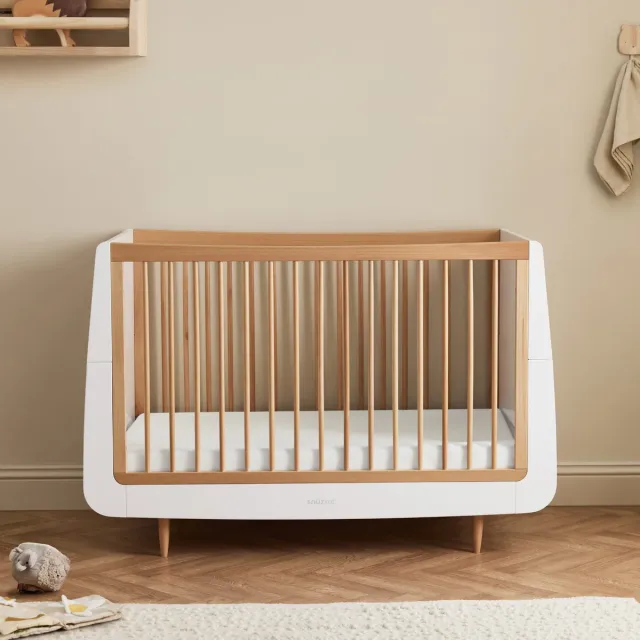
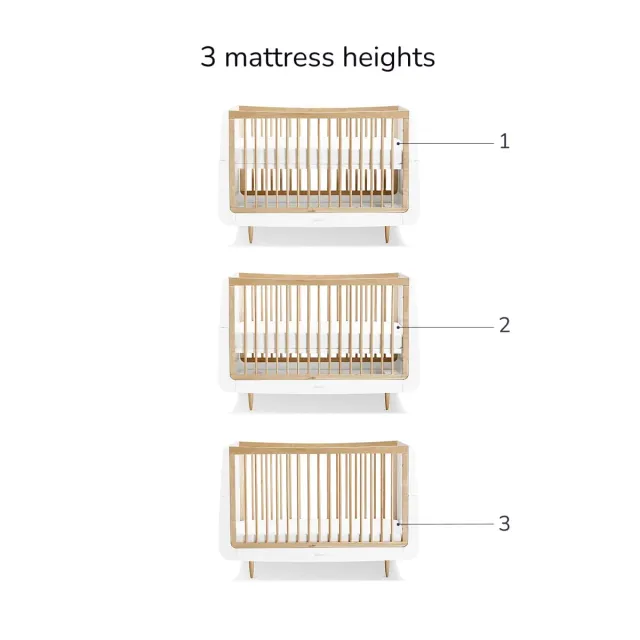
SnuzKot Skandi Cot Bed, Natural
Snuz
- • No MDF or veneer (maker claim)
- • Beech plywood, solid beech and pine
Honest caveat: The spec lists ’beech (plywood and solid wood) and pine’, so some parts are glued plywood despite the ’solid wood’ headline. The finish type is not stated. The junior-bed extension costs extra.
£349
snuz.co.uk
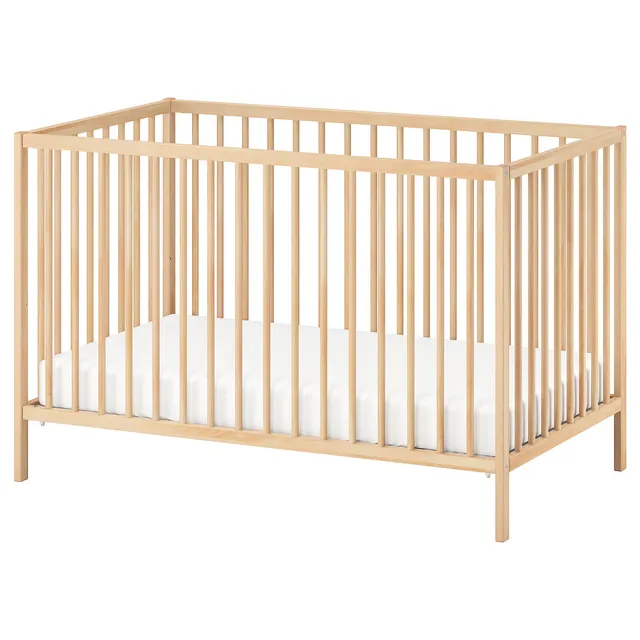
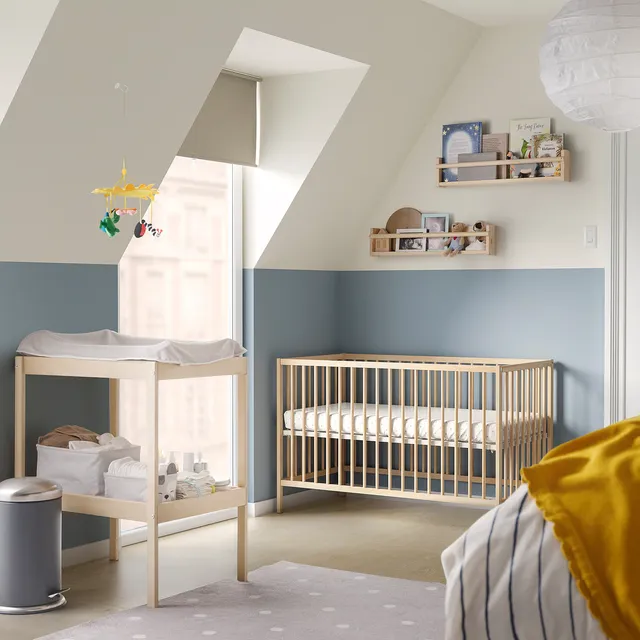
IKEA SNIGLAR Cot, Beech
IKEA
- • Solid beech frame and spindles
- • 60 x 120 cm mattress size
Honest caveat: It is a 60 x 120 cm cot, not a cot bed, so it lasts a shorter time. It includes a nylon fabric part. No emissions certificate is published.
£59
ikea.com
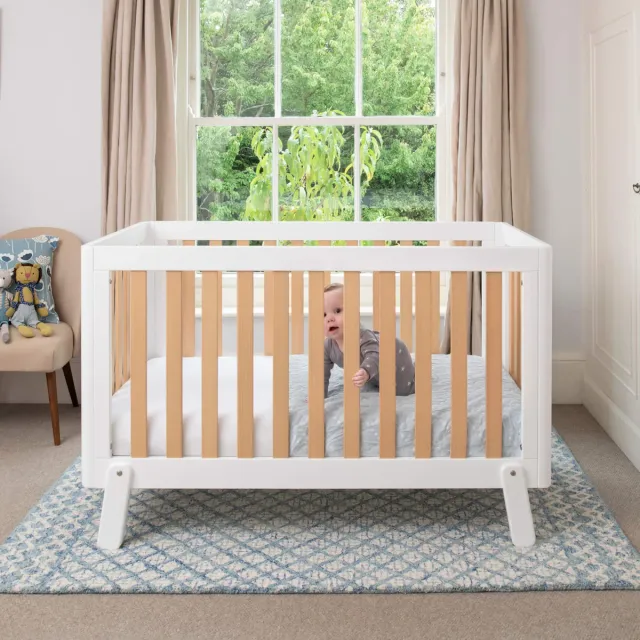
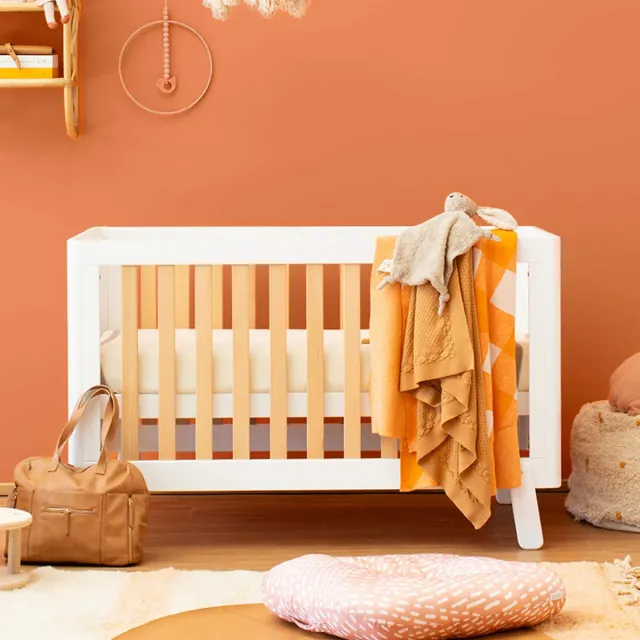
Boori Turin Cot Bed
Boori
- • Solid Araucaria and Radiata frame
- • Engineered timber slats
Honest caveat: The base slats are engineered timber and the frame is painted; Boori calls the paint ’nursery-friendly’ but publishes no emissions data. Grade reflects that.
£329.99
boori.co.uk
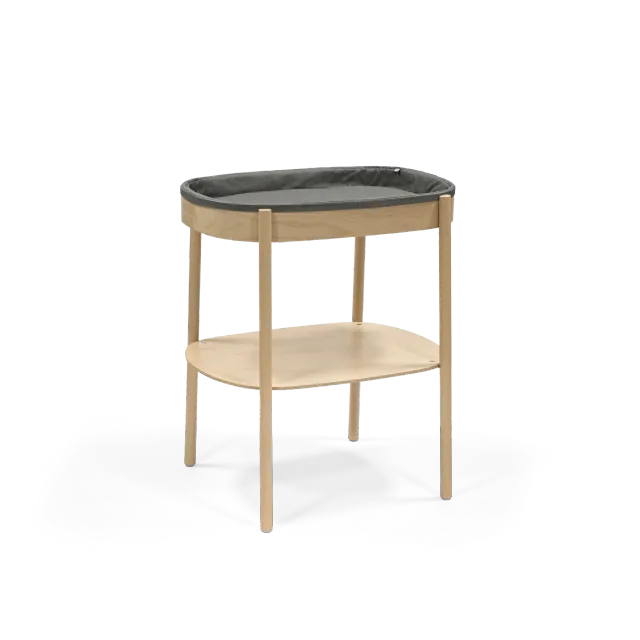
Stokke Sleepi Changing Table
Stokke
- • Beech frame
- • Cushioned changing pad
Honest caveat: The certification claim on Stokke’s site is made for the Sleepi range; we could not see a separate certificate for the changing table itself, so ask. The pad is foam with a wipeable cover.
£299
stokke.com
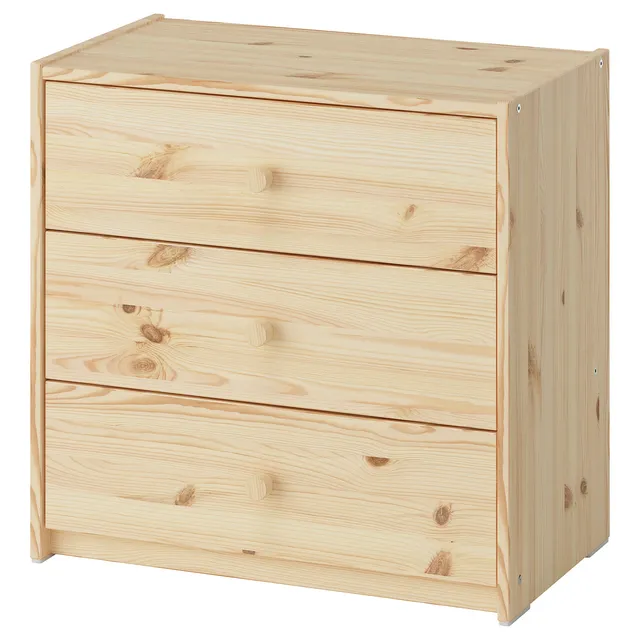
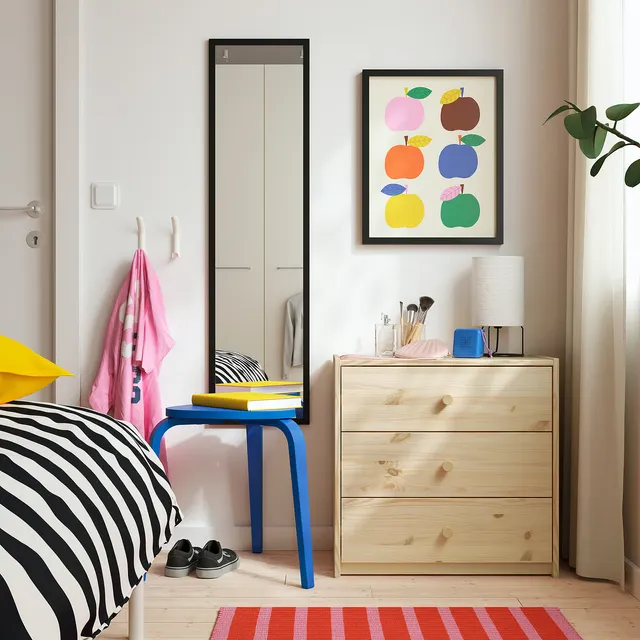
IKEA RAST Chest of 3 Drawers, Pine
IKEA
- • Solid pine top, sides and drawer fronts
- • Fibreboard back and drawer bottoms
Honest caveat: The back panel and drawer bottoms are fibreboard, which is made with resin binders, so this is not board-free. It is untreated, so stains show. Anchor it to the wall, especially in a child’s room.
£49
ikea.com
We may earn a commission if you buy through our links. How we choose ›
How strong is the research? What our grades mean ›
- Strong research
- Independent certification or lab data for the specific claim.
- Promising research
- The material is well supported, but there is no product-level testing.
- Early research
- Little independent research.
- Mixed research
- Research findings disagree.
- £
- Under £20
- ££
- £20 to £79
- £££
- £80+
Babies spend 12 to 16 hours a day in one small room, often with the window shut, and nurseries are usually freshly painted and newly furnished. That is why the nursery is the room where choosing lower-emission furniture makes the most sense. Our formaldehyde in furniture guide covers the science; this guide covers cots, changing units and chests.
Our picks at a glance
| Product | Best for | Material/key feature | Price | Evidence grade |
|---|---|---|---|---|
| CotStokke Sleepi Bed, Mattress & Sheet | Certified cot bed | Solid beech, UL GREENGUARD and OEKO-TEX | £699 | Strong |
| Mokee Midi Cot Bed, Beech (Untreated) | Untreated cot bed | Solid FSC beech, no finish | £299 | Promising |
| CotSnuzKot Skandi Cot Bed, Natural | UK-designed cot bed | Beech and pine, no MDF | £349 | Promising |
| CotIKEA SNIGLAR Cot, Beech | Budget cot | Solid beech | £299 | Promising |
| CotBoori Turin Cot Bed | Painted colour | Solid pine frame, engineered slats | £329.99 | Early |
| Changing tableStokke Sleepi Changing Table | Changing | Beech, matches Sleepi | £299 | Promising |
| IKEA RAST Chest of 3 Drawers | Budget chest | Solid pine, fibreboard back | £49 | Promising |
What does EN 716 cover, and what does it not?
BS EN 716 is the cot safety standard. It checks bar gaps, cot depth, strength and finger and head entrapment. Every cot you buy should meet it, and all our cot picks state compliance. EN 716 says nothing about formaldehyde or VOC emissions. Paint and coatings on children's furniture are often tested to EN 71-3, which limits heavy metals that can leach out if chewed; that is also not an emissions test. So you need to look separately at materials and finishes.
Which materials give off the least?
- Solid beech or pine, untreated or oiled with a food-safe oil. The lowest-emitting option. Untreated beech is hard and resists teeth marks better than pine.
- Solid wood with water-based paint or lacquer. Fine once cured; air it for a few weeks.
- Plywood and engineered timber. Glued layers, so some formaldehyde, usually less than MDF per piece. Common in slats.
- MDF and particleboard. The biggest board area and highest formaldehyde potential. Many mainstream cot beds list "MDF and particle board" as their composition, so read the spec line.
How we chose
We read the composition and standards lines on each UK product page and favoured cots that list solid wood for the frame, an untreated or stated finish, and BS EN 716 compliance. A cot with an independent emissions certificate scored highest. We excluded cot beds whose spec lists MDF, particleboard or "engineered wood" as the main material. Picks run from £49 to £699 across five brands. No brand paid to be included.
The picks
Stokke Sleepi Bed, Mattress & Sheet: best certified cot bed
The Sleepi frame is solid FSC European beech, and Stokke says the Sleepi is certified by UL GREENGUARD and OEKO-TEX Standard 100. It grows from cot to junior bed. Caveat: the oval shape means buying Stokke mattresses and sheets, the bundle mattress uses synthetic fibres, and you should ask which GREENGUARD level applies to your version.
Mokee Midi Cot Bed, Beech (Untreated): best untreated cot bed
Sold as untreated FSC beech with seven base heights and listed compliance with EN 716-1, EN 716-2 and BS 8509 (toddler beds). A strong choice if you want no factory finish at all. Caveat: no emissions test is published and untreated rails show teeth marks; make sure you order the natural, not painted, version.
SnuzKot Skandi Cot Bed, Natural: best UK-designed cot bed
Snuz says it uses no MDF or veneer and tests to BS EN 716-1 and -2:2017. It converts to a junior bed with an extension kit. Caveat: the spec lists "beech (plywood and solid wood) and pine", so parts are plywood despite the "solid wood" headline, and the finish is not named.
IKEA SNIGLAR Cot, Beech: best budget cot
At £59 the frame, spindles and base frame are listed as solid beech. Hard to beat for value. Caveat: it is a 60 x 120 cm cot rather than a cot bed, so it lasts about two years, and no emissions certificate is published.
Boori Turin Cot Bed: if you want colour
Solid Araucaria and Radiata pine frame and EN 716 compliance, in a painted Scandinavian style. Caveat: the slats are engineered timber and the paint is called "nursery-friendly" with no emissions data, so we grade it Early.
Stokke Sleepi Changing Table: best changing unit
A beech changer with a padded top and open shelf that matches the Sleepi cot. Caveat: Stokke's certification claim is made for the Sleepi range; we could not see a separate certificate for the changer, so ask.
IKEA RAST Chest of 3 Drawers: best budget chest
Mostly solid pine, untreated, at £49. Caveat: the back and drawer bottoms are fibreboard. Always anchor chests to the wall in a child's room.
For the mattress itself, see our non-toxic mattress guide, which covers cot mattresses and flame retardants.
What to avoid
- Cot beds listing MDF, particleboard or engineered wood as the main material, especially if bought in the last few weeks before birth.
- Unlabelled imports sold online with no standards line. Great Britain has not adopted the EU's tighter 2026 formaldehyde limit for furniture (see our formaldehyde guide).
- Solvent-based paint jobs done in the nursery shortly before the baby arrives.
- Second-hand cots that do not meet BS EN 716, or with missing parts. Second-hand solid wood cots in good condition can be a very low-emission choice if they meet the standard.
What the evidence says
There are no trials of cot materials and baby health. What we know is that board furniture releases formaldehyde for months (Brown, 1999), that HSE links new particleboard furniture with higher home levels, and that some studies associate indoor emissions with respiratory symptoms in children, though HSE judges that evidence inconclusive (Mendell, 2007). Choosing solid wood is a low-cost way to lower a known source, not a proven health measure.
A simple nursery plan
- Buy and assemble furniture four to six weeks before the due date.
- Paint with a water-based, low-VOC paint first, then bring furniture in.
- Ventilate daily: windows open while you are out, trickle vents on at night (NICE NG149).
- Skip plug-in air fresheners and scented candles.
- Wash new textiles before use.
Paint, mattresses and textiles
The cot is one part of the nursery. Fresh paint is often the biggest short-term source of VOCs, so paint at least four weeks before the due date with a low-VOC, water-based paint and keep the window open. The mattress sits closest to your baby's face; our non-toxic mattress guide explains cot mattress fillings and UK flame retardant rules. Wash new sheets, sleeping bags and muslins before first use, and keep the cot clear of pillows, bumpers and soft toys in line with UK safer-sleep advice.
Bottom line
Solid beech or pine, untreated or water-based finished, meeting BS EN 716, set up a few weeks early in a well-ventilated room covers most of what matters. Pay for a GREENGUARD-certified cot if you want independent proof; otherwise an untreated solid beech cot bed is excellent value.
Frequently asked questions
Is an MDF cot bad for my baby?
+
An MDF cot meeting BS EN 716 is structurally sound, but MDF releases formaldehyde, most in the first months. If you can, choose solid wood. If you already have an MDF cot, assemble it early, ventilate the nursery and keep the room cool, as heat and humidity raise emissions.
Does BS EN 716 test for chemicals?
+
No. BS EN 716 covers mechanical safety: bar spacing, depth, strength and trapping hazards. Paints on children's products are often tested to EN 71-3, which limits heavy metals that could leach if chewed. Neither standard measures formaldehyde or VOC emissions.
Is untreated wood OK for a cot?
+
Yes. Untreated solid beech or pine is a common, low-emission choice and meets the same safety standard. It marks more easily and can be wiped with a damp cloth. Some parents later apply a food-safe oil, but that is optional.
How early should I set up the nursery?
+
Four to six weeks before the due date gives paint and new furniture time to air. Paint first, then bring furniture in. Ventilate the room daily during that period, avoid air fresheners and scented candles, and keep it ventilated once the baby is sleeping there.
Are GREENGUARD Gold cots available in the UK?
+
A few are. Stokke says its Sleepi range is certified by UL GREENGUARD and OEKO-TEX Standard 100. Ask any brand for the certificate level and number, as GREENGUARD Gold uses stricter limits than standard GREENGUARD. If you cannot find one, untreated solid beech is a good alternative.
Is a second-hand cot a good idea?
+
A second-hand solid wood cot has finished most of its off-gassing, which is a plus. Make sure it meets BS EN 716, has all its parts and fixings, and buy a new mattress that fits snugly with no gaps at the sides. Avoid cots with flaking old paint, which may contain lead.
Last updated