Sleep
How to Reduce EMF Exposure at Home (Without the Gimmicks)
Quick answer
Home EMF levels in the UK are far below international limits and the evidence of harm is weak. If you still want less exposure, use earphones or the speaker for calls, keep your phone out of the bedroom, wire desk devices and put the router on a timer. Skip shielding stickers, pendants and cases.
Our picks
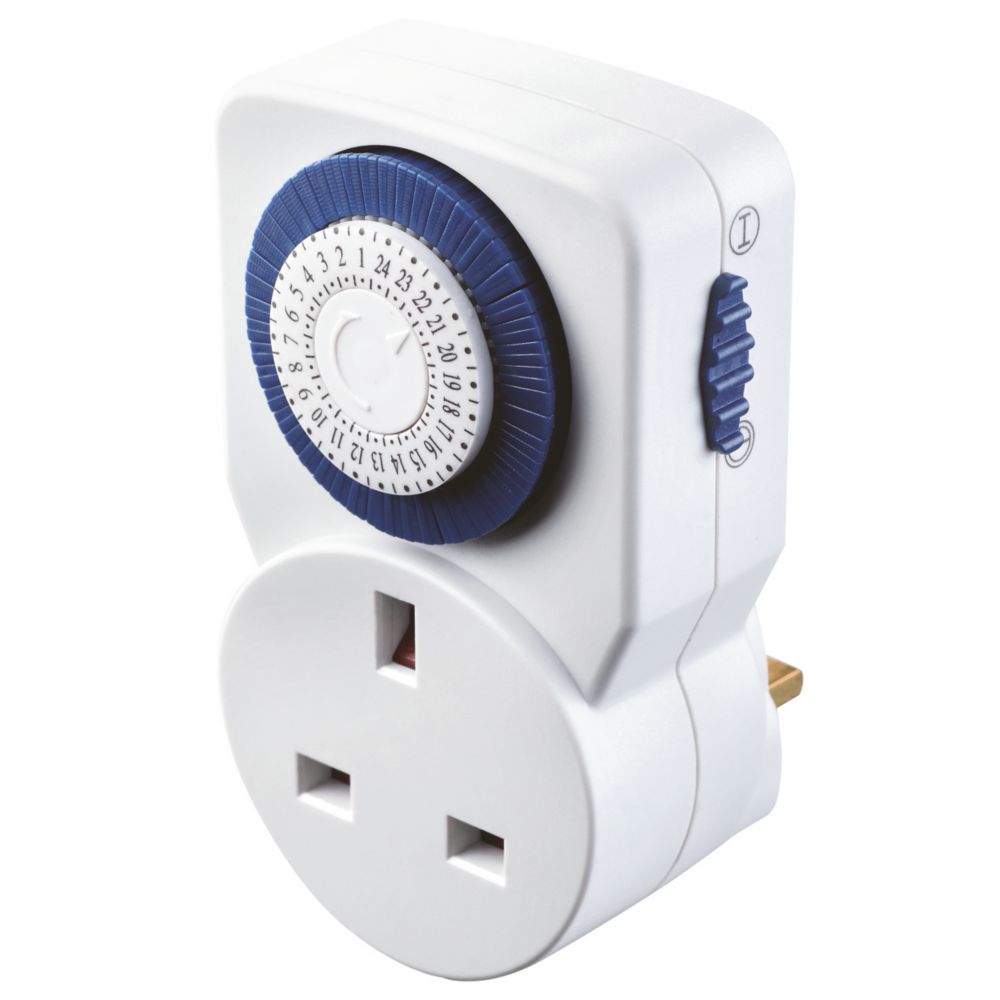
Masterplug TMS24 Mechanical Plug-In Timer
Masterplug
- • 24-hour dial with 1-hour on/off segments
- • No Wi-Fi, app or radio of its own
Honest caveat: It only switches in 1-hour blocks, has no battery backup (a power cut shifts the schedule) and ticks faintly, so it is better in a hallway than a bedroom. Switching off the router also switches off anything that depends on it, including digital landline phones.
£7.99
screwfix.com

Apple EarPods (USB-C)
Apple
- • Wired, no Bluetooth radio
- • Inline mic and volume controls
Honest caveat: The benefit comes from distance, not the earphones: keeping the phone on the desk with the loudspeaker on does the same for free. Bluetooth earbuds also move the phone away and emit far less than the phone itself, so wired is a preference, not a necessity.
£19
apple.com
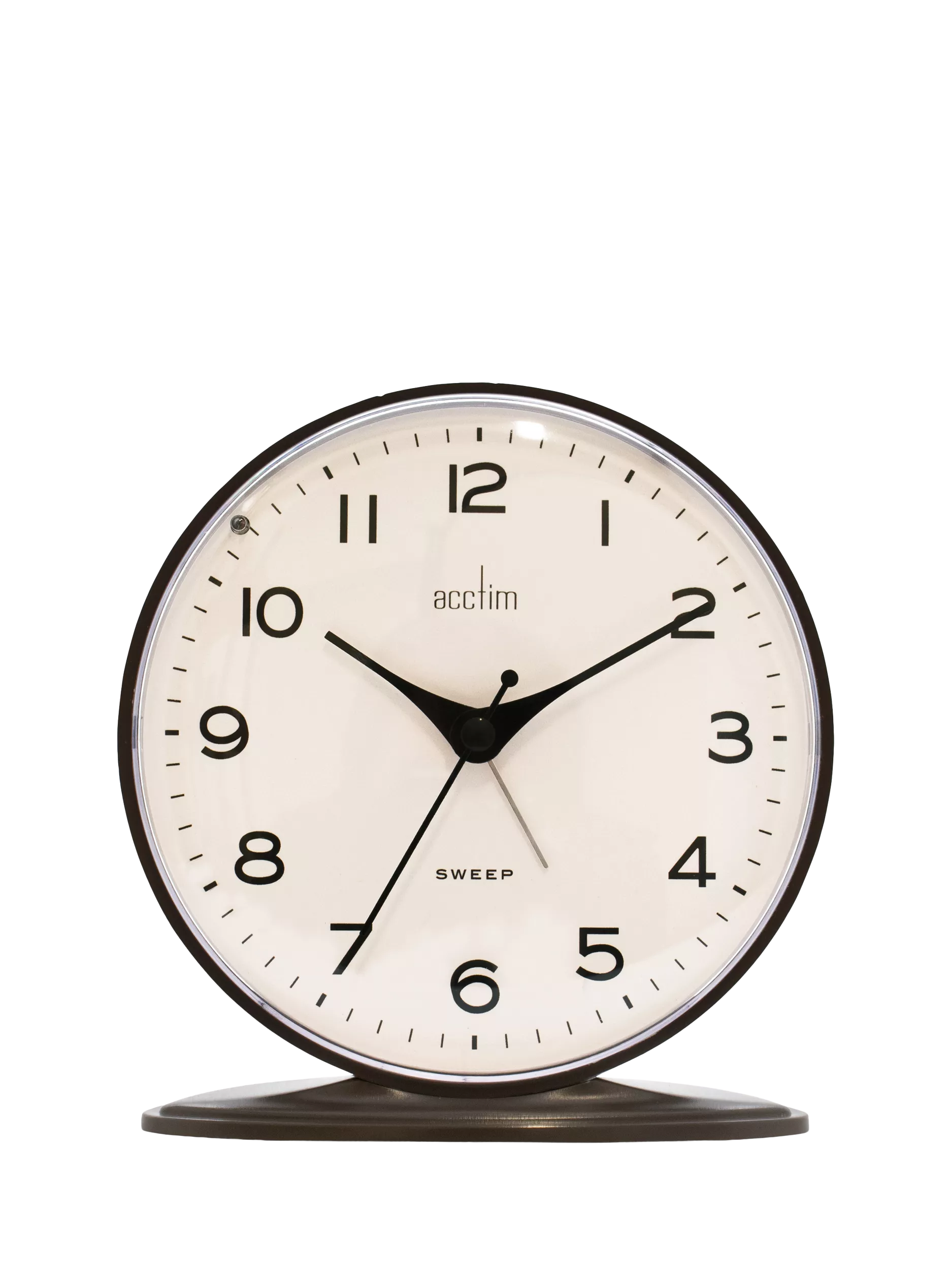
Acctim Oakridge Analogue Alarm Clock
Acctim
- • Silent sweep second hand (no ticking)
- • Beep alarm with snooze and built-in light
Honest caveat: A single beep alarm with snooze is basic and some people find it too quiet. It runs on one AA battery (not included). The sleep benefit comes from moving the phone, not from the clock.
£25
johnlewis.com
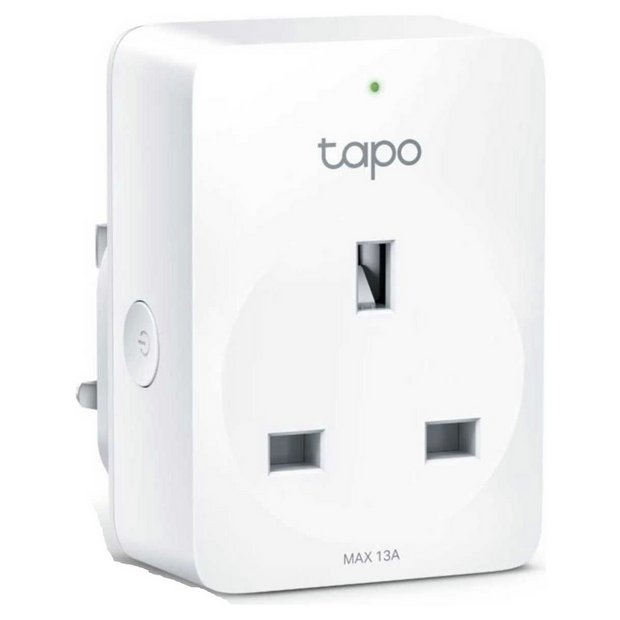
Tapo P110 Smart Wi-Fi Plug with Energy Usage Monitoring
TP-Link Tapo
- • Exact-time schedules and countdown timers
- • Silent switching, no ticking
Honest caveat: It is itself a 2.4GHz Wi-Fi device, so it adds a (very low power) transmitter while it saves you switching others off. If it cuts power to your router it loses its own app connection; TP-Link does not clearly say schedules are stored on the plug, so test it for a few nights.
£9.99
argos.co.uk

Anker PowerExpand USB-C to Gigabit Ethernet Adapter
Anker
- • Gigabit (1000Mbps) Ethernet over USB-C
- • Plug and play on most laptops
Honest caveat: Your router keeps broadcasting Wi-Fi for other devices unless you switch that off too, so the exposure change is small. You need a cable run to the router, which is not always practical.
£16.99
uk.anker.com

UGREEN Flat Cat 6 Ethernet Cable 10m
UGREEN
- • 10m flat Cat 6 cable, gigabit speed
- • Slim profile hides under rugs and trim
Honest caveat: Sold on Amazon UK (UGREEN’s own UK store does not list it). Flat cables are less robust than round ones if trodden on often, and wired devices only lower exposure meaningfully if Wi-Fi is also turned off on them.
£6.99 RRP
amazon.co.uk

VAYDEER Phone Time Lock Box with Timer
VAYDEER
- • Countdown timer locks the lid
- • USB-C backup power
Honest caveat: Sold on Amazon UK only (the better-known kSafe does not sell to the UK directly). It does not block signals and is not meant to; it only stops you picking the phone up. Leave it outside the bedroom if your phone is your emergency line, or skip it.
£29.99 RRP
amazon.co.uk

Lumie Bodyclock Rise 100
Lumie
- • 30-minute sunrise and sunset
- • Adjustable sunrise brightness
Honest caveat: Sunrise length is fixed at 30 minutes and there are no wake sounds beyond a beep, which is thin for £99. Evidence that dawn simulation improves mood or alertness comes from small studies.
£99 typical price
Amazon · lumie.com
We may earn a commission if you buy through our links. How we choose ›
How strong is the research? What our grades mean ›
- Strong research
- Independent certification or lab data for the specific claim.
- Promising research
- The material is well supported, but there is no product-level testing.
- Early research
- Little independent research.
- Mixed research
- Research findings disagree.
- £
- Under £20
- ££
- £20 to £79
- £££
- £80+
Is EMF at home actually harmful?
Short answer: probably not at the levels found in homes, and the official bodies agree. "EMF" here means radio waves (radiofrequency fields) from phones, Wi-Fi and masts, plus low-frequency fields from wiring and appliances. For the full evidence review, see our explainer Is EMF harmful? What the UK evidence says. The key points:
- UKHSA (the UK Health Security Agency) says there is "no consistent evidence" that Wi-Fi signals harm health, and that routers and laptops run at about 0.1 watt. It sees no need for further action to reduce Wi-Fi exposure.
- Ofcom's audit of more than 3,000 measurements near UK mobile masts found the highest level was "hundreds of times below" the international guideline.
- ICNIRP, the body whose limits the UK follows, sets limits to stop tissue heating, with extra safety margins for uncertainty, and says the 2020 guidelines cover 5G.
- WHO/IARC classed radio waves as "possibly carcinogenic" (Group 2B) in 2011. That label means the evidence was judged "limited": a possible link to a brain tumour (glioma) in the heaviest phone users that could not be ruled out as chance or bias. Group 2B also includes things like aloe vera extract and pickled vegetables; it says nothing about how big any risk is.
- Since then, a 2024 WHO-commissioned systematic review of 63 studies found mobile phone use was not associated with higher risk of glioma, meningioma or other head tumours, even in long-term heavy users.
So why bother at all? Two reasons. Some people simply prefer lower exposure while research continues, and UKHSA says adults are entitled to make that choice from an informed position. And the most effective steps, mainly getting the phone away from your head and out of the bedroom, are free or cheap and have a separate, better-evidenced payoff: sleep.
What actually reduces exposure (and what the evidence says)
| Step | Lowers exposure? | Separate benefit | Evidence for the benefit |
|---|---|---|---|
| Hands-free or speaker for calls | Yes, the biggest single cut | None needed | Strong (UKHSA, IARC advice) |
| Phone out of the bedroom overnight | Yes, at night | Fewer night wake-ups, less screen time | Promising (large reviews, observational) |
| Router off overnight on a timer | Small | Lower standby electricity | Early |
| Wired Ethernet for desk devices | Small | Faster, steadier connection | Strong (for connection quality) |
| Shielding stickers, pendants, cases | No, or makes it worse | None | Mixed research at best; ASA rulings against claims |
The phone is the main source. UKHSA notes that the highest public exposure from radio waves comes from mobile phones held to the head, and that texting or holding the phone away gives "very much lower" exposure. Routers, laptops and masts are much further away and much lower.
Our picks at a glance
| Product | Best for | Key feature | Price | Evidence grade |
|---|---|---|---|---|
| Everyday itemMasterplug TMS24 Mechanical Plug-In Timer | Router off overnight | No radio, dial timer | £7.99 | Promising |
| Tapo P110 Smart Wi-Fi Plug | Silent scheduled switching | App schedule, energy monitor | £9.99 | Promising |
| Everyday itemApple EarPods (USB-C) | Hands-free calls | Wired, inline mic | £19 | Promising |
| Everyday itemAnker PowerExpand USB-C to Gigabit Ethernet Adapter | Laptop on a cable | Gigabit, plug and play | £16.99 | Promising |
| Everyday itemUGREEN Flat Cat 6 Ethernet Cable 10m | Tidy wired runs | Flat, 10m | £6.99 RRP | Promising |
| Everyday itemAcctim Oakridge Analogue Alarm Clock | Replacing the phone alarm | Silent sweep, AA battery | £25 | Early |
| Sunrise alarm clockLumie Bodyclock Rise 100 | Gentle light wake-up, no app | 30-min sunrise | £99 typical price | Early |
| VAYDEER Phone Time Lock Box | Hard stop on night scrolling | Timer lock, USB-C backup | £29.99 RRP | Early |
Grades here describe how well each product does its job (cutting a source of exposure, or helping keep the phone out of the bedroom), not any health claim.
How we chose
We started from what UKHSA and IARC actually recommend (hands-free use, distance, shorter calls) and from sleep research on phones in the bedroom. We only included products that do one of those jobs in a way you can check yourself: a device is off, a phone is further away, or the phone is out of reach. Every product is on sale from a UK retailer in pounds. We excluded anything sold on claims to block, neutralise or "harmonise" EMF, and we did not include a meter (see the FAQ).
The picks
Masterplug TMS24 Mechanical Plug-In Timer: best for switching the router off overnight
Push in the segments for the hours you want the router off (say midnight to 6am) and it does the rest. It has no wireless radio of its own and costs under £8 at Screwfix. Caveat: it switches in 1-hour blocks, has no battery backup and ticks slightly. Before you do this, check nothing important runs through your router at night: since the UK digital landline switchover, many home phones and telecare alarms do. Some broadband providers also advise against nightly power cycling because automatic line management can read it as a fault, so check with yours.
Tapo P110 Smart Wi-Fi Plug: best silent, flexible timer
Set exact times in the app for a games console, smart speaker or mesh point that does not need to be on overnight. TP-Link says schedules continue regardless of connection, and the energy monitor shows how much standby power you save. Caveat: it is a Wi-Fi device itself. If you use it on the router, test for a few nights that it switches back on as scheduled.
Apple EarPods (USB-C): best for hands-free calls
Hands-free is the step both UKHSA and IARC's director name, because it moves the phone from your head to your hand or desk. Any wired earphones work; EarPods are £19 and fit USB-C phones. Caveat: the speakerphone does the same for free. Air-tube style earphones (which carry sound up a hollow tube) are sold on the idea that they cut exposure further, but the main gain is the distance from the phone, which ordinary wired earphones already give you.
Anker PowerExpand USB-C to Gigabit Ethernet Adapter: best for a wired laptop
Plug your laptop into the router by cable and turn its Wi-Fi off. Video calls usually get steadier too. Caveat: the router still broadcasts for everything else, so the change in overall exposure is small.
UGREEN Flat Cat 6 Ethernet Cable 10m: best cheap cable
Ten metres of flat cable tucks under rugs and along skirting boards to reach a desk or TV. Caveat: sold via Amazon UK, and flat cables wear faster if walked on.
Acctim Oakridge Analogue Alarm Clock: best budget phone-alarm replacement
The alarm is the main reason phones sleep next to us. This £25 battery clock has a silent sweep hand, snooze and a light, and no screen. Caveat: the single beep is basic.
Lumie Bodyclock Rise 100: best light-based wake-up without an app
If you want something gentler than a beep, this mains-powered sunrise clock needs no Wi-Fi or app. See our sunrise alarm clock guide for other options. Caveat: £99 is a lot for a fixed 30-minute sunrise, and the mood and alertness evidence is from small studies.
VAYDEER Phone Time Lock Box: best for a hard stop
Set the timer and the phone stays locked until morning. Caveat: Amazon UK only, and not for anyone who must be reachable at night. It does not block signals and is not meant to.
Why the phone-free bedroom is the step worth taking
This is where the case is strongest, and it has nothing to do with radio waves. The NHS advises not using phones, tablets or computers for an hour before bed and keeping the phone silent and face down. A systematic review of 20 studies covering more than 125,000 children found bedtime device use was linked to about twice the odds of not getting enough sleep; even having a device in the room without using it was linked to worse sleep. In a controlled lab study, adults reading on a light-emitting e-reader before bed took longer to fall asleep and were less alert the next morning than when reading a printed book. These are mostly observational findings (Promising, not Strong), but the change costs almost nothing.
A simple routine: charge the phone in the hall or kitchen, use a clock for your alarm, and if you are worried about missing calls, set "emergency bypass" for key contacts and leave the door ajar.
What not to buy
These products are sold to reduce EMF or protect you from it. We do not recommend any of them.
- Shielding stickers, "dots" and chips. The ASA ruled against energyDots' smartDOT in 2021 for claims it shielded users from EMF, finding customer questionnaires were not adequate evidence, and told the company to stop implying everyday EMF harms health.
- Pendants, shungite and "orgone" crystals. The ASA upheld complaints against orgone pendants, a "Hologuard" device and shungite products sold on TV with claims to block EMF and 5G, finding the claims misleading and, for the TV ad, irresponsible.
- "Harmonisers" and plug-in neutralisers. No credible evidence they change exposure. The ASA's guidance is that sellers must hold documentary evidence that the product works, and must not frighten people without good reason.
- Shielding phone cases and pouches. The GSMA (the mobile industry body) says shields "may not reduce exposure and are likely to reduce coverage", and that when a case blocks the antenna the phone raises its transmit power. The US FTC warns they may make the phone emit more. Distance does the job better and free.
- Shielding paint, fabric and bed canopies. Expensive, unproven for any health benefit, and they can make phones inside the space work harder. UKHSA considers measures to reduce exposure from masts and Wi-Fi unnecessary.
Bottom line
You do not need to do anything about EMF at home on health grounds; levels are far below UK limits and the large reviews are reassuring. If you prefer lower exposure, the effective steps are cheap: use earphones or the speaker for calls, wire the devices you use at a desk, and put the router on a timer if nothing depends on it overnight. The step most worth taking is keeping your phone out of the bedroom, because it is the one with a real sleep payoff. Skip anything that promises to block, neutralise or harmonise EMF.
Frequently asked questions
Is it worth turning off Wi-Fi at night?
+
For health, UKHSA says it is not necessary: Wi-Fi routers run at about 0.1 watt and exposure is small compared with guideline limits. If you prefer to, a £8 plug-in timer does it automatically. Check first that nothing needs the router overnight, such as a digital landline, telecare alarm or Wi-Fi calling, and ask your broadband provider whether nightly switching affects your line.
What does the WHO 2B classification for EMF mean?
+
In 2011 IARC, part of the WHO, classed radio waves as "possibly carcinogenic" (Group 2B) because evidence of a link to glioma in heavy phone users was limited and chance or bias could not be ruled out. Group 2B describes the strength of evidence, not the size of risk. A 2024 WHO-commissioned review of 63 studies found no association between phone use and brain tumours.
Do EMF shielding phone cases work?
+
Not in a useful way. The GSMA says shields may not reduce exposure and are likely to reduce coverage, and if a case blocks the antenna the phone increases its transmit power to keep the signal. The US FTC warns they may make a phone emit more. Holding the phone away from your head, or using earphones, cuts exposure far more and costs nothing.
Should I buy an EMF meter?
+
We do not recommend one. Cheap consumer meters vary widely in accuracy and frequency range, and a reading does not tell you anything about harm: UK homes measure far below ICNIRP limits, and limits are set well below levels that heat tissue. Meters mostly create worry. If you want to reduce exposure, the steps in this guide work without measuring anything.
Are air tube headphones better than normal wired earphones?
+
Air-tube earphones carry sound up a hollow tube for the last few centimetres, and are sold as lower exposure. The main reduction, though, comes from keeping the phone away from your head, which any wired earphones or the speakerphone already achieve. There is no good evidence the tube adds a meaningful extra benefit, so ordinary wired earphones are a cheaper choice.
Is it bad to sleep with your phone next to your bed?
+
Not because of radio waves, according to UKHSA and the large reviews. The better reason to move it is sleep: the NHS advises avoiding screens for an hour before bed and silencing the phone, and a review of 20 studies linked bedtime device access in children to roughly double the odds of poor sleep. Charging it outside the bedroom and using a clock is a simple fix.
Last updated