Home, Air & Renovation
Best Wool and Natural Rugs UK: Wool, Jute and Cotton Without Latex
Quick answer
For lower emissions, choose a flatwoven or hand-knotted rug in wool, jute or cotton, or one with a cotton backing rather than a latex-glued synthetic one, and skip stain-proof coatings that may use PFAS. Our top pick is IKEA's STOCKHOLM wool flatweave at £199. IKEA LOHALS jute is the budget pick.
Our picks
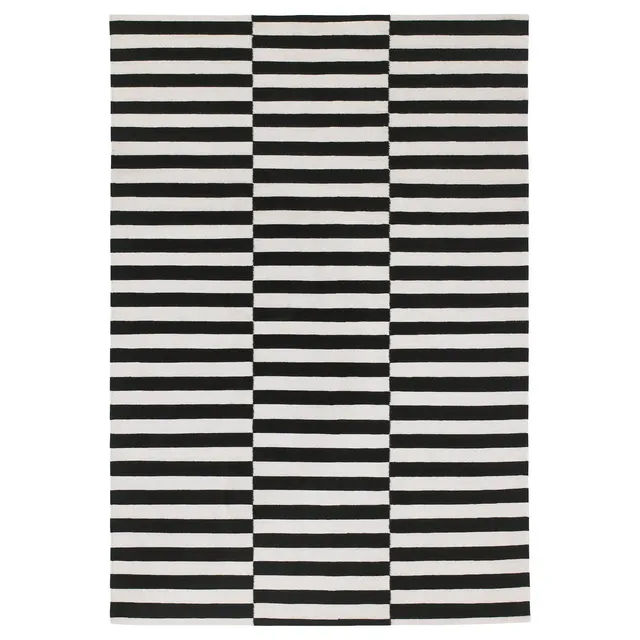
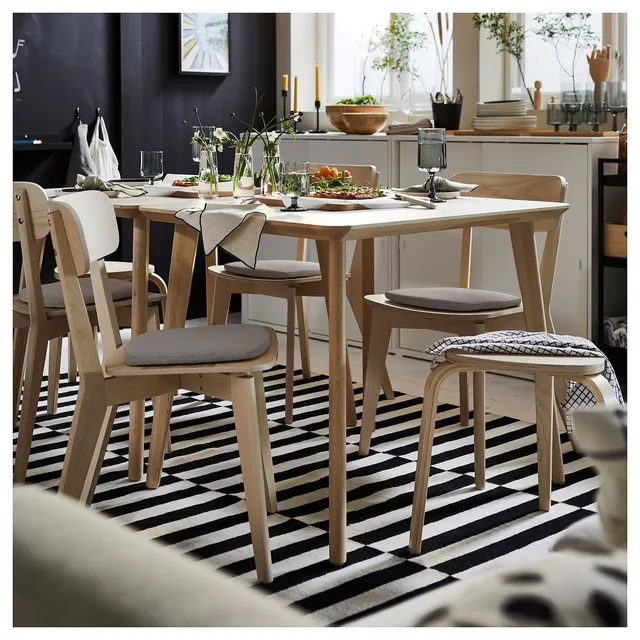
IKEA STOCKHOLM Rug, Flatwoven, Handmade, Striped, 170x240 cm
IKEA
- • 100% wool surface
- • 100% cotton warp
Honest caveat: IKEA does not say whether the wool is moth-proofed. Wool sheds when new. You need a separate anti-slip underlay, which is usually synthetic.
£199
ikea.com
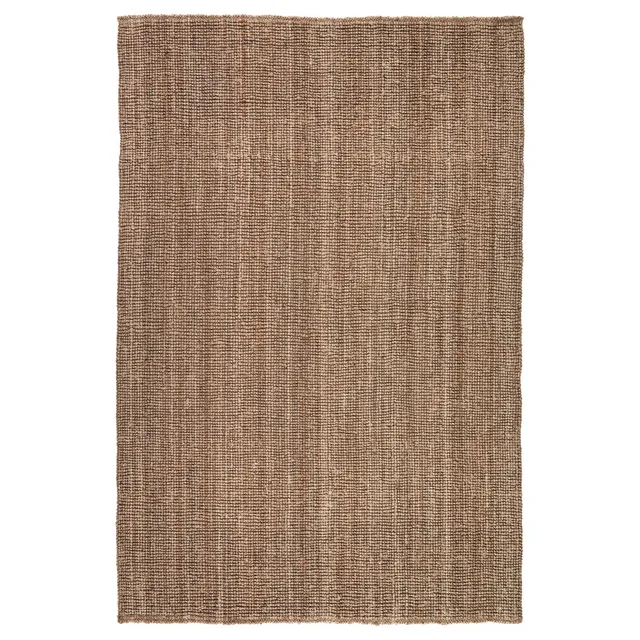
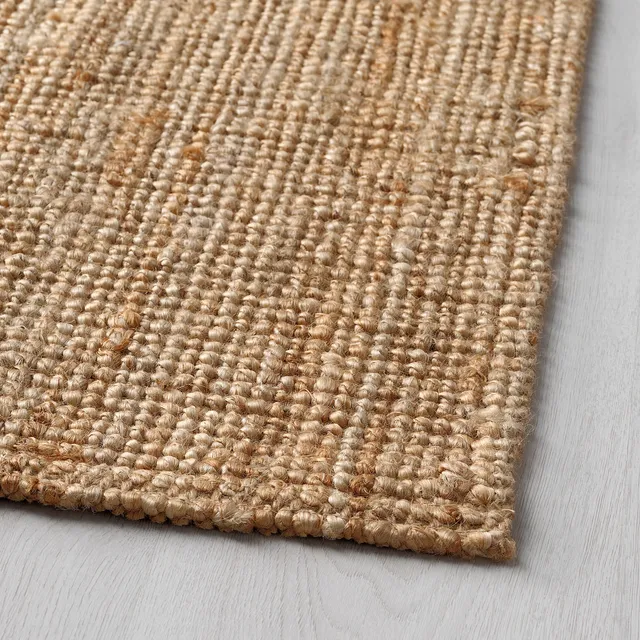
IKEA LOHALS Rug, Flatwoven, Natural, 160x230 cm
IKEA
- • 100% jute
- • Flatwoven, no backing
Honest caveat: Jute is coarse, sheds at first and stains with water. IKEA notes a new-rug smell that fades with airing, which is the jute itself. Needs an anti-slip underlay on hard floors.
£129
ikea.com
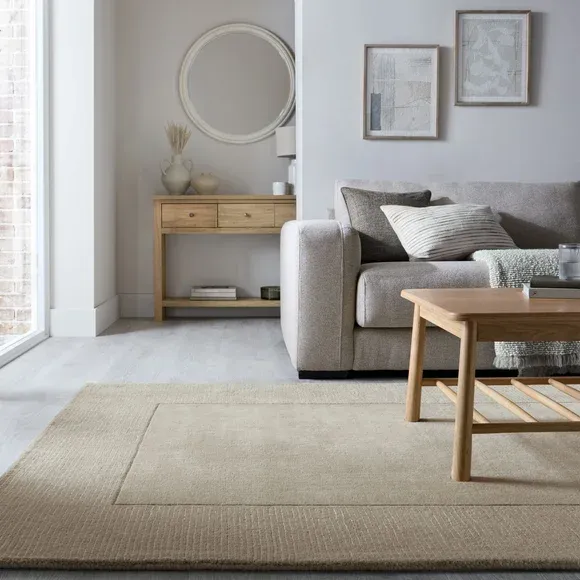
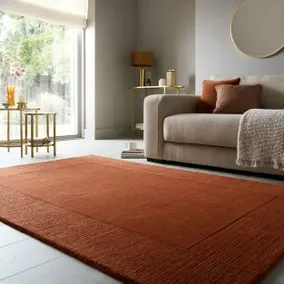
Dunelm Boston Wool Border Rug, Natural, 140x200 cm
Dunelm
- • 100% wool pile
- • 100% cotton backing
Honest caveat: No information on moth-proofing, latex adhesives under the backing cloth or stain treatments. Larger sizes cost up to £269.
£139
dunelm.com

benuta Pure Wool Rug Tess Cream
benuta
- • Wool pile
- • Cotton backing
Honest caveat: Price shown is 160 x 230 cm (120 x 170 cm is £139). No emissions test or moth-proofing information is given. Ships from Germany.
£289
benuta.co.uk
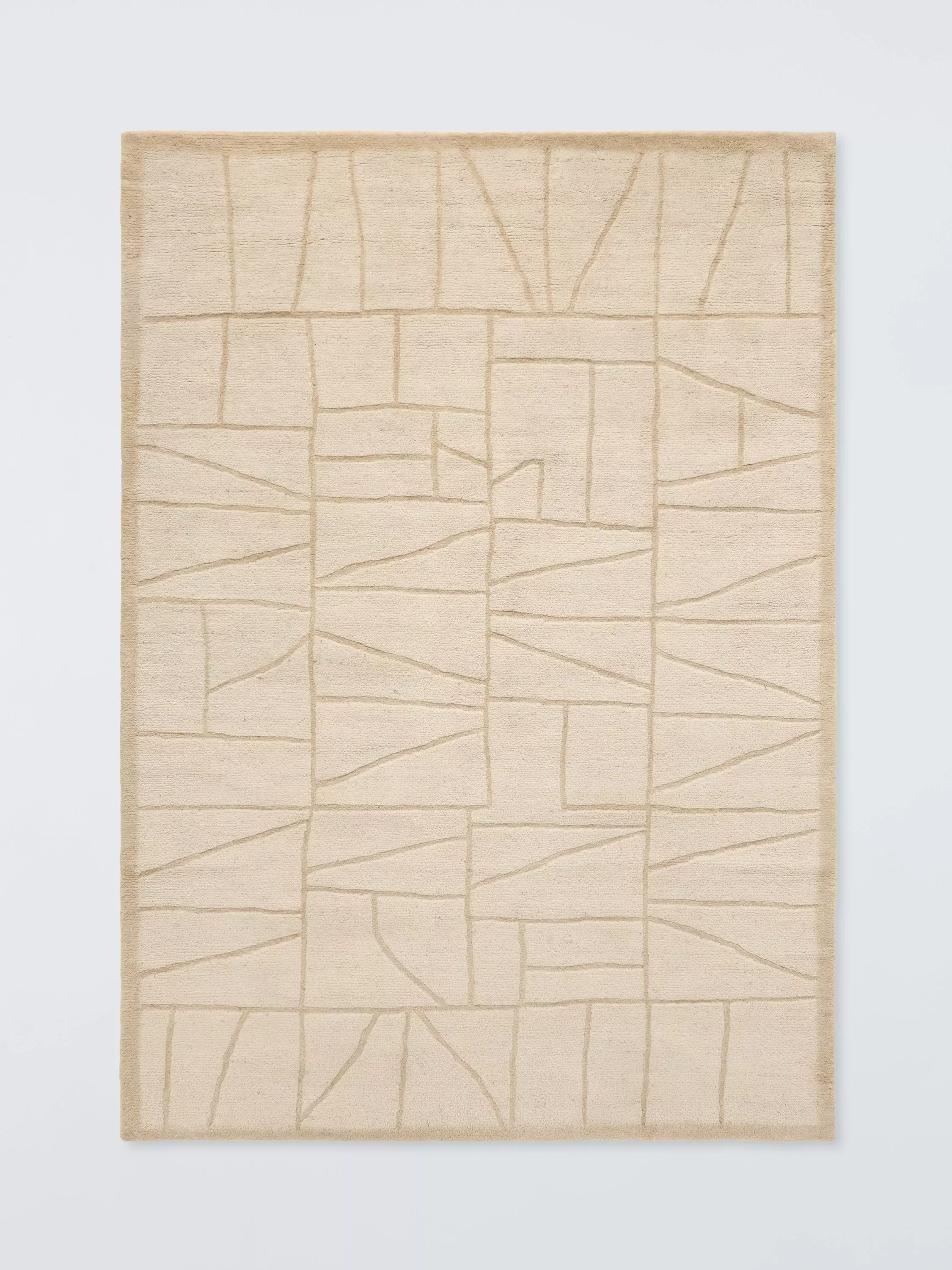
John Lewis Henrik Pure Wool Hand Knotted Rug, Natural
John Lewis
- • Pure wool
- • Hand-knotted (no glued backing needed)
Honest caveat: The page we saw did not list warp material, moth-proofing or any treatment, so ask before buying. Prices run from £350 to £875 by size.
£350
johnlewis.com
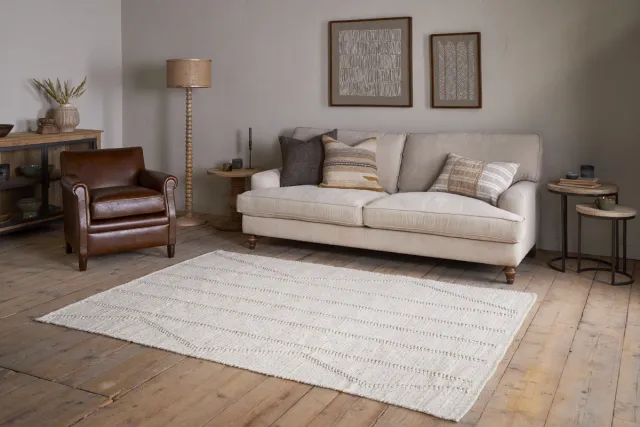
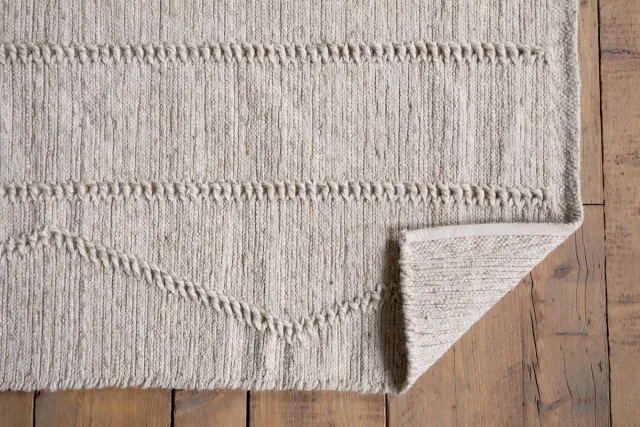
Nkuku Shanti Wool & Cotton Rug, Natural, 150x240 cm
Nkuku
- • Wool and cotton blend
- • Woven
Honest caveat: Nkuku does not state the backing, any latex or any moth or stain treatment, so ask. Off-white shows dirt.
£400
nkuku.com
We may earn a commission if you buy through our links. How we choose ›
How strong is the research? What our grades mean ›
- Strong research
- Independent certification or lab data for the specific claim.
- Promising research
- The material is well supported, but there is no product-level testing.
- Early research
- Little independent research.
- Mixed research
- Research findings disagree.
- £
- Under £20
- ££
- £20 to £79
- £££
- £80+
Rugs sit on the floor where babies crawl and pets lie, and they collect dust. Two things matter most for what a rug adds to your air and dust: how it is held together (woven, knotted or tufted and glued) and what it is treated with (stain repellents, moth-proofing). The fibre matters too, but less than people think.
Our picks at a glance
| Product | Best for | Material/key feature | Price | Evidence grade |
|---|---|---|---|---|
| IKEA STOCKHOLM Rug, Flatwoven, 170x240 | Best overall | Wool on cotton warp, no backing | £199 | Promising |
| IKEA LOHALS Rug, Jute, 160x230 | Budget | 100% jute flatweave | £129 | Promising |
| Dunelm Boston Wool Border Rug, 140x200 | Budget wool | Wool pile, cotton backing | £139 | Promising |
| benuta Pure Wool Rug Tess, 160x230 | Soft pile | Handmade wool, cotton backing | £289 | Promising |
| John Lewis Henrik Hand Knotted Rug | Heirloom | Pure wool, hand-knotted | £350 | Promising |
| Nkuku Shanti Wool & Cotton Rug | Texture | Woven wool and cotton | £400 | Promising |
Wool, jute or synthetic: what is the difference?
- Polypropylene and polyester rugs are cheap and easy to clean but are plastic, often have a latex or synthetic backing, and are commonly treated for stain resistance. Washable polyester rugs (such as Ruggable) and recycled-plastic outdoor-style rugs (such as Weaver Green) solve a cleaning problem, not an emissions one, so we left them out.
- Wool is naturally stain- and flame-resistant, which is why it rarely needs added treatments, though many wool carpets and some rugs are moth-proofed with an insecticide.
- Jute, sisal and cotton are plant fibres. Jute is cheap and hard-wearing but coarse and stains with water.
Why does the backing matter?
Most machine-tufted rugs are made by punching yarn into a cloth and gluing it in place with latex, then adding a second backing. Chamber studies of new carpets found that styrene-butadiene (SBR) latex backings were the main source of 4-phenylcyclohexene (4-PCH), the chemical behind "new carpet smell", plus styrene (Hodgson et al., 1993). Flatwoven and hand-knotted rugs are held together by the weave itself, so they need no glue. Our new carpet VOCs guide explains this in more detail.
What about PFAS stain protection?
PFAS (per- and polyfluoroalkyl substances, "forever chemicals") have been used to make carpets and rugs repel stains. HSE's PFAS assessment lists rugs, carpets and carpet-care products among their uses in Great Britain. A US analysis found people living with low-pile carpet had higher blood levels of some PFAS (Zhu et al., 2021), and a review of household dust found treated carpets and textiles are among the sources. Avoid rugs sold as "stain-proof", "stain-guard" or "water and oil repellent" unless the maker says the treatment is PFAS-free.
How we chose
We checked each product page for fibre, construction (flatwoven, hand-knotted or tufted), backing and any stated treatment, and we excluded synthetic rugs and rugs with latex backing listed. We favoured retailers that publish composition clearly. No rug we found publishes an emissions test, so none reaches Strong; all are graded Promising on material choice. Picks cover £129 to £400 across five retailers. No brand paid to be included.
The picks
IKEA STOCKHOLM Rug, Flatwoven: best overall
A handwoven wool surface on a cotton warp, with no backing at all, for £199 at 170 x 240 cm. Flatweaves are reversible, easy to vacuum and contain no glue. Caveat: IKEA does not say whether the wool is moth-proofed, it sheds when new and you need an anti-slip underlay, which is usually synthetic.
IKEA LOHALS Rug, Jute: best budget
100% jute, flatwoven, £129 at 160 x 230 cm. No backing, no latex, no stated treatment. Caveat: jute is scratchy for babies and pets, marks with water and cannot be washed. The new smell IKEA mentions is the jute itself and fades with airing.
Dunelm Boston Wool Border Rug: best budget wool
Dunelm lists wool pile with a 100% cotton backing, a good combination at £139 for 140 x 200 cm. Caveat: no information on moth-proofing, stain treatments or the adhesive used to fix the pile.
benuta Pure Wool Rug Tess: best soft pile
A handmade wool rug whose product data lists a cotton backing. Soft enough for bedrooms and nurseries. £289 at 160 x 230 cm, £139 at 120 x 170 cm. Caveat: no treatment information and it ships from Germany.
John Lewis Henrik Hand Knotted Rug: best heirloom rug
Hand-knotted pure wool. Knotted rugs are tied into the warp rather than glued, last decades and can be professionally washed. From £350 to £875 by size. Caveat: the page did not list warp fibre, moth-proofing or any treatment, so ask.
Nkuku Shanti Wool & Cotton Rug: best for texture
A woven wool and cotton rug from a UK brand that focuses on natural materials. £400 at 150 x 240 cm. Caveat: backing and treatments are not stated.
What to avoid
- "Stain-proof", "Scotchgard" or "water and oil repellent" without a PFAS-free statement.
- Tufted rugs with latex or "rubber" backing, especially in nurseries.
- Synthetic "washable" rugs if your goal is natural fibres; they are polyester or polypropylene.
- Rubber or PVC anti-slip underlays with a strong smell. Felt or natural rubber underlays are better options.
Underlays and sizes
Most rugs on hard floors need an anti-slip underlay. Many are PVC or synthetic rubber with a noticeable smell; felt, wool felt or natural rubber versions are lower-emission alternatives. Pick a rug size you can lift and air outside occasionally, and in nurseries choose a low pile that is easy to vacuum, as dust is where many indoor chemicals settle.
How to air a new rug
Unroll it in a ventilated room or outside on a dry day for a day or two, vacuum it well over the first few weeks (wool sheds) and keep the room ventilated. For carpets and underlay, see our new carpet VOCs guide and low-VOC flooring guide.
Looking after a natural rug
Vacuum without a beater bar for the first few weeks while wool sheds, rotate the rug every few months, and blot spills rather than rubbing. Jute and sisal should not get wet. Hand-knotted wool rugs can be professionally washed every few years, which also removes accumulated dust. Avoid spraying aftermarket stain protectors, which may reintroduce the treatments you avoided.
Bottom line
Construction beats fibre. A flatwoven or hand-knotted wool, jute or cotton rug with no stain treatment is the lowest-emission rug you can buy, and IKEA's STOCKHOLM and LOHALS show it does not have to be expensive. If you want a pile rug, look for a cotton backing and ask the retailer about latex, moth-proofing and stain treatments.
Frequently asked questions
Are wool rugs better than synthetic rugs?
+
Wool is a natural fibre that resists stains and flames without added treatments, while synthetic rugs are plastic and often have latex backings and stain-repellent coatings. A woven wool rug is generally a lower-emission choice, though some wool is moth-proofed with insecticide, so ask.
Do jute rugs off-gas?
+
Jute itself has a natural earthy smell when new, which fades with airing. A flatwoven 100% jute rug has no latex backing or synthetic glue, so it is a low-emission option. Avoid jute rugs with a rubber or latex backing if emissions are your concern.
What is the latex backing on rugs?
+
Most machine-tufted rugs are held together with a latex adhesive, often synthetic styrene-butadiene. In chamber tests this type of backing was the main source of 4-PCH, the chemical behind new carpet smell. Flatwoven and hand-knotted rugs do not need it.
How can I tell if a rug has PFAS?
+
Look for terms such as stain-proof, stain-guard, Scotchgard, or water and oil repellent. These finishes have often used PFAS. If a retailer cannot confirm a treatment is PFAS-free, choose an untreated rug, and vacuum regularly with a HEPA vacuum to keep dust down. Wool resists stains naturally, so it rarely needs a coating.
Is a wool rug good for a nursery?
+
A soft wool rug with a cotton backing or a flatweave works well. Avoid latex-backed tufted rugs and stain-repellent treatments, air the rug for a day or two before use and use a felt or natural rubber underlay. Choose a size and pile you can vacuum easily, as crawling babies spend time close to the floor.
Are Ruggable rugs low-emission?
+
Ruggable rugs are polyester with a separate pad, designed to be machine washable. Washing helps with dust and spills, but they are synthetic, so they do not fit a natural-fibre brief. We did not include them, but they can suit homes where frequent washing matters more than fibre type.
Last updated