Women's Health
Menopause Supplements: What the research Actually Shows (UK 2026)
Part of Women's health ›Quick answer
Most menopause supplements have weak evidence. NICE and the NHS say HRT is the most effective option for hot flushes and other symptoms, and CBT also has NICE backing. Sage, red clover and black cohosh show small or uncertain effects, black cohosh carries an MHRA liver warning, and vitamin D supports bones rather than symptoms.
Our picks
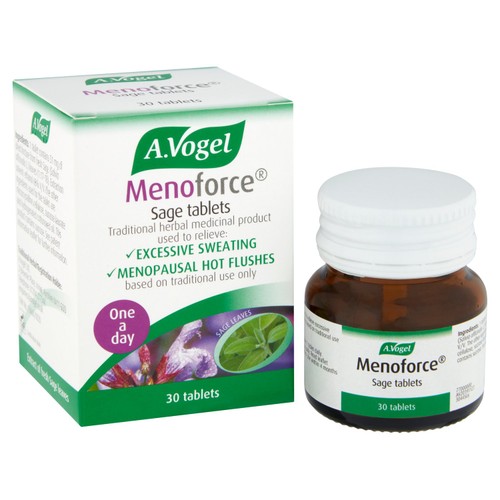
A.Vogel Menoforce Sage Tablets (30 tablets)
A.Vogel
- • MHRA Traditional Herbal Registration (THR 13668/0020)
- • One tablet a day of fresh sage leaf extract
Honest caveat: A THR is based on long traditional use, not proof that it works. The main sage study was small and had no placebo group, so it may overstate the benefit. It is far less effective than HRT.
£16
ocado.com

Viridian Red Clover Extract (60 capsules)
Viridian
- • 250mg red clover extract, 8% isoflavones
- • Plant cellulose capsule, no fillers
Honest caveat: Trials show at best a small drop in hot flushes (about 1 to 2 fewer a day) and results vary between studies. Each capsule gives about 20mg isoflavones, well below the 80mg a day used in the trials that showed most effect. It is a food supplement, not a licensed medicine.
£16.95
viridian-nutrition.com

Viridian Vitamin D3 400iu (Vegan)
Viridian
- • 10 micrograms (400 IU) vitamin D3
- • Vegan, plant capsule
Honest caveat: No independent product-level test is published. Vitamin D supports bone health but does not ease hot flushes. Do not exceed 100 micrograms a day.
£7.55
viridian-nutrition.com

Wild Nutrition Food-Grown Menopause Complex (30 days)
Wild Nutrition
- • Magnesium 114mg and vitamin B6 per 2 capsules
- • Includes hops, ashwagandha and dong quai
Honest caveat: There is no trial of this blend. Its ingredients (hops, ashwagandha, dong quai) have weak or mixed evidence for menopause symptoms, and ashwagandha and dong quai can interact with medicines. Speak to a pharmacist first. It costs over £400 a year.
£37
wildnutrition.com
We may earn a commission if you buy through our links. How we choose ›
How strong is the research? What our grades mean ›
- Strong research
- Independent certification or lab data for the specific claim.
- Promising research
- The material is well supported, but there is no product-level testing.
- Early research
- Little independent research.
- Mixed research
- Research findings disagree.
- £
- Under £20
- ££
- £20 to £79
- £££
- £80+
Before spending money on supplements, it helps to know where they sit. NICE guideline NG23 and the NHS both put hormone replacement therapy (HRT) first for hot flushes, night sweats, low mood linked to menopause and other symptoms. The 2024 NICE update also recommends discussing cognitive behavioural therapy (CBT, a talking therapy with menopause-specific versions) as an option. If symptoms are affecting your life, see a GP or practice nurse first. This page is a guide to the supplement aisle, not a replacement for that conversation.
What do menopause supplements claim?
Products sold for menopause usually promise some mix of the following:
- fewer or milder hot flushes and night sweats
- better sleep and mood
- "hormone balance" or "natural oestrogen" support
- stronger bones, more energy and better skin
The common ingredients are black cohosh, red clover and soy isoflavones (plant compounds that act a little like weak oestrogen), sage leaf, magnesium, vitamin D, B vitamins and blends with herbs such as ashwagandha, hops or dong quai. Most are sold as food supplements, which means nobody checks that they work before they reach the shelf. A small number are registered herbal medicines with a THR number (see below).
What does the evidence show for each ingredient?
| Claim | Evidence grade | Best evidence |
|---|---|---|
| Black cohosh eases hot flushes | Mixed research | Cochrane review, 2012: insufficient evidence |
| Red clover or soy isoflavones ease hot flushes | Early | Cochrane review, 2013; red clover meta-analysis, 2021 |
| Sage eases hot flushes | Early | Uncontrolled trial, 2011 |
| Magnesium eases hot flushes | Mixed research | Placebo-controlled trial, 2015: no benefit |
| Vitamin D supports bone health | Strong (for the NHS-advised dose) | NHS vitamin D advice |
| Menopause multivitamins ease symptoms | Early | No trials of finished blends we could find |
Black cohosh
Black cohosh is the best-known menopause herb. NICE says there is "some evidence" that isoflavones or black cohosh may relieve hot flushes, but warns that preparations vary, their safety is uncertain and interactions with other medicines have been reported. The Cochrane review concluded there is currently insufficient evidence to support it. The MHRA has also reminded the public about a risk of liver problems, with reports including jaundice and hepatitis and one case needing a liver transplant. It advised that anyone choosing black cohosh should pick a product with a THR number, which includes the liver warning on the leaflet. For these reasons we do not recommend a black cohosh product.
Red clover and soy isoflavones
Isoflavones are the most studied group. The Cochrane review found no conclusive evidence that phytoestrogen supplements reduce hot flushes overall. A 2021 meta-analysis of red clover found about 1.7 fewer hot flushes a day than placebo, with large differences between trials, and the clearest effect at doses of 80mg isoflavones a day or more over 12 weeks. That is a small effect compared with HRT. NICE advises that people with a history of, or high risk of, breast cancer should be told that the safety of isoflavones is uncertain.
Sage
Sage leaf has a long traditional use for sweating. The main study (a 2011 trial) reported fewer hot flushes, but it had no placebo group, so some of the improvement may be the natural ups and downs of symptoms. Sage is interesting because one product, A.Vogel Menoforce, is a registered traditional herbal medicine.
Magnesium
Magnesium is popular for sleep and cramps, but a placebo-controlled trial found magnesium oxide did not reduce hot flashes. It may still be worth getting enough magnesium from food (nuts, seeds, wholegrains, leafy greens), but it is not a hot flush treatment.
Vitamin D
This is the one supplement with clear public health advice. The NHS says adults need 10 micrograms a day and suggests most people consider a supplement in autumn and winter. It matters after menopause because bone loss speeds up, but it does not ease hot flushes. See our bone health guide.
Menopause multivitamins
Blends such as Menopace, Wild Nutrition and others combine vitamins, minerals and herbs. We could not find trials of the finished products. Most of what is in them (B6, magnesium, zinc) supports normal body function in the way any multivitamin does, and the herbal parts have the weak evidence above. Menopace Original is a popular, low-cost option, but its current UK ingredient list starts with maltodextrin, so it does not meet our site policy on processed fillers and we have not listed it.
What is a THR and why does it matter?
A Traditional Herbal Registration (THR) is an MHRA licence for herbal medicines. The regulator checks manufacturing quality, safety information and at least 30 years of traditional use. It does not prove the herb works; the claim is based on tradition. Even so, it is a better quality signal than an ordinary food supplement, where content and purity are not checked before sale. NICE specifically warns that "the safety, quality and purity of constituents in unregulated preparations may be unknown". You can check a product on the MHRA THR list.
Who might reasonably try a supplement?
- People with mild symptoms who have talked to a GP and prefer not to use HRT, or cannot use it.
- People waiting for an HRT review who want to try a low-risk option for a few weeks.
- Anyone who is low in vitamin D, which is common in the UK in winter.
Give any herbal product 8 to 12 weeks, keep a simple symptom diary and stop if nothing changes.
Who should be careful?
- Breast cancer history or high risk: NICE says the safety of isoflavones and black cohosh is uncertain. Speak to your specialist team before using any herbal product.
- Liver problems: avoid black cohosh. Stop any herbal product and see a GP if you notice yellowing skin or eyes, dark urine, tummy pain or unusual tiredness.
- Medicines: herbs can interact with blood thinners, tamoxifen, epilepsy medicines and others. Dong quai may affect blood clotting; ashwagandha may affect thyroid tests. Ask a pharmacist.
- Still having periods: some symptoms, such as heavy or irregular bleeding, need a GP check rather than a supplement.
If you want to try one: what to look for
- A THR number for herbal products, shown on the pack.
- A stated dose of the active ingredient (for example isoflavones in mg), not just a "proprietary blend".
- A short ingredient list without sweeteners, flavourings or maltodextrin.
- Vitamin D at 10 micrograms, and no more than 100 micrograms a day in total from all products.
- A realistic price: £400 or more a year for a premium blend buys a lot of GP and pharmacy advice.
Our picks at a glance
| Product | Best for | Material/key feature | Price | Evidence grade |
|---|---|---|---|---|
| Sage tabletsA.Vogel Menoforce Sage Tablets (30 tablets) | A registered herbal option | Sage leaf extract, THR 13668/0020 | £16 | Early |
| Red clover supplementViridian Red Clover Extract (60 capsules) | Trying isoflavones | 250mg extract, 8% isoflavones | £16.95 | Early |
| Menopause supplementWild Nutrition Food-Grown Menopause Complex (30 days) | A premium all-in-one | Magnesium, B6, hops, herbs | £37 | Early |
| Vitamin DViridian Vitamin D3 400iu (Vegan) | Bone health, NHS dose | 10 micrograms vitamin D3 | £7.55 | Strong (for the dose) |
How we chose
We started from NICE NG23 and Cochrane reviews, then looked for UK products with a clear dose, a short ingredient list and either a THR or a transparent label. We checked every ingredient list against our no-ultra-processed policy, which ruled out several big-name tablets with maltodextrin, sweeteners or flavourings. We did not include any black cohosh product because of the liver warning and weak evidence. Grades describe the evidence for the main claim, not the brand.
A.Vogel Menoforce Sage Tablets (30 tablets)
Our top pick because it is a registered traditional herbal medicine, so the MHRA has checked its quality and leaflet. One tablet a day contains fresh sage leaf extract. Caveat: the THR is based on traditional use, and the key study had no placebo group, so expect a modest effect at most. It is not suitable in pregnancy or with epilepsy.
Viridian Red Clover Extract (60 capsules)
A plain capsule with a stated isoflavone level and no binders. Red clover has the most trials of any isoflavone source, showing a small drop in hot flushes. Caveat: each capsule gives about 20mg isoflavones, well below the 80mg a day where trials saw the most effect, and it is a food supplement without a THR. Check with your GP first if you have a breast cancer history.
Wild Nutrition Food-Grown Menopause Complex (30 days)
A premium blend with a readable ingredient list and no sweeteners or flavourings. Caveat: there is no trial of this blend, and two of its herbs (ashwagandha and dong quai) can interact with medicines. At £37 a month, it is the hardest to justify on evidence.
Viridian Vitamin D3 400iu (Vegan)
Gives exactly the 10 micrograms the NHS advises, in a plant capsule. It will not ease hot flushes, but it supports bone health at a time when bone loss speeds up. Caveat: no independent product test is published, and you should count vitamin D in any multivitamin you take.
Bottom line
If menopause symptoms are affecting your sleep, work or mood, talk to a GP about HRT and CBT first: these are the options NICE recommends. Supplements are a small side-bet. If you want to try one, choose a THR-registered sage product or a clearly dosed red clover capsule for 8 to 12 weeks, avoid black cohosh, and take 10 micrograms of vitamin D in the darker months for your bones.
Frequently asked questions
What is the best supplement for menopause in the UK?
+
No supplement matches HRT, which NICE and the NHS say is the most effective treatment for symptoms. If you want to try one, a THR-registered sage product or a clearly dosed red clover capsule has the best, though still weak, evidence. Vitamin D at 10 micrograms a day is worth taking for bones in autumn and winter.
Is black cohosh safe to take for menopause?
+
The MHRA has warned that black cohosh carries a risk of liver problems, with reports of jaundice and hepatitis. A Cochrane review found insufficient evidence that it works. If you still choose it, use a THR-registered product, avoid it if you have liver problems, and stop and see a GP if you notice yellow skin or dark urine.
Does Menopace work?
+
We could not find a clinical trial of Menopace itself. It is a multivitamin with a small amount of soy isoflavones, so it supports normal nutrition rather than treating symptoms. Its current ingredient list starts with maltodextrin, which is why it is not on our list. For symptom relief, NICE points to HRT and CBT.
Can I take menopause supplements with HRT?
+
Vitamin D is fine alongside HRT. Herbal products such as red clover, black cohosh or dong quai may interact with hormones or other medicines, and there is little point doubling up on hormone-like products. Ask your GP or pharmacist before combining them.
Does magnesium help with hot flushes?
+
A placebo-controlled trial found magnesium oxide did not reduce hot flushes. Magnesium from food still matters for muscles and bones, but it is not a reliable hot flush remedy. If sleep is the main problem, CBT for menopause has better evidence.
What does a THR number mean on a herbal product?
+
A Traditional Herbal Registration means the MHRA has checked the product's quality, safety information and at least 30 years of traditional use. It does not prove the herb works, but it is a stronger quality check than an ordinary food supplement, which is not reviewed before sale.
Last updated


