Supplements, Fact-Checked
Best Magnesium for Sleep UK (2026): Glycinate vs Citrate, Dose and Research
How we grade ›Sources checked on Our independence ›
Our top pick
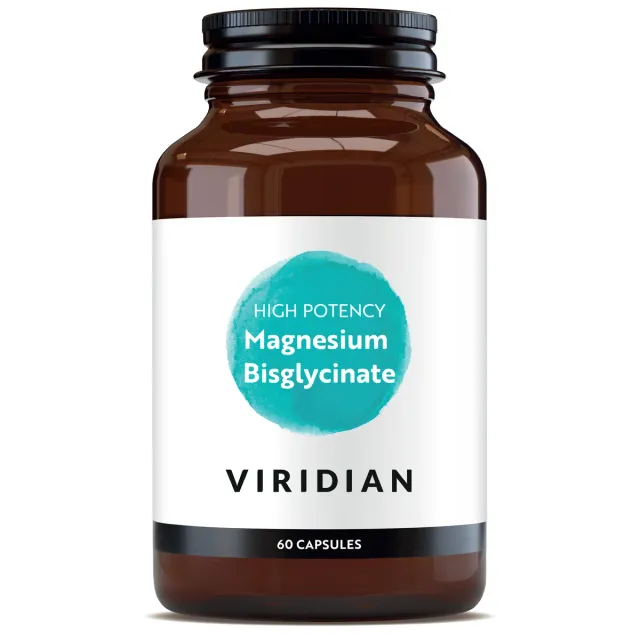
Magnesium · £16.05 typical price
Budget: DRV+ (Dr.Vegan) Magnesium Glycinate · £12.99 typical price ›Premium: Bare Biology Ready & Rested Magnesium Bisglycinate · £34.99 typical price ›
Quick answer
Magnesium may help you fall asleep a little faster, but trials are small and effects modest, so we grade it Early. Our top pick is Viridian High Potency Magnesium Bisglycinate: fully reacted glycinate at 200mg elemental magnesium. The caveat: keep total supplements under 400mg a day, and see your GP for persistent insomnia.
Our picks
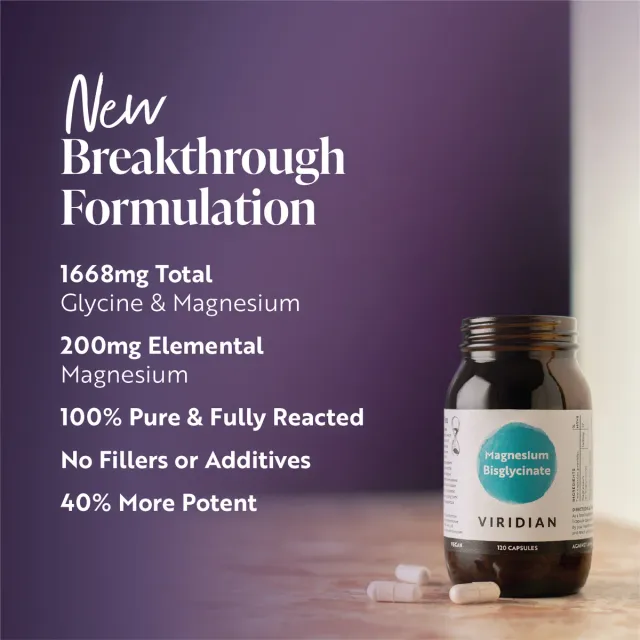
Viridian High Potency Magnesium Bisglycinate
Viridian
- • 200mg elemental magnesium per 2 capsules
- • Unbuffered bisglycinate
Honest caveat: No published third-party test. Evidence that magnesium improves sleep in people who are not low in it is weak. The 60-capsule pot lasts a month at two a day; larger pots are better value.
£16.05 typical price
Amazon · Viridian
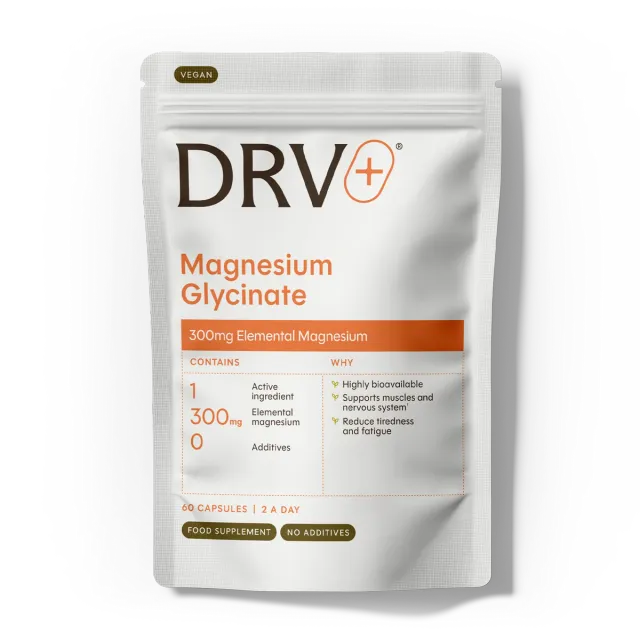
DRV+ (Dr.Vegan) Magnesium Glycinate
DRV+
- • 300mg elemental magnesium per serving
- • Bisglycinate form
Honest caveat: 300mg plus a magnesium-rich diet is fine for most adults, but stacking it with another magnesium product could push you past the NHS 400mg guide. No published third-party test.
£12.99 typical price
Amazon · DR.VEGAN
Heights Magnesium+
Heights
- • 300mg elemental per 2 capsules
- • Glycinate, no oxide listed
Honest caveat: The testing lab is not named, and the price is for a monthly subscription.
£20
Heights
Nutrition Geeks Magnesium Glycinate 3-in-1
Nutrition Geeks
- • 384mg elemental per 2 capsules
- • Glycinate, citrate, malate
Honest caveat: Close to the 400mg NHS supplement level, contains magnesium stearate, and is not a pure glycinate.
£9.99
Nutritiongeeks
VitaBright Magnesium Glycinate 180 Capsules
VitaBright
- • 300mg elemental per 2 capsules
- • Contains magnesium oxide
Honest caveat: Contains magnesium oxide, so it is a buffered product; testing lab not named.
£19.99
Vitabright
Holland & Barrett Magnesium Bisglycinate 375mg 90 Capsules
Holland & Barrett
- • 85mg elemental per capsule
- • Contains magnesium oxide
Honest caveat: 375mg is the compound weight; each capsule gives 85mg elemental magnesium and contains oxide.
£19.29
Holland & Barrett
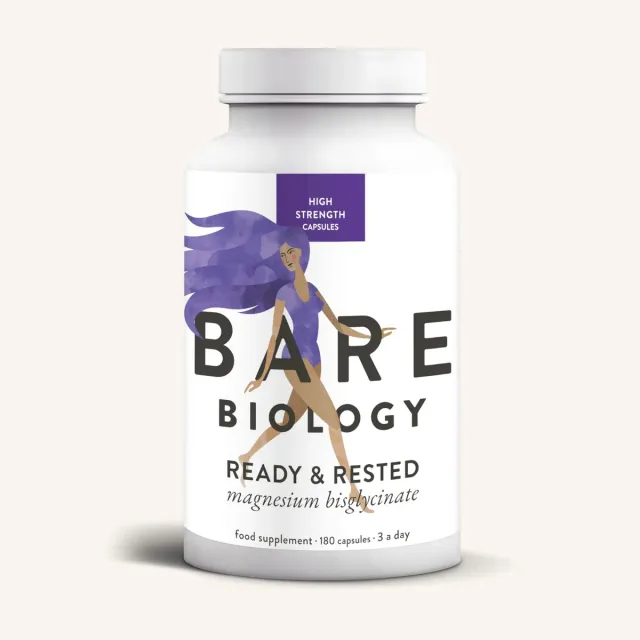
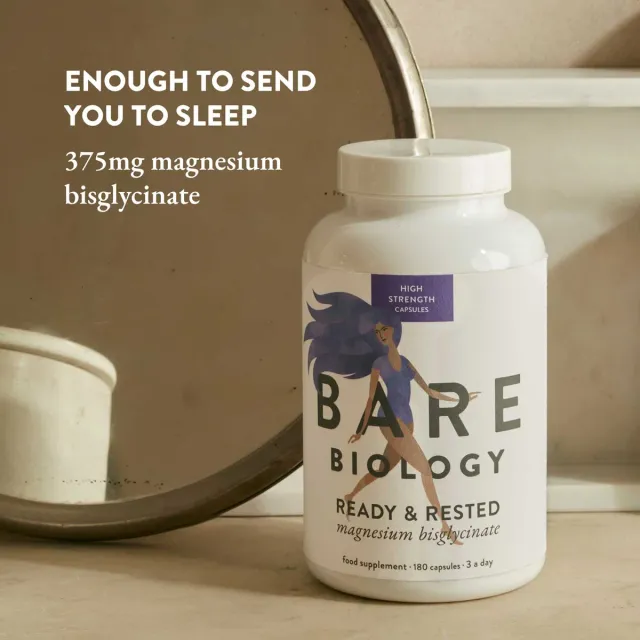
Bare Biology Ready & Rested Magnesium Bisglycinate
Bare Biology
- • 375mg per 3 capsules (100% NRV)
- • Buffered: 15% magnesium oxide
Honest caveat: The ingredients list says the chelate is buffered: 85% bisglycinate and 15% magnesium oxide. Oxide is cheaper and less well absorbed, so this is not a pure glycinate. 375mg is close to the NHS 400mg guide.
£34.99 typical price
Amazon · Bare Biology
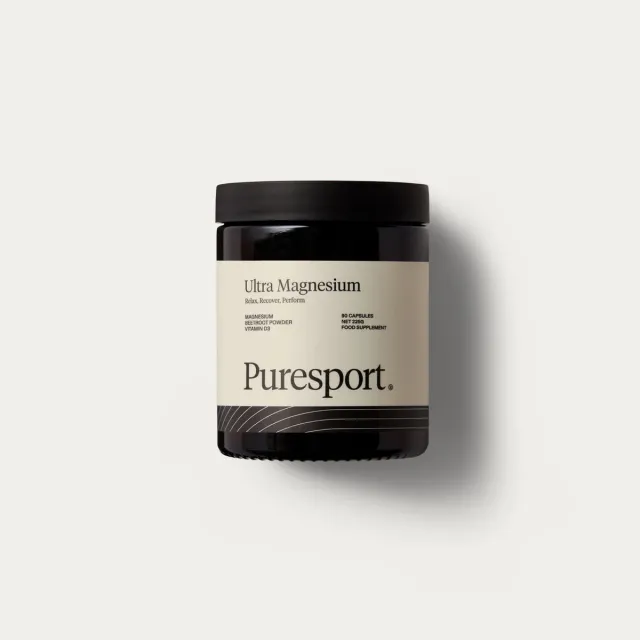
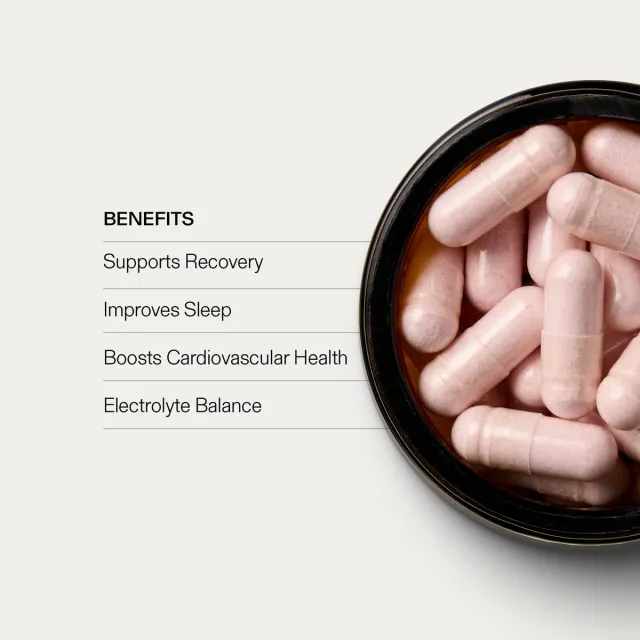
Puresport Ultra Magnesium
Puresport
- • Informed Sport certified
- • Citrate, bisglycinate and taurate forms
Honest caveat: It also contains beetroot powder and vitamin D3, which you may not want or may already take. At £25 it costs more than single-ingredient glycinates. Sleep claims for magnesium rest on limited evidence.
£25 typical price
Amazon · Puresport
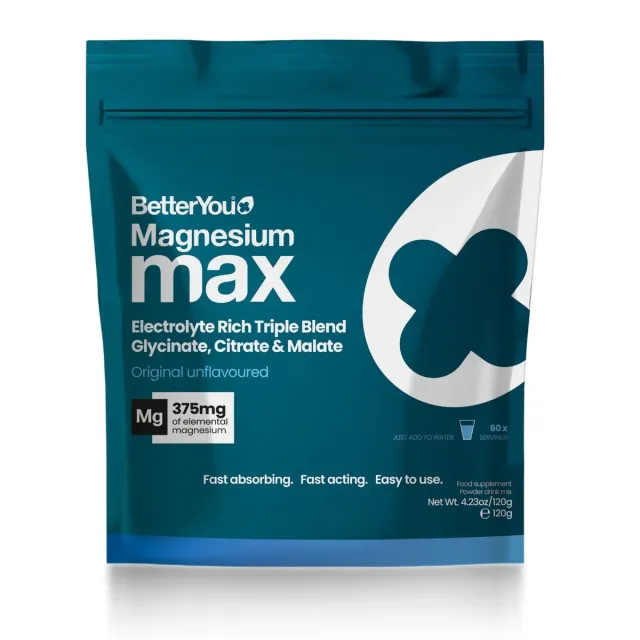
BetterYou Magnesium Max 3-in-1 Original Powder
BetterYou
- • 375mg elemental magnesium per 2g
- • Glycinate, citrate and malate
Honest caveat: A full dose of 375mg sits just under the NHS 400mg guide, so it leaves little room for other magnesium supplements. Citrate can loosen stools. No published third-party test.
£9.99
BetterYou
Cytoplan Magtein Magnesium L-Threonate
Cytoplan
- • 144mg elemental per 3 capsules
- • Magtein L-threonate
Honest caveat: The only sleep trial was short, small and industry-linked, and it is the most expensive per milligram.
£49.99
Cytoplan
Prices checked
We may earn a commission if you buy through our links. How we choose ›
How strong is the research? What our grades mean ›
- Strong research
- Independent certification or lab data for the specific claim.
- Promising research
- The material is well supported, but there is no product-level testing.
- Early research
- Little independent research.
- Mixed research
- Research findings disagree.
- £
- Under £20
- ££
- £20 to £79
- £££
- £80+
Picks at a glance
| Product | Elemental mg per dose | Buffered | Additives | Third-party testing | £ per day | Evidence grade |
|---|---|---|---|---|---|---|
| MagnesiumViridian High Potency Magnesium Bisglycinate | 200mg (2 capsules) | No, fully reacted | None of concern; plant capsule | Not published | About 53p | Promising |
| DR.VEGAN Magnesium Glycinate | 300mg (2 capsules) | No oxide listed | HPMC capsule | Not published | About 43p | Promising |
| MagnesiumHeights Magnesium+ | 300mg (2 capsules) | No oxide listed | HPMC capsule | Brand says every batch tested; lab not named | About 67p (subscription) | Promising |
| MagnesiumNutrition Geeks Magnesium Glycinate 3-in-1 | 384mg (2 capsules) | No oxide listed | Magnesium stearate; HPMC capsule | Not published | About 22p | Early |
| VitaBright Magnesium Glycinate | 300mg (2 capsules) | Yes, contains oxide | HPMC capsule | Brand says lab tested; lab not named | About 22p | Early |
| Holland & Barrett Magnesium Bisglycinate 375mg | 85mg (1 capsule) | Yes, contains oxide | Microcrystalline cellulose, silicon dioxide, magnesium salts of fatty acids | Not published | About 21p | Early |
| Bare Biology Ready & Rested | 375mg (3 capsules) | Yes, 15% oxide | MCT oil powder; HPMC capsule | Brand testing | About 58p | Promising |
| MagnesiumPuresport Ultra Magnesium | 225mg (3 capsules) | No, brand says no oxide | Beetroot, vitamin D3; full list not published | Informed Sport | About 83p | Promising |
| BetterYou Magnesium Max 3-in-1 Powder | 375mg (1 teaspoon) | No oxide listed | Citric acid, flavouring, stevia | Not published | About 33p | Early |
| MagnesiumCytoplan Magtein Magnesium L-Threonate | 144mg (3 capsules) | No oxide listed | HPMC capsule | Not published | About £1.67 | Early |
Prices are one-off prices on brand and UK retailer pages in October 2026; Heights is priced as a monthly subscription. "Promising" here means a glycinate or well-absorbed form at a sensible dose with a clean label; "Early" means a low dose, added oxide, a lower-evidence form, or unclear labelling.
Does magnesium help you sleep?
Grade: Early. Magnesium may help a little, especially in older adults or people whose diet is low in magnesium, but the trials are small and the effects modest.
- A 2021 meta-analysis of three randomised trials in 151 older adults found people fell asleep about 17 minutes faster on magnesium than placebo, but total sleep time did not improve significantly. The authors rated the evidence low to very low quality.
- An 8-week trial in 46 older adults found 500mg of magnesium a day improved several sleep measures. That dose is above the level the NHS suggests for supplements.
- The best recent trial (Schuster et al., 2025) gave 155 adults with poor sleep 250mg of magnesium as bisglycinate or placebo for four weeks. Insomnia scores improved by 3.9 points with magnesium and 2.3 with placebo: a real but small difference. It was independently funded, but the capsules also delivered about 1.5g of glycine, which may itself aid sleep.
In plain terms: magnesium is not a sleeping pill. It may take the edge off for some people, and it is unlikely to help if your sleep problems come from stress, shift work, caffeine, alcohol, pain or a sleep disorder.
Which form is best for sleep?
| Form | Typical elemental magnesium | Absorption | Sleep evidence | Gut side effects | Notes |
|---|---|---|---|---|---|
| Glycinate (bisglycinate) | About 14% | Good | Early: one positive 2025 trial | Low | Glycine may add a small calming effect |
| Citrate | About 16% | Good | Early: used in some trials | Promising (can loosen stools) | Cheap, well absorbed |
| L-threonate | About 8% | Good; studied for the brain | Early: one small industry-linked trial | Low | Expensive per mg |
| Malate | About 15% | Good | No direct evidence | Low | Often sold for energy |
| Taurate | About 9% | Good | No direct evidence | Low | Taurine has calming effects in animal studies |
| Oxide | About 60% | Poor | Early: used in older trials | Higher (laxative) | Cheap; high mg on the label |
| Chloride | About 12% | Good | No direct evidence for sleep | Promising | Also used in sprays and flakes, which are poorly absorbed through skin |
No head-to-head trial shows one form is best for sleep. Glycinate is the sensible default because it is well absorbed, gentle on the gut and is the form used in the most recent positive trial.
Glycinate vs citrate for sleep
Both are well absorbed. Glycinate is gentler on the stomach and adds glycine, an amino acid that has been studied for sleep on its own at around 3g a night; most glycinate supplements give much less than that. Citrate is cheaper and well absorbed, but is more likely to loosen stools, which is why it is also used for constipation.
Our view: for sleep, choose glycinate. If you also want help with constipation, citrate may suit you better.
Buffered vs non-buffered glycinate
A "buffered" glycinate mixes magnesium glycinate with cheaper magnesium oxide. Oxide is more concentrated, so buffering raises the milligrams on the label and lowers the cost, but oxide is less well absorbed and more likely to upset the gut.
- Non-buffered (fully reacted): Viridian says its bisglycinate is fully reacted with no other forms.
- Buffered: Bare Biology states 85% bisglycinate and 15% oxide; VitaBright and Holland & Barrett also list oxide.
- Not stated: many brands do not say. "No oxide listed" is a good sign but not proof.
Buffered products are not useless, but if you are paying glycinate prices for gentleness and absorption, choose one that does not add oxide.
How much to take and when
The NHS says adults aged 19 to 64 need about 300mg a day (men) and 270mg a day (women), and that most people can get this from food. It advises that taking 400mg or less a day from supplements is unlikely to cause harm; more can cause diarrhoea.
- Check the elemental dose. "Magnesium glycinate 1,500mg" may contain only about 200 to 300mg of actual magnesium. Our table shows elemental magnesium.
- Start low. 100 to 200mg in the evening is a reasonable start; the 2025 trial used 250mg.
- Take it 30 to 60 minutes before bed, with or without food. Some people prefer to split the dose.
- Count all sources. Add magnesium from multivitamins, electrolyte drinks and sleep blends.
- Give it four weeks, then judge whether it helps.
Magnesium for sleep and anxiety
A 2017 systematic review found suggestive benefits of magnesium for mild anxiety in some vulnerable groups, but the studies were poor quality. Grade: Early. Magnesium is not a treatment for anxiety disorders. If anxiety is keeping you awake, NHS talking therapies and cognitive behavioural therapy for insomnia (CBT-I) have far stronger evidence.
Magnesium and sleep apnoea
People with obstructive sleep apnoea may have lower blood magnesium on average (Al Wadee et al., 2022), but that is an association, and no good trial shows magnesium treats apnoea. Grade: No direct evidence. If you snore loudly, someone has seen you stop breathing in your sleep, or you are very sleepy in the day, see your GP. Apnoea needs proper assessment and treatment, often with a CPAP machine.
How we chose
We checked each product on a live UK brand or major retailer page in October 2026 and compared:
- Elemental magnesium per daily dose, not the compound weight.
- Form, favouring glycinate for sleep.
- Buffering, noting any added oxide.
- Additives, such as magnesium stearate, colourings and gelatine capsules.
- Third-party testing, such as Informed Sport.
- Price per day at the full adult dose.
The picks
Viridian High Potency Magnesium Bisglycinate: best overall
Fully reacted bisglycinate with no other magnesium forms, 200mg of elemental magnesium in two plant capsules, from an ethical UK brand. A sensible dose within NHS guidance. Caveat: no third-party testing is published, and at about 53p a day it is not the cheapest.
DR.VEGAN Magnesium Glycinate: best value glycinate
300mg of elemental magnesium as glycinate in two capsules, about 43p a day, with a plain label. Caveat: no testing is published, and the brand does not say whether it is buffered, though no oxide is listed.
Heights Magnesium+: best for a clean label
300mg of elemental magnesium as glycinate in two capsules with no other additives listed, and the brand says every batch is third-party tested. Caveat: the lab is not named, and the £20 price is for a monthly subscription.
Nutrition Geeks Magnesium Glycinate 3-in-1: cheapest per day
Glycinate, citrate and malate giving 384mg in two capsules, about 22p a day. Caveat: 384mg is close to the 400mg NHS level, so do not stack it with other magnesium, and it contains magnesium stearate. Not a pure glycinate.
VitaBright Magnesium Glycinate: budget glycinate
300mg in two capsules for about 22p a day, with 180 capsules per pot. Caveat: it contains magnesium oxide, so it is a buffered product.
Holland & Barrett Magnesium Bisglycinate 375mg: high-street option
Easy to buy in store. Caveat: "375mg" is the compound weight; it gives only 85mg of elemental magnesium per capsule and contains oxide.
Bare Biology Ready & Rested: premium buffered glycinate
375mg in three capsules, clearly labelled as 85% bisglycinate and 15% oxide, from a brand that tests its products. Caveat: 375mg is near the top of the NHS supplement range, and it is buffered.
Puresport Ultra Magnesium: best tested option
Citrate, bisglycinate and taurate, 225mg in three capsules, with Informed Sport certification for athletes. Caveat: at about 83p a day it is expensive, and the full excipient list was not published on the page we checked.
BetterYou Magnesium Max 3-in-1 Powder: best powder
Citrate, glycinate and malate in a lemon and lime powder giving 375mg per teaspoon, about 33p a day. A good choice if you dislike capsules. Caveat: contains citrate, which can loosen stools, and stevia.
Cytoplan Magtein Magnesium L-Threonate: threonate option
144mg of elemental magnesium as Magtein L-threonate in three capsules. A 2024 trial of 80 adults found small improvements in wearable-tracked sleep scores and daytime functioning over three weeks. Caveat: the trial was short, small and industry-linked, and at about £1.67 a day this is by far the most expensive per milligram.
Who should be careful
- Kidney disease: your kidneys clear excess magnesium. Do not take supplements unless your kidney team agrees, as levels can build up (NHS SPS).
- Bisphosphonates for osteoporosis: take them at least two hours apart from magnesium (NIH).
- Tetracycline or quinolone antibiotics: take the antibiotic at least two hours before or four to six hours after magnesium.
- Long-term proton pump inhibitors (such as omeprazole): these can lower magnesium; ask your GP rather than self-treating.
- Heart or blood pressure medicines: check with a pharmacist.
- Pregnancy: stick to food sources unless your midwife or GP advises otherwise.
If in doubt, ask your pharmacist. Persistent insomnia is worth discussing with your GP, who can refer you for CBT-I.
Food first
You can usually meet your magnesium needs from food. Good sources, according to the NHS, include green leafy vegetables such as spinach, nuts, brown rice, wholemeal bread, fish, meat and dairy. A handful of almonds, a portion of spinach and a slice of wholemeal toast go a long way. Good sleep habits matter more: a regular wake-up time, daylight in the morning, less caffeine after midday, and less alcohol in the evening.
What to avoid
- Doses above 400mg a day from supplements, unless a doctor advises it.
- Labels showing only the compound weight. Look for "elemental magnesium" or "providing X mg magnesium".
- "Sleep blends" that hide doses inside proprietary mixes, especially with melatonin, which is prescription-only in the UK.
- Magnesium sprays and bath flakes sold for sleep: there is little evidence that much magnesium is absorbed through the skin.
- Relying on magnesium for apnoea or severe insomnia. See your GP.
Bottom line
Magnesium may help you fall asleep a little faster, but the evidence is small and the effect modest. If you want to try it, choose a glycinate giving 100 to 300mg of elemental magnesium in the evening, keep total supplements under 400mg a day, and judge it after four weeks. Viridian is our top pick for a fully reacted glycinate; DR.VEGAN and Heights are strong alternatives. For more on choosing a magnesium supplement for other reasons, see our best magnesium supplement guide.
Frequently asked questions
Which magnesium is best for sleep?
+
Magnesium glycinate is the sensible default: it is well absorbed, gentle on the gut and the form used in the most recent positive sleep trial. No head-to-head trial shows one form is clearly best.
Is magnesium glycinate or citrate better for sleep?
+
Glycinate, for most people. Both are well absorbed, but citrate is more likely to loosen stools. Choose citrate if you also want help with constipation.
How much magnesium should I take for sleep?
+
Start with 100 to 200mg of elemental magnesium in the evening; the 2025 trial used 250mg. The NHS says 400mg or less a day from supplements is unlikely to cause harm. Count magnesium from all supplements.
When should I take magnesium for sleep?
+
About 30 to 60 minutes before bed, with or without food. Give it four weeks before judging whether it helps.
What is buffered magnesium glycinate?
+
A blend of magnesium glycinate with cheaper magnesium oxide, which raises the milligrams on the label. Oxide is less well absorbed and more likely to upset the gut.
Does magnesium help with anxiety?
+
There are suggestive benefits for mild anxiety in some groups, but the studies are poor quality. Magnesium is not a treatment for anxiety disorders.
Can magnesium help sleep apnoea?
+
No good evidence. Lower magnesium has been linked with apnoea, but supplements are not a treatment. See your GP if you snore loudly or stop breathing in your sleep.
Who should not take magnesium?
+
People with kidney disease, unless their kidney team agrees. Check with a pharmacist if you take bisphosphonates, tetracycline or quinolone antibiotics, long-term proton pump inhibitors or heart medicines.
Last updated