New Baby & Nursery
Baby Sunscreen UK (2026): NHS Advice and the Best Picks
Quick answer
The NHS says babies under 6 months should be kept out of direct sunlight, with shade, clothing and a hat instead of sunscreen. From 6 months, use SPF30 or higher with good UVA protection (4 or 5 stars), apply generously and reapply every 2 hours. Mineral and chemical filters both work when applied properly.
Our picks

Ultrasun Mineral Baby SPF50
Ultrasun
- • Zinc oxide and titanium dioxide only
- • No perfume listed
Honest caveat: 50ml goes quickly on a whole body, so the cost per ml is higher than family-size tubes. Like all mineral creams it can leave a faint white cast and needs rubbing in well to give the labelled protection. The ingredient list includes a little alcohol.
£18
ultrasun.co.uk
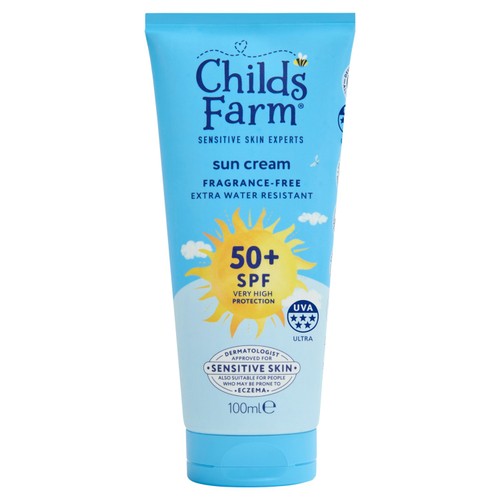
Childs Farm 50+ SPF Sun Cream Fragrance Free
Childs Farm
- • SPF50+ with 5-star UVA
- • Fragrance-free and alcohol-free
Honest caveat: It uses six organic (chemical) UV filters rather than minerals. That is not a problem the evidence supports worrying about for children over 6 months, but it is a different choice from a zinc cream. Do not use on babies under 6 months.
£12
ocado.com
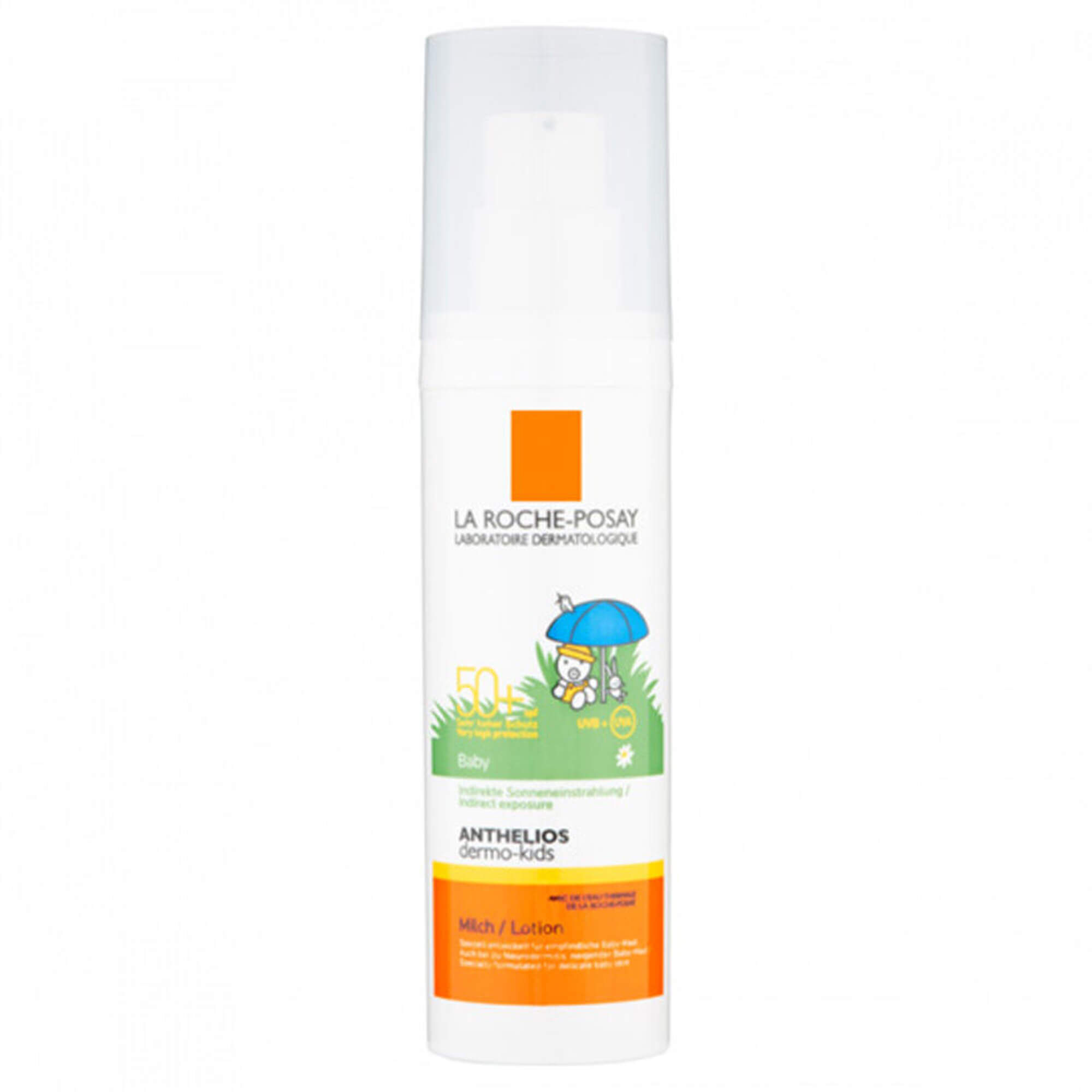
Anthelios Dermo-Pediatrics Baby Lotion SPF50+
La Roche-Posay
- • SPF50+, from 6 months
- • Titanium dioxide plus organic filters
Honest caveat: It is a hybrid, not a mineral sunscreen, and the ingredient list includes denatured alcohol, which some parents of eczema-prone babies prefer to avoid. 50ml at £17 (often discounted) is pricey per ml.
£17
laroche-posay.co.uk
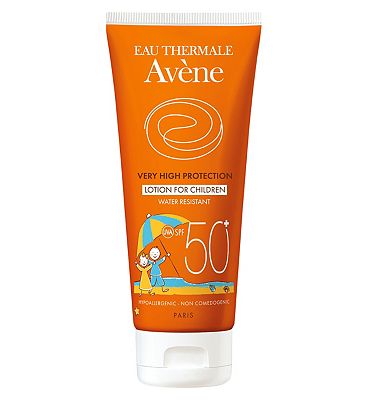
Avène Very High Protection Lotion for Children SPF50+
Avène
- • SPF50+ lotion for children
- • No fragrance in the ingredient list
Honest caveat: It uses four organic filters, one in nano form, and no minerals. Boots does not show a UVA star rating on the listing, so we cannot confirm the star level; the brand describes very broad UVA and UVB protection.
£16
boots.com

Green People Organic Children Scent Free Sun Cream SPF30
Green People
- • Non-nano zinc oxide plus two organic filters
- • No fragrance or essential oils
Honest caveat: SPF30 is the NHS minimum, not a margin above it, so thick, frequent application matters more. It is a hybrid formula, not mineral-only. Use within 6 months of opening.
£30
greenpeople.co.uk
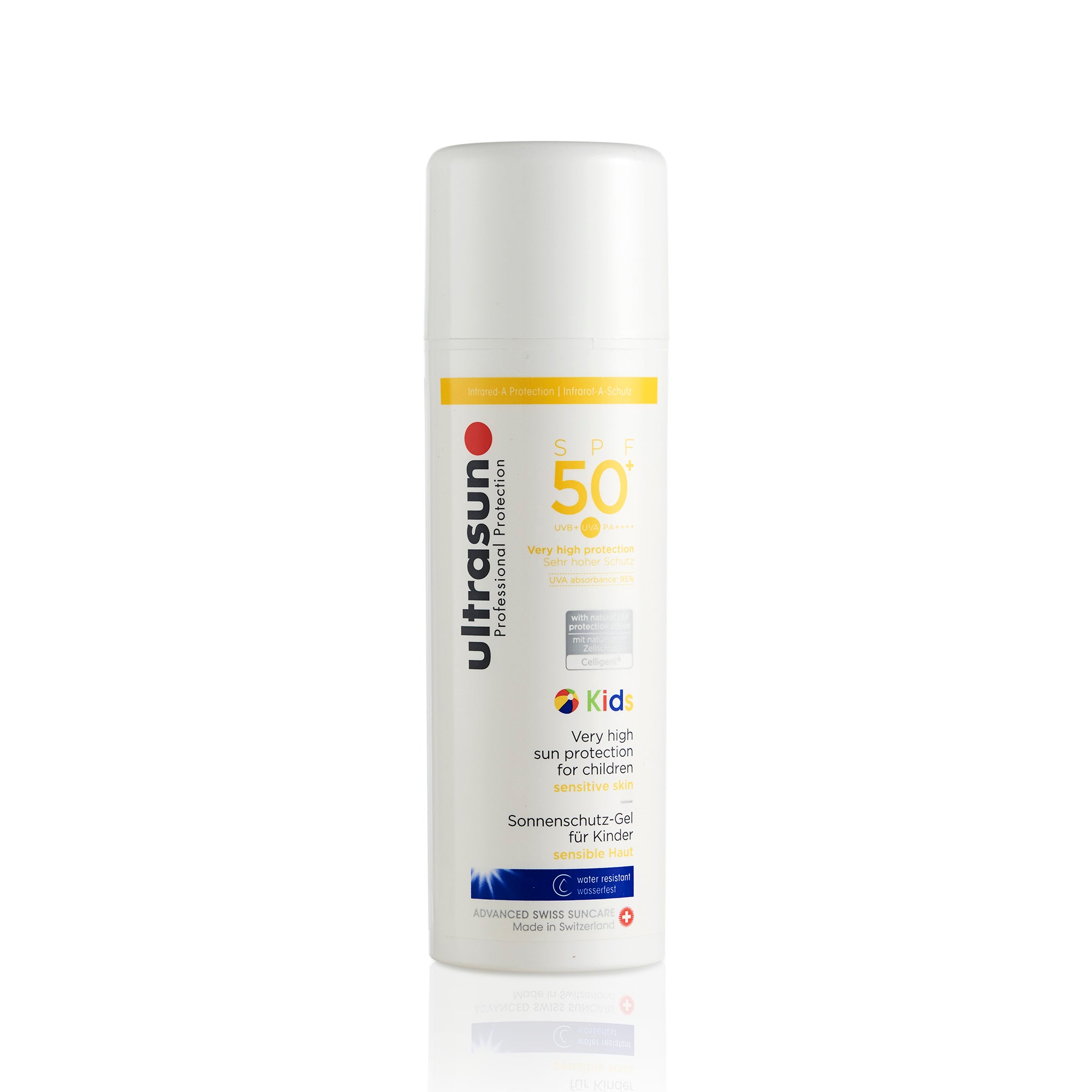
Ultrasun Kids SPF50+
Ultrasun
- • SPF50+, water-resistant
- • Photostable lotion
Honest caveat: Long-wear claims do not replace NHS advice to reapply every 2 hours and after swimming or towelling. At £33 for 150ml it is one of the dearer options.
£33
ultrasun.co.uk
We may earn a commission if you buy through our links. How we choose ›
How strong is the research? What our grades mean ›
- Strong research
- Independent certification or lab data for the specific claim.
- Promising research
- The material is well supported, but there is no product-level testing.
- Early research
- Little independent research.
- Mixed research
- Research findings disagree.
- £
- Under £20
- ££
- £20 to £79
- £££
- £80+
Short answer: the NHS says babies under 6 months should be kept out of direct sunlight, so shade, clothing and a hat come first and sunscreen is not recommended at that age. From 6 months, use SPF30 or higher with UVA protection (4 or 5 UVA stars), apply it generously and reapply every 2 hours. Mineral and chemical filters both work when used properly.
What does the NHS say about babies and sun?
The NHS guidance is short and clear:
- Under 6 months: keep babies out of direct sunlight. Use a parasol or sunshade on the pushchair, and do not cover the pushchair with a blanket, which can trap heat.
- 6 months and over: keep them out of the sun as much as possible, especially around the middle of the day, and use a sunscreen with SPF30 or higher that protects against both UVA and UVB.
- Reapply every 2 hours and straight after swimming, towelling or sweating, even if the label says water resistant.
- Look for at least 4-star UVA protection on UK packs, and use enough: the NHS sunscreen and sun safety page says an adult needs around 6 to 8 teaspoons to cover the whole body, so a baby still needs a generous layer.
- Check the expiry and the open-jar symbol, and keep using the vitamin D drops the NHS advises for under-fives.
Why sunburn in childhood matters
A meta-analysis of sunburn and melanoma found that sunburn at any age was associated with a higher melanoma risk, with childhood burns among the exposures studied. Babies' skin burns quickly, which is why the NHS puts shade and clothing first and sunscreen second.
What do SPF and UVA stars mean?
- SPF (sun protection factor) measures protection from UVB, the rays that mainly burn. SPF30 blocks roughly 97% in lab conditions; SPF50 roughly 98%. Most people apply far less than the lab amount, so a higher SPF gives some margin.
- UVA stars (Boots' 0 to 5 star system on UK packs) show how much UVA protection there is relative to UVB. UVA penetrates deeper and is linked to skin ageing and damage. A UVA circle logo means the UVA protection is at least a third of the SPF, the EU minimum.
Mineral or chemical: which is better for babies?
Both types are allowed in the UK under cosmetics law and both protect well when applied properly.
| Filter type | Examples | Pros | Cons |
|---|---|---|---|
| Mineral | Zinc oxide, titanium dioxide | Very low skin irritation; works on the skin surface | Can leave a white cast; harder to spread thickly and evenly |
| Organic ("chemical") | Bemotrizinol, avobenzone, octyl salicylate | Light, easy to spread, so people use enough | A small number of children react to particular filters |
| Hybrid | Zinc or titanium plus organic filters | Balance of texture and protection | Not mineral-only, if that matters to you |
Mineral filters are often recommended for very sensitive or eczema-prone skin because they rarely cause reactions. Concerns about nano zinc oxide getting into the body are not well supported: a study using human skin found very little zinc penetrated beyond the outer layer from commercial sunscreens. The most important thing is that the product is used thickly and often.
What else to look for
- Fragrance-free: fragrance is a common trigger of skin reactions in children; skip it where you can.
- Alcohol-free if your child has eczema or very dry skin.
- Age labelling: most baby sunscreens are labelled from 6 months. Do not use sunscreen on younger babies unless a doctor advises it.
- Patch test a new product on a small area first.
Our picks at a glance
| Product | Best for | Material/key feature | Price | Evidence grade |
|---|---|---|---|---|
| Ultrasun Mineral Baby SPF50 | Mineral-only for babies over 6 months | Zinc oxide and titanium dioxide, no perfume listed | £18 | Promising |
| Childs Farm 50+ SPF Sun Cream Fragrance Free | Budget family use | SPF50+, 5-star UVA, fragrance and alcohol-free | £12 | Strong |
| Anthelios Dermo-Pediatrics Baby Lotion SPF50+ | Very fair, reactive skin | Titanium dioxide plus organic filters, from 6 months | £17 | Promising |
| Avène Very High Protection Lotion for Children SPF50+ | Light lotion for sensitive skin | Organic filters, no fragrance listed | £16 | Promising |
| Green People Organic Children Scent Free Sun Cream SPF30 | Mostly organic, essential-oil-free | Non-nano zinc oxide plus two organic filters | £30 | Promising |
| Ultrasun Kids SPF50+ | Long days out with toddlers | Water-resistant, photostable lotion | £33 | Promising |
How we chose
We started from the NHS criteria (SPF30 or more, UVA protection) and checked each product's ingredient list on a live UK page. We favoured fragrance-free formulas, clear age labelling and a range of filter types and prices. Childs Farm gets a "Strong" grade because its pack shows a tested 5-star UVA rating at SPF50+; the others are "Promising" because UVA ratings were not shown on the pages we checked or the SPF is at the minimum. We could not find UK prices for Mustela's sun range on its UK store, and Riemann P20 Kids was out of stock or discontinued at the retailers we checked, so neither is included.
The picks
Ultrasun Mineral Baby SPF50: best mineral
Zinc oxide and titanium dioxide are the only UV filters, with no perfume in the ingredient list, in a 50ml tube sized for faces and hands. Caveat: 50ml does not go far on a whole body, it can leave a faint white cast, and the list includes a small amount of alcohol.
Childs Farm 50+ SPF Sun Cream Fragrance Free: best value
SPF50+ with the top 5-star UVA rating, fragrance-free and alcohol-free, labelled from 6 months, and £12 in supermarkets. Caveat: it uses six organic filters rather than minerals; that is a preference, not a safety issue for children over 6 months.
Anthelios Dermo-Pediatrics Baby Lotion SPF50+: for very fair skin
A pharmacy favourite made for children from 6 months, combining titanium dioxide with organic filters. Caveat: it contains denatured alcohol and it is a hybrid, not mineral-only.
Avène Very High Protection Lotion for Children SPF50+
A light lotion that spreads easily, which helps you use enough. Caveat: it uses only organic filters, one in nano form, and we could not see a UVA star rating on the Boots listing.
Green People Organic Children Scent Free Sun Cream SPF30
Non-nano zinc oxide with two modern organic filters, no fragrance or essential oils, and alcohol-free. Caveat: SPF30 is the NHS minimum, so apply thickly and often; for beach days, an SPF50 gives more margin.
Ultrasun Kids SPF50+
A water-resistant, photostable lotion for active children and long days out. Caveat: long-wear claims do not replace reapplying every 2 hours and after swimming, and it is one of the pricier options.
What to avoid
- Any sunscreen on babies under 6 months unless a doctor advises it. Use shade and clothing.
- Sunscreens below SPF30, or with no UVA rating or UVA logo.
- Fragranced "baby" products and those with essential oils such as lavender if your child has sensitive skin.
- Sprays as the only product for babies: it is hard to get an even, thick layer and easy to inhale.
- Out-of-date sunscreen, or a bottle opened longer ago than its open-jar symbol allows.
- Relying on sunscreen alone. Clothing, a wide-brimmed hat and shade do more.
If you want a mineral sun cream for yourself, see our mineral sunscreen guide. For other nursery basics, see our non-toxic nursery checklist.
Bottom line
For babies under 6 months, the answer is shade, not sunscreen. From 6 months, any SPF30+ with good UVA protection works if you use enough and reapply. Choose mineral (Ultrasun Mineral Baby) if your baby has sensitive skin or you prefer it, or a well-rated fragrance-free option like Childs Farm if you want value. The best sunscreen is the one you will actually apply generously, every 2 hours.
Frequently asked questions
Can I put sunscreen on my baby under 6 months?
+
The NHS says sunscreen is not recommended for babies under 6 months. Keep them out of direct sunlight, use a parasol or sunshade on the pushchair, and dress them in loose clothing and a hat. Do not cover the pushchair with a blanket, which can trap heat. If shade is impossible, ask a pharmacist or GP for advice.
What SPF should baby sunscreen be?
+
At least SPF30, with protection against both UVA and UVB. On UK packs look for 4 or 5 UVA stars or the UVA circle logo. Many parents choose SPF50 for extra margin, because most people apply less than the amount used in lab testing. Reapply every 2 hours and after water or towelling.
Is mineral sunscreen better for babies?
+
Mineral filters (zinc oxide and titanium dioxide) rarely irritate skin, so they suit sensitive or eczema-prone babies. Chemical filters are also permitted for children and spread more easily, which helps you apply enough. The best choice is the one you will use generously. Patch test any new product first.
Is nano zinc oxide a concern?
+
Research using human skin found very little zinc from commercial nano zinc oxide sunscreens got past the outer layer of skin. If you prefer to avoid nano particles, choose a product labelled non-nano, such as Green People's children's cream. Either way, avoid spray sunscreens on babies' faces, as they are easy to inhale.
Does sunscreen stop babies getting vitamin D?
+
The NHS advises vitamin D supplements for all children under 5 regardless, so you do not need to skip sunscreen for vitamin D. Babies fed infant formula may already get enough from the formula; check the NHS guidance or ask your health visitor.
How long does baby sunscreen last once opened?
+
Check the open-jar symbol on the pack, shown as a number with an M, such as 6M or 12M, for months after opening. Also check the expiry date. Green People, for example, advises using its children's SPF within 6 months of opening. Old sunscreen can lose protection, so replace it each summer.
Last updated