Skincare
Best Mineral Sunscreen UK (2026): Zinc Oxide SPFs Checked Ingredient by Ingredient
Quick answer
The best mineral sunscreen for most UK buyers is Ultrasun Mineral Face SPF50: its only UV filters are zinc oxide and titanium dioxide, it is fragrance-free and light enough for oily skin. Green People suits those wanting certified organic, non-nano zinc, while Heliocare and Ultra Violette offer tinted options that reduce white cast.
Our picks
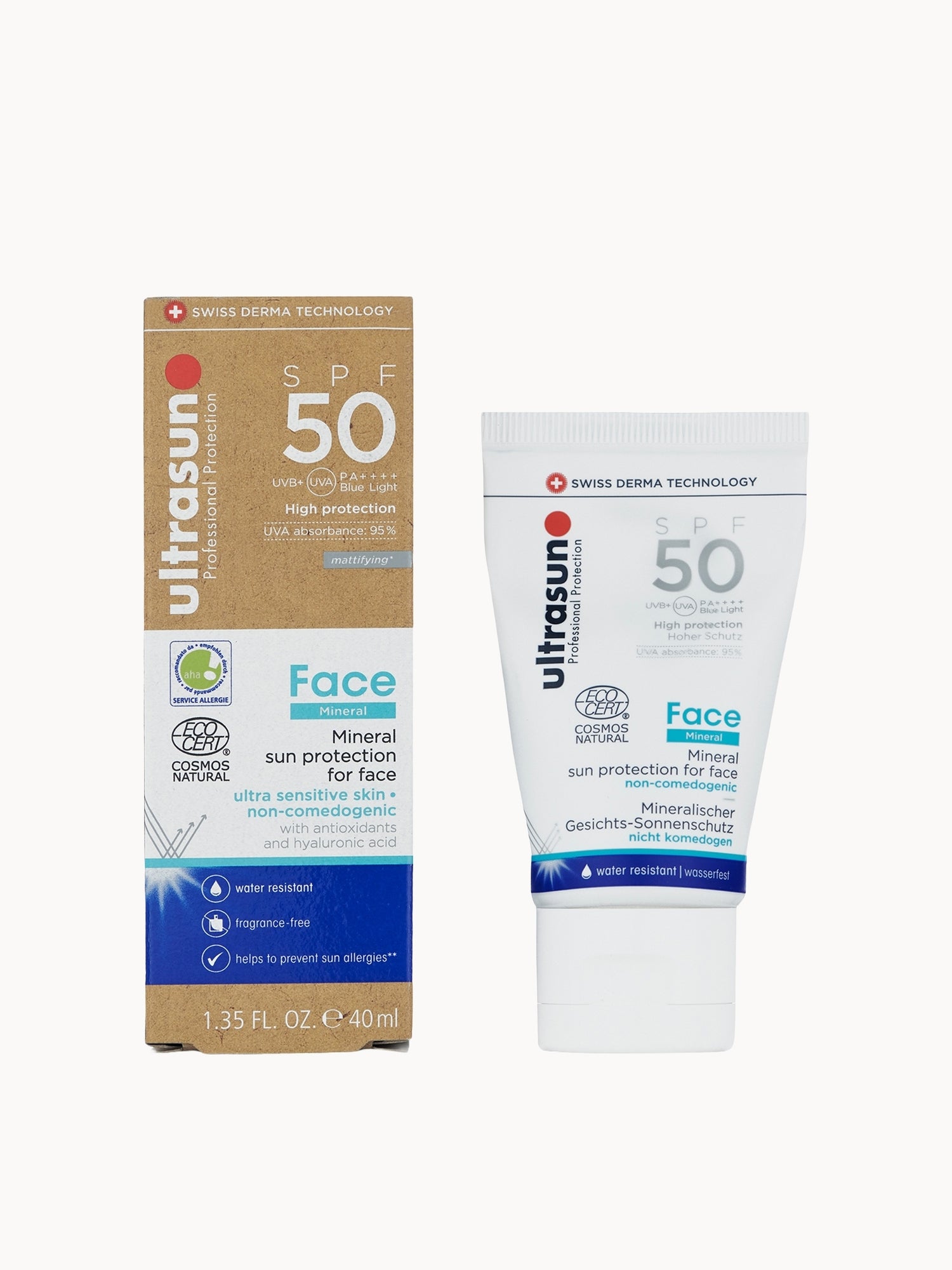
Ultrasun Mineral Face SPF50
Ultrasun
- • UV filters: zinc oxide and titanium dioxide only
- • No parfum or essential oils on the INCI list
Honest caveat: A 40ml tube at this price works out expensive if you apply the full amount the NHS recommends, and some white tint is possible on darker skin.
Ultrasun


Avène Very High Protection Mineral Fluid SPF50+
Avène
- • UV filters: zinc oxide and titanium dioxide (both nano)
- • Fragrance-free
Honest caveat: The ingredient list includes PTFE (a fluoropolymer, the same family as non-stick coatings) and both filters are nano-form. It also contains isopropyl palmitate, which some oily skin types find congesting. Stock is patchy at some UK retailers.
Avène


Green People Scent Free Mineral Sun Cream SPF30
Green People
- • Single UV filter: zinc oxide (non-nano)
- • Fragrance-free (rosemary appears as an extract, not an essential oil)
Honest caveat: SPF30 is the NHS minimum rather than a margin above it, and the sunflower, shea and argan base can feel heavy on an oily T-zone. The brand’s 30ml ’Scent Free Sun Cream’ is a different, hybrid formula with chemical filters, so check the name.
Green People
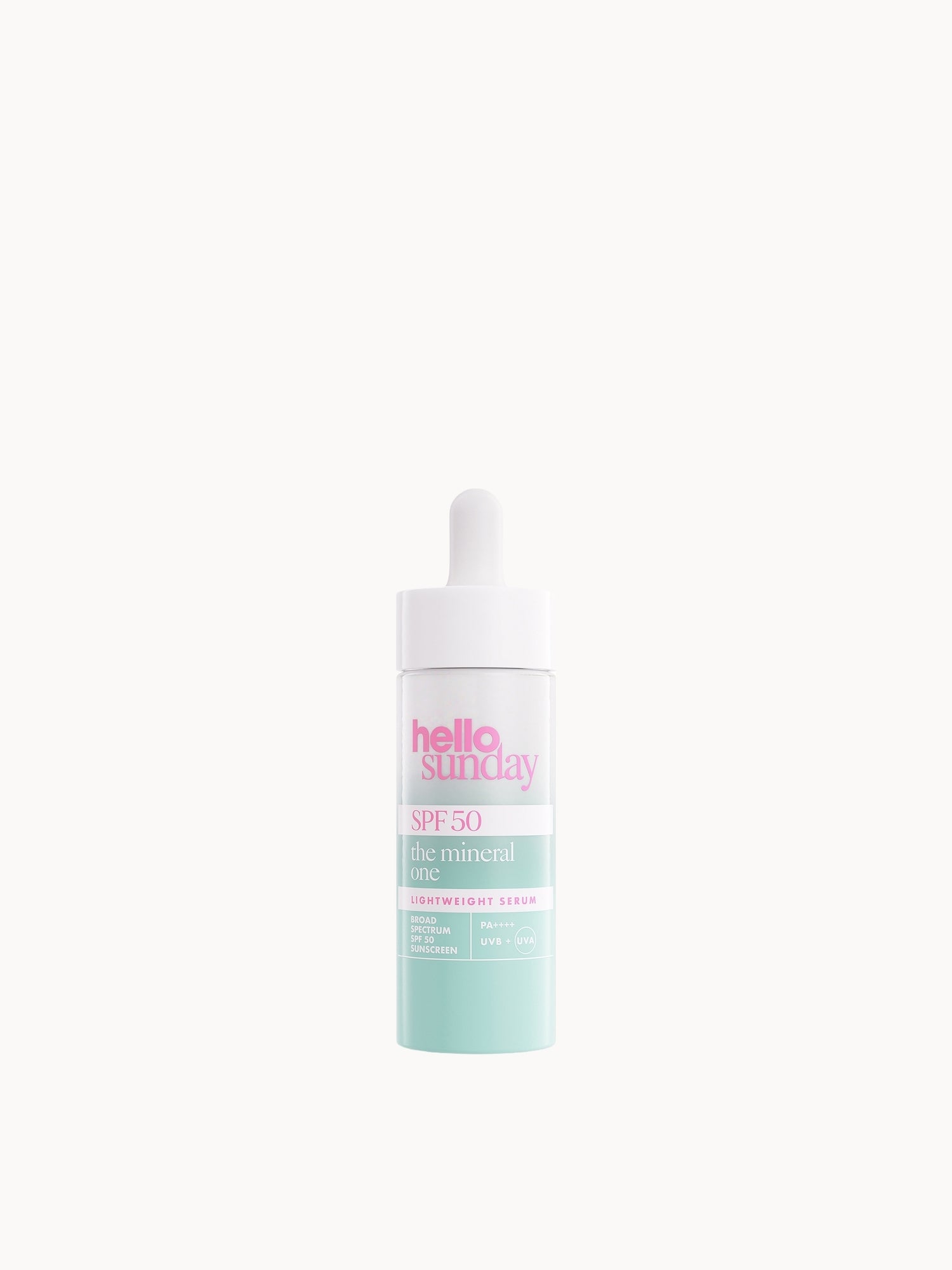
Hello Sunday The Mineral One SPF50
Hello Sunday
- • Single UV filter: zinc oxide
- • Not labelled (nano)
Honest caveat: A 30ml bottle runs out quickly at the NHS-recommended amount, and plant oils near the top of the list may not suit every oily, blackhead-prone face.
Hello Sunday
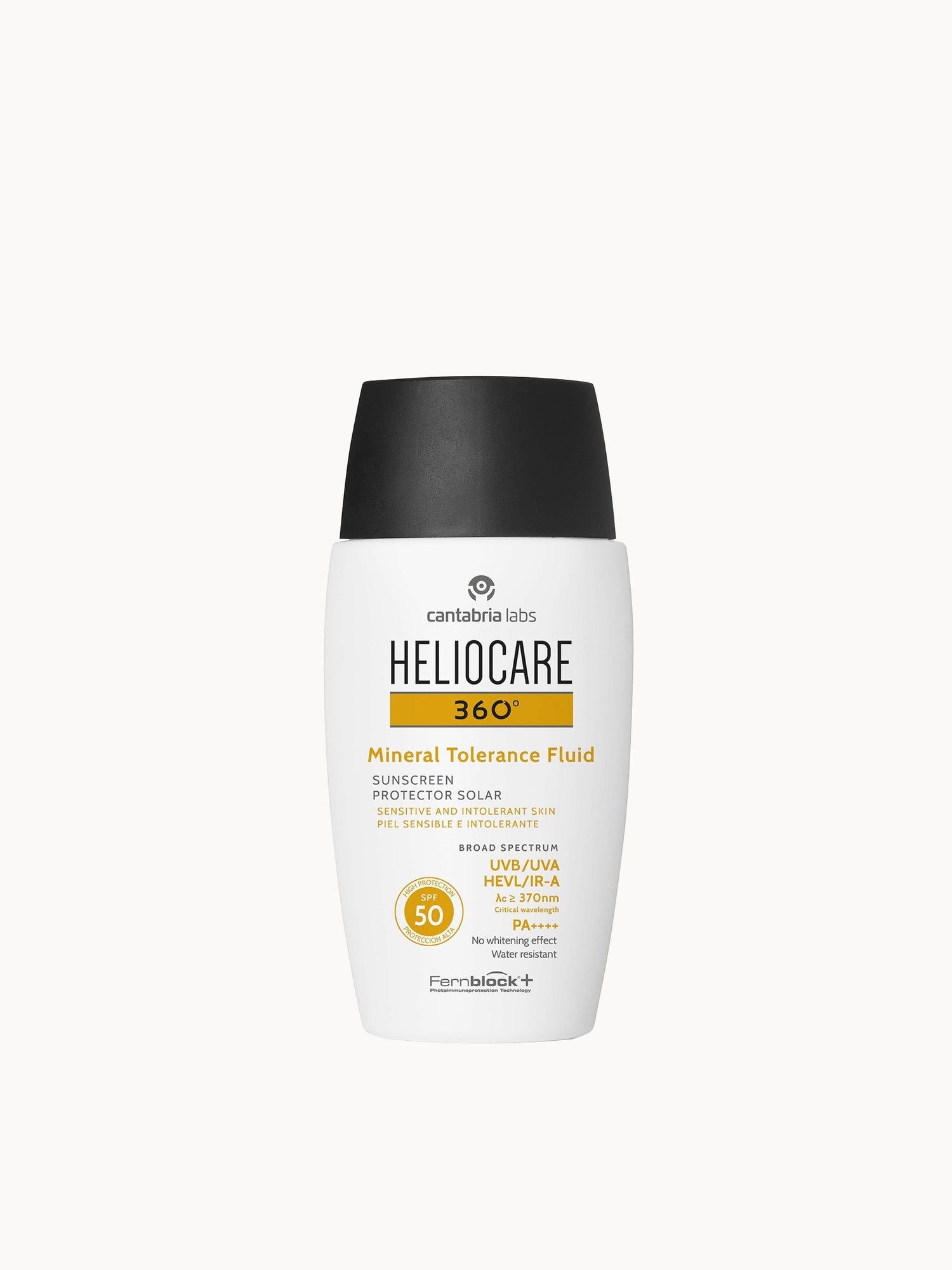
Heliocare 360 Mineral Tolerance Fluid SPF50
Heliocare
- • UV filters: titanium dioxide and zinc oxide (both nano)
- • Iron oxide tint helps hide white cast
Honest caveat: Both filters are nano-form, the tint will not suit every skin tone, and claims about its fern extract and ’beyond UV’ protection rest on limited evidence.
Heliocare
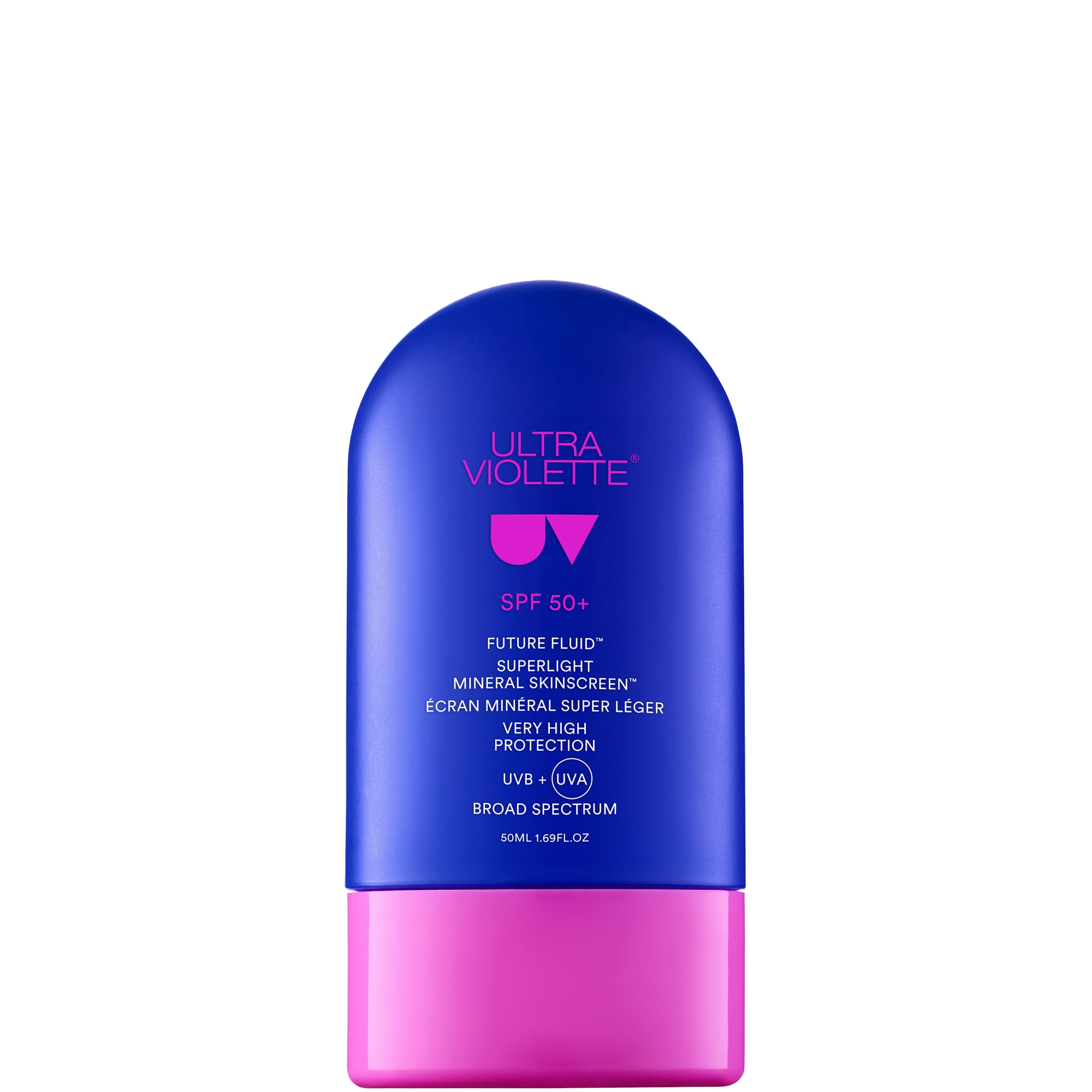
Ultra Violette Future Fluid SPF50+
Ultra Violette
- • Single UV filter: zinc oxide
- • Light tint with iron oxides
Honest caveat: It contains ethylhexyl methoxycrylene, a photostabiliser that is not an approved UV filter but supports the zinc. Check the ’Future Fluid’ name, because other Ultra Violette products such as Unblock Screen are hybrid formulas with octocrylene.
Ultra Violette
We may earn a commission if you buy through our links. How we choose ›
How strong is the research? What our grades mean ›
- Strong research
- Independent certification or lab data for the specific claim.
- Promising research
- The material is well supported, but there is no product-level testing.
- Early research
- Little independent research.
- Mixed research
- Research findings disagree.
- £
- Under £20
- ££
- £20 to £79
- £££
- £80+
Which mineral sunscreen is best in the UK?
A mineral sunscreen is one whose only UV filters are zinc oxide and/or titanium dioxide. We read the full ingredient list (INCI) of every candidate and dropped anything that also contained chemical filters, which ruled out several products sold as "sensitive" or "scent free". Six passed. Every one is fragrance-free, which matters as much as the filter type if your skin reacts easily.
Our picks at a glance
| Product | Best for | Material/key feature | Price | Evidence grade |
|---|---|---|---|---|
| Ultrasun Mineral Face SPF50 | Everyday face SPF, oily or sensitive skin | Zinc oxide + titanium dioxide, not nano-labelled, no parfum | £21.60 | Moderate |
| Avène Very High Protection Mineral Fluid SPF50+ | Very reactive skin | Zinc oxide + titanium dioxide (nano), fragrance-free | £15.96 | Moderate |
| Green People Scent Free Mineral Sun Cream SPF30 | Certified organic, face and body | Non-nano zinc oxide only, COSMOS Organic | £33.00 | Moderate |
| Hello Sunday The Mineral One SPF50 | Lightweight serum texture | Zinc oxide only, no parfum | £26.00 | Moderate |
| Heliocare 360 Mineral Tolerance Fluid SPF50 | Oily skin wanting a tint | TiO2 + ZnO (nano), iron oxide tint | £31.00 | Moderate |
| Ultra Violette Future Fluid SPF50+ | Make-up days, premium feel | Zinc oxide only, light tint | £38 | Moderate |
How we chose
- Filters checked on the label, not the marketing. We read the INCI list on a live UK product page. Only zinc oxide and titanium dioxide could appear as UV filters.
- Fragrance-free. Any product listing parfum or essential oils was excluded.
- SPF30 or higher. The NHS says to use at least SPF30 for UVB and at least 4-star UVA protection, or the UVA circle logo, which means the product meets the EU standard for UVA protection.
- Currently sold in the UK, across a range of prices and brands.
We have not lab-tested SPF ourselves. SPF and UVA figures come from the manufacturers' own testing, which UK law requires them to be able to back up (GOV.UK).
What does SPF, the UVA star rating and the UVA circle mean?
SPF measures protection against UVB, the rays mainly linked to sunburn. UVA rays penetrate deeper and are linked to skin ageing. In the UK you will see two UVA marks: the star rating (up to 5 stars, higher is better) and the UVA circle, which shows the product meets the EU minimum for UVA protection relative to its SPF. The NHS recommends looking for at least 4 stars or the circle. Many European pharmacy brands use the circle rather than stars, so a missing star rating is not a red flag on its own.
The number on the bottle assumes a generous layer. The NHS suggests around 6 to 8 teaspoons for an adult's whole body, reapplied every two hours and after swimming or towelling. Most people apply far less, which is the biggest real-world reason sunscreen underperforms.
Zinc oxide or titanium dioxide: which is better?
Both sit mostly on the skin's surface and absorb and scatter UV light.
- Zinc oxide covers a broad range of UVB and UVA, including longer UVA wavelengths. It is the more complete single filter.
- Titanium dioxide is strong against UVB and shorter UVA but weaker at the long end of UVA, so it is often paired with zinc.
A product using zinc alone, or zinc with titanium, is the usual way mineral sunscreens reach high UVA protection.
Are nano mineral filters a concern?
"Nano" means particles under 100 nanometres. UK and EU law requires nano ingredients to be labelled "(nano)" on the ingredient list (GOV.UK), so you can check. The EU's Scientific Committee on Consumer Safety (SCCS) has assessed nano titanium dioxide coatings for use on skin (SCCS opinion), and a human study found nano zinc oxide did not penetrate beyond the outer skin layers, even after bathing. The main open questions concern breathing in sprayed or powdered nano particles, which is one reason we picked creams and fluids rather than aerosols. If you prefer to avoid nano altogether, Ultrasun, Green People, Hello Sunday and Ultra Violette list zinc oxide without the nano tag.
Why do mineral sunscreens leave a white cast?
The same particles that scatter UV also scatter visible light. Larger particles and higher zinc levels look whiter. Two fixes work: tinted formulas with iron oxides (Heliocare and Ultra Violette here) and smaller, often nano, particles. On deeper skin tones a tinted mineral product is usually the most wearable option.
What does the evidence say about chemical filters?
This is where honesty matters. The SCCS reviewed two of the most debated chemical filters in 2021:
- Benzophenone-3 (oxybenzone): the SCCS judged it acceptable at up to 6% in face and hand products, but not at 6% in body sunscreens and sprays, where it set lower limits. It called the evidence on hormone disruption "inconclusive, and at best equivocal" (SCCS, benzophenone-3).
- Octocrylene: judged acceptable at up to 10% in most products, with a lower limit for propellant sprays when combined with other products (SCCS, octocrylene).
The EU then tightened the legal limits for both in Regulation (EU) 2022/1176. In short, regulators have not banned these filters, but they have reduced how much can be used. Choosing a mineral sunscreen is a reasonable way to lower exposure to filters that are still under review. It is not the case that chemical sunscreens are dangerous, and wearing any well-tested sunscreen properly is far better than skipping it.
The best mineral sunscreens in detail
Ultrasun Mineral Face SPF50: best overall
Zinc oxide and titanium dioxide are the only UV filters, neither is tagged nano, and there is no parfum. The base is coconut-derived esters, glycerin and hyaluronic acid, so it is light enough for oily skin. Caveat: at £21.60 for 40ml it is costly if you apply the full recommended amount daily, and a slight white tint is possible on darker skin.
Avène Very High Protection Mineral Fluid SPF50+: best for very reactive skin
Fragrance-free, mineral filters only and SPF50+, aimed at skin that reacts to chemical filters. Caveat: both filters are nano and the list includes PTFE, a fluoropolymer from the same family as non-stick coatings, plus isopropyl palmitate, which some oily skins find congesting. If avoiding PTFE is your reason for being here, choose another pick.
Green People Scent Free Mineral Sun Cream SPF30: best certified organic
Non-nano zinc oxide is the only filter, it is COSMOS Organic certified by the Soil Association and there is no fragrance. Caveat: SPF30 is the NHS minimum, and the sunflower, shea and argan base can feel rich on an oily T-zone. Green People's 30ml "Scent Free Sun Cream SPF30" is a different, hybrid formula that also contains chemical filters, so check the name.
Hello Sunday The Mineral One SPF50: best lightweight texture
A serum-like zinc-only sunscreen with no parfum, which is easy to layer under make-up. Caveat: a 30ml bottle goes quickly at the recommended dose, and it contains soybean and kukui nut oils.
Heliocare 360 Mineral Tolerance Fluid SPF50: best tinted fluid for oily skin
A thin, silicone-based fluid with titanium dioxide and zinc oxide and a light iron oxide tint that hides white cast. Caveat: both filters are nano, one tint will not match everyone, and claims about its fern extract go beyond the evidence.
Ultra Violette Future Fluid SPF50+: premium pick
A tinted, zinc-only fluid with a polished finish. Caveat: it contains ethylhexyl methoxycrylene, a photostabiliser rather than a UV filter, and other Ultra Violette products such as Unblock Screen are hybrids containing octocrylene, so check the exact name.
What to avoid
- "Scent free" or "sensitive" does not mean mineral. Always check the ingredient list for names such as octocrylene, avobenzone (butyl methoxydibenzoylmethane), bemotrizinol (bis-ethylhexyloxyphenol methoxyphenyl triazine) or diethylamino hydroxybenzoyl hexyl benzoate.
- Mineral products with added fragrance or essential oils. These defeat the point for sensitive or blackhead-prone skin.
- Relying on SPF in make-up or moisturiser alone. You rarely apply enough to reach the label SPF.
- Aerosol mineral sprays. Harder to apply evenly and they raise inhalation questions.
Bottom line
For most people with oily or sensitive skin, Ultrasun Mineral Face SPF50 is the best balance of mineral-only filters, no fragrance and a light finish. Choose Green People if certified organic and non-nano matter most, and a tinted option from Heliocare or Ultra Violette if white cast is the problem. Whatever you pick, the NHS advice still applies: apply generously, reapply every two hours, and use shade and clothing too.
Frequently asked questions
Is mineral sunscreen better than chemical sunscreen?
+
Not automatically. Both protect well when applied properly. Mineral filters (zinc oxide, titanium dioxide) suit sensitive skin and people who want to lower exposure to filters such as benzophenone-3 and octocrylene, which EU regulators have restricted to lower concentrations. Chemical filters often give a lighter, clearer finish. The sunscreen you will apply generously every day is the right one.
What SPF and UVA rating should I look for in the UK?
+
The NHS recommends at least SPF30 for UVB protection plus at least 4-star UVA protection, or the UVA circle logo, which shows the product meets the EU standard for UVA relative to its SPF. Many European pharmacy brands use the circle rather than stars, so check for either mark on the pack.
Is nano zinc oxide a problem?
+
Nano ingredients must be labelled '(nano)' in the UK, so you can choose. Human research has found nano zinc oxide stays in the outer skin layers rather than passing into the body, and the EU's scientific committee has assessed nano forms for skin use. The open questions mainly concern inhaling sprays and powders, so creams and fluids are the lower-exposure choice.
How do I avoid a white cast with mineral sunscreen?
+
Pick a tinted formula containing iron oxides, such as Heliocare 360 Mineral Tolerance Fluid or Ultra Violette Future Fluid, or a product using smaller particles. Apply in two thinner layers rather than one thick one, and let each settle for a minute. Deeper skin tones usually find tinted mineral fluids the most wearable.
Is mineral sunscreen good for oily, blackhead-prone skin?
+
It can be, if the base is light and fragrance-free. Look for fluids or lotions rather than rich creams, and check for heavier oils or esters such as isopropyl palmitate high in the list. Ultrasun Mineral Face and Heliocare Mineral Tolerance Fluid are the lightest of our picks.
How much sunscreen should I use?
+
The NHS suggests around 6 to 8 teaspoons to cover an adult's whole body, and reapplying every two hours and after swimming, sweating or towel drying. For the face and neck, a common rule of thumb is about a teaspoon. Applying too little is the most common reason sunscreen falls short of its label SPF.
Last updated