Trends Explained
Best Tongue Scraper UK (2026): Steel, Copper and Plastic Compared
Quick answer
The best tongue scraper for most people is a simple stainless steel U-shaped scraper, such as Smile Therapy's at £4.99: it is durable, washable and boilable. Tongue cleaning can make breath slightly fresher in the short term, but a 2019 Cochrane review rated the evidence very low certainty, so treat it as an add-on to brushing.
Our picks


Smile Therapy Stainless Steel Tongue Scraper
Smile Therapy
- • Stainless steel, wide U-shaped edge
- • Travel case included
Honest caveat: Evidence that any tongue scraper improves bad breath is limited and short term, and marketing claims about taste and digestion are not backed by good trials. A metal edge can nick the tongue if you press hard.
Smile Therapy

Curaprox CTC Tongue Cleaner Set
Curaprox
- • Single-blade and double-blade cleaner in one pack
- • Slim heads designed to reduce gagging
Honest caveat: These are plastic, so they wear and need replacing more often than metal. The ’successful against halitosis’ claim is the brand’s; the independent evidence for tongue scraping is low certainty.
Amazon · Curaprox
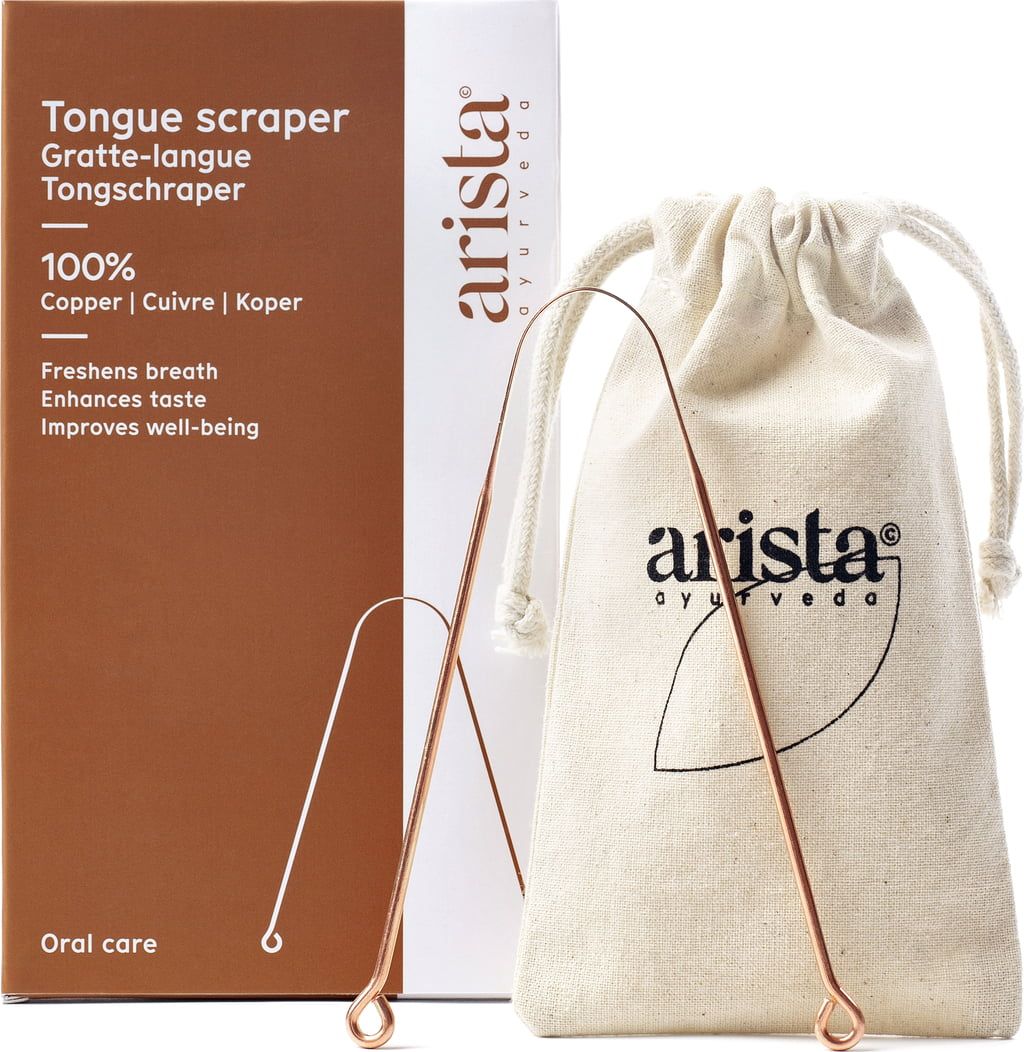
Arista Ayurveda Copper Tongue Scraper
Arista Ayurveda
- • Solid copper, U-shaped
- • Cotton storage pouch
Honest caveat: Copper tarnishes and needs drying and occasional polishing. Claims that copper is antibacterial on the tongue come from lab studies of copper surfaces, not trials showing better breath than steel.
Amazon · Arista Ayurveda


Whites Beaconsfield Stainless Steel Tongue Scraper
Whites Beaconsfield
- • Stainless steel
- • Two-piece design
Honest caveat: It costs £2 more than our top pick for the same material. As with every scraper, benefits for breath are short term and the evidence is low certainty.
Amazon · Whites Beaconsfield

Georganics Beechwood Tongue Scraper
Georganics
- • FSC-certified beechwood handle
- • Snap-off bristle head
Honest caveat: Despite the name, this has bristles, so it works more like a tongue brush. Wood cannot be boiled and must dry fully between uses, and it will need replacing every few months.
Amazon · Georganics
We may earn a commission if you buy through our links. How we choose ›
How strong is the research? What our grades mean ›
- Strong research
- Independent certification or lab data for the specific claim.
- Promising research
- The material is well supported, but there is no product-level testing.
- Early research
- Little independent research.
- Mixed research
- Research findings disagree.
- £
- Under £20
- ££
- £20 to £79
- £££
- £80+
What is the best tongue scraper in the UK?
A tongue scraper is a simple U-shaped or flat blade you draw from the back of your tongue to the tip to lift off the whitish coating of bacteria, dead cells and food debris that builds up there. That coating is one of the main sources of bad breath, and the NHS suggests gently cleaning your tongue once a day with a tongue scraper or cleaner.
Our top pick is the Smile Therapy Stainless Steel Tongue Scraper: steel is non-porous, lasts for years and can be boiled clean, and this one costs under £5 with a travel case. If you gag easily, the slimmer Curaprox plastic set is the better fit.
Our picks at a glance
| Product | Best for | Material/key feature | Price | Evidence grade |
|---|---|---|---|---|
| Smile Therapy Stainless Steel Tongue Scraper | Best overall | Stainless steel, travel case | £4.99 | Limited |
| Curaprox CTC Tongue Cleaner Set | Best if you gag easily | Plastic, single and double blade | £6.00 | Limited |
| Arista Ayurveda Copper Tongue Scraper | Best copper | Solid copper, cotton pouch | £5.40 | Limited |
| Whites Beaconsfield Stainless Steel Tongue Scraper | Alternative steel | Stainless steel, two-piece | £6.99 | Limited |
| Georganics Beechwood Tongue Scraper | Best plastic-light brush style | FSC beechwood handle, bristle head | £4.90 | Limited |
Every pick is graded limited because the evidence is about tongue cleaning in general, not about any one product, and that evidence is low certainty (see below).
How we chose
We checked live UK product pages and prices in October 2026 and favoured:
- Easy-to-clean materials. Stainless steel and copper can be washed in hot water; plastic and wood wear out sooner.
- A comfortable edge and shape. A smooth, rounded edge scrapes without cutting; a slimmer head reaches further back for people with a sensitive gag reflex.
- Clear UK availability from a brand site or established UK retailer, not anonymous marketplace listings.
- No inflated claims. We have noted where brands claim benefits (better taste, digestion, "detox") that the research does not support.
Does tongue scraping actually work?
It helps a little, for a short time, and the evidence is weak. The most rigorous summary is a 2019 Cochrane review of all interventions for bad breath. For mechanical tongue cleaning versus none it found a small improvement in dentist-rated breath odour (2 trials, 46 people) but rated the evidence very low certainty (Kumbargere Nagraj et al., Cochrane 2019). This review replaced an earlier Cochrane review on tongue scraping from 2006, which was withdrawn in 2016 (Outhouse et al.).
A separate systematic review found that all five included studies showed a positive effect of tongue cleaning (scraping or brushing) on breath odour and tongue coating on top of toothbrushing, but there was not enough data to say it helps chronic bad breath (Van der Sleen et al., 2010).
In plain terms: scraping removes visible coating and many people notice fresher morning breath. It is cheap and low risk. It will not fix bad breath caused by gum disease, decay, sinus problems or reflux, so persistent bad breath is a reason to see a dentist.
Scraper or toothbrush: which is better?
The systematic review above grouped tongue scrapers and tongue brushes together, and both reduced coating and odour compared with toothbrushing alone (Van der Sleen et al., 2010). There is no strong evidence that a scraper beats a brush. In practice a flat blade covers the tongue in fewer strokes and many people find it triggers less gagging than a toothbrush head. If you already brush your tongue well and are happy, a scraper is an optional upgrade, not an essential.
Our picks in detail
1. Smile Therapy Stainless Steel Tongue Scraper: best overall
A wide U-shaped stainless steel blade with handles at each end and a carry case, from a UK oral-care seller. Steel does not absorb bacteria, can be washed with hot soapy water or boiled, and should last for years. Caveat: the brand's "supports digestive well-being" and "enhances taste" claims are not backed by good trials, and a metal edge can scratch if you press too hard.
2. Curaprox CTC Tongue Cleaner Set: best if you gag easily
The Swiss brand's twin pack includes a single-blade and a double-blade cleaner with slim heads designed to reach the back of the tongue with less gagging. It is a sensible way to find out which shape you prefer before buying a metal one. Caveat: plastic wears and should be replaced when edges roughen; the brand's halitosis claims go beyond the independent evidence.
3. Arista Ayurveda Copper Tongue Scraper: best copper
Copper tongue scrapers come from Ayurvedic tradition. This one is solid copper with a cotton pouch and costs under £6 from a UK natural-beauty retailer. Caveat: copper tarnishes and needs drying and occasional polishing; claims that copper is "antibacterial" come from studies of copper surfaces in the lab, not from trials showing fresher breath than steel. Avoid if you have a copper allergy.
4. Whites Beaconsfield Stainless Steel Tongue Scraper: alternative steel
A two-piece stainless steel scraper from a UK whitening and oral-care brand. It does the same job as our top pick and is a good option if you are already ordering from this brand. Caveat: it costs £2 more for the same material.
5. Georganics Beechwood Tongue Scraper: best brush-style
An FSC-certified beechwood handle with a snap-off bristle head, sold by a UK brand that takes the bristles back for recycling. Good if metal edges feel harsh. Caveat: despite the name, it is a tongue brush rather than a blade, wood cannot be boiled and must dry fully, and it needs replacing every few months.
How do you use a tongue scraper?
- Brush your teeth first, then stick your tongue out and relax.
- Place the scraper as far back as is comfortable.
- Draw it forward to the tip with light pressure. Rinse the scraper.
- Repeat 2 to 4 times across the width of the tongue. Do it once a day, ideally in the morning.
- Wash the scraper with hot water and let it dry.
What to avoid
- Pressing hard or scraping until it stings. The goal is to lift the coating, not to scrape the tongue's surface. Stop if you see bleeding.
- Sharp or rough edges. Run a finger along the edge before first use. Replace plastic scrapers once the edge roughens.
- Ignoring persistent bad breath. If bad breath lasts despite good brushing, flossing and tongue cleaning, see a dentist, as the NHS advises. A white tongue that will not scrape off, a painful patch or a sore that lasts more than three weeks also needs checking.
- Over-the-top claims. No good evidence shows tongue scraping "detoxes", boosts digestion or improves immunity.
Bottom line
A tongue scraper is a cheap, low-risk extra that can make morning breath noticeably fresher, but the research is small and low certainty. Choose stainless steel for durability and easy cleaning, a slim plastic head if you gag easily, or copper if you like the tradition. Keep brushing twice a day with fluoride toothpaste and cleaning between your teeth, because those do more for your mouth than any scraper.
Frequently asked questions
Do dentists recommend tongue scrapers?
+
Many do, as part of a routine for fresher breath. The NHS suggests gently cleaning your tongue once a day with a tongue scraper or cleaner. The research behind it is limited: a 2019 Cochrane review found a small improvement in breath odour from tongue cleaning but rated the evidence very low certainty. It is an add-on to brushing and flossing, not a replacement.
Is a copper or stainless steel tongue scraper better?
+
There is no good evidence that one cleans better. Stainless steel is cheaper, does not tarnish and can be boiled. Copper is traditional in Ayurveda and has antibacterial properties on lab surfaces, but no trials show fresher breath than steel. Copper needs drying and polishing, and should be avoided if you have a copper allergy.
How often should you scrape your tongue?
+
Once a day is enough for most people, usually in the morning after brushing your teeth, which matches NHS advice. Two to four light strokes from back to front are plenty. Scraping more often or harder does not help and can make the tongue sore.
Can tongue scraping cure bad breath?
+
No single tool cures bad breath. Scraping removes tongue coating, a common source of odour, and can freshen breath for a few hours. Persistent bad breath often comes from gum disease, decay, dry mouth, sinus problems or reflux, so if it continues despite good oral hygiene, see a dentist or GP.
Is it better to scrape or brush your tongue?
+
Both remove coating. A systematic review grouped scrapers and tongue brushes together and found both helped compared with toothbrushing alone, with no clear winner. Many people find a flat scraper quicker and less likely to trigger gagging than a toothbrush head. If you already brush your tongue thoroughly and are happy with your breath, a scraper is optional.
Can tongue scraping be harmful?
+
It is low risk when done gently. Pressing too hard can scratch the tongue or cause soreness, and scraping too far back can trigger gagging. Stop if you see bleeding. Do not try to scrape off a white or red patch that will not budge, or a sore lasting more than three weeks; get it checked by a dentist or GP.
Last updated