Women's Health
Best Ovulation Tests and Fertility Trackers UK (2026)
Part of Women's health ›Quick answer
For most people, a simple LH ovulation test is enough: Boots own-brand sticks cost about £1.45 a test, and Clearblue Digital shows a clear smiley face. Clearblue Advanced flags more fertile days, Proov confirms ovulation, and Mira gives numbers for irregular cycles. None of these work as contraception; only a certified app such as Natural Cycles is approved for that.
Our picks
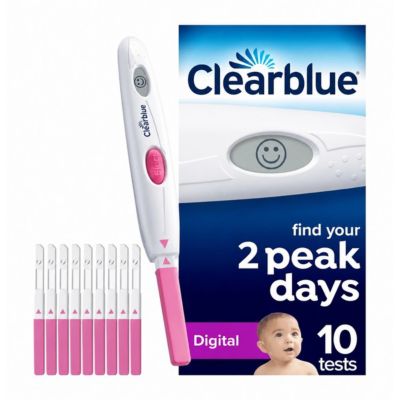
Clearblue Digital Ovulation Test Kit (10 tests)
Clearblue
- • Detects the LH surge
- • Smiley face for your 2 most fertile days
Honest caveat: It only finds the LH surge, which shows your 2 best days but not whether you actually ovulated. Each test costs about £2, far more than strips. Not a contraceptive.
£20
boots.com
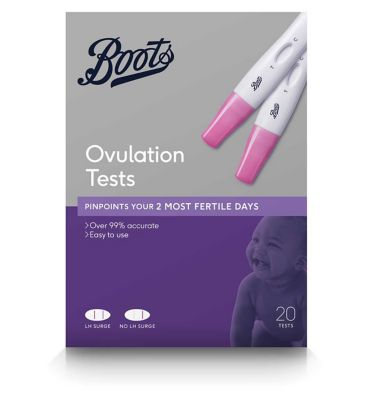
Boots Ovulation Tests (20 pack)
Boots
- • About £1.45 per test
- • 20 tests for 1 to 2 cycles
Honest caveat: You compare two lines yourself, which some people find confusing. Boots does not publish the sensitivity level. Online-only bulk strips are cheaper still.
£29
boots.com
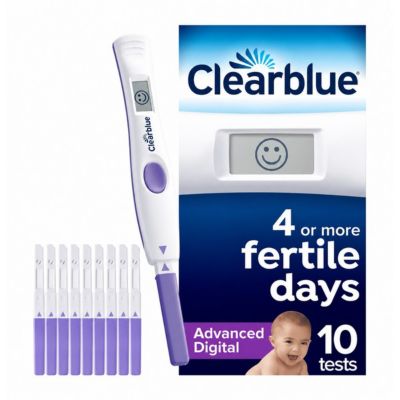
Clearblue Advanced Digital Ovulation Test Kit (10 tests)
Clearblue
- • Tracks oestrogen and LH
- • Typically shows 4 or more fertile days
Honest caveat: Dearer than the basic digital test (around £32 at Tesco and Sainsbury’s; Boots shows the price at checkout). Like all LH tests it does not confirm ovulation, and readings can be unclear with PCOS.
£32
boots.com

Proov Predict & Confirm Ovulation Kit
Proov
- • 15 LH plus 5 PdG strips
- • Confirms ovulation at home
Honest caveat: This is a US company shipping to the UK, so delivery takes longer and returns are harder. A positive PdG result suggests ovulation but does not guarantee pregnancy. If you have tried for a year, see a GP.
£30
proovtest.com

Mira Hormone Monitor: Max Kit
Mira
- • Numeric LH, E3G and PdG readings
- • Useful for irregular cycles
Honest caveat: Expensive, and refill wands add ongoing cost. Numbers can be over-read; they are not a diagnosis. Little independent research compares it with simple LH tests. Ships from a US-based store.
£200
shop.miracare.com

Tempdrop 2.0 Advanced Fertility Monitor
Tempdrop
- • Worn on the arm overnight
- • Shows ovulation after it happens
Honest caveat: Temperature rises after ovulation, so it confirms ovulation in hindsight rather than predicting it. It is not certified as a contraceptive. The NHS does not officially recommend any fertility app or monitor.
£199
tempdrop.com
We may earn a commission if you buy through our links. How we choose ›
How strong is the research? What our grades mean ›
- Strong research
- Independent certification or lab data for the specific claim.
- Promising research
- The material is well supported, but there is no product-level testing.
- Early research
- Little independent research.
- Mixed research
- Research findings disagree.
- £
- Under £20
- ££
- £20 to £79
- £££
- £80+
Ovulation tests can take some of the guesswork out of trying for a baby, but they are not essential. The NHS says more than 8 in 10 couples where the woman is under 40 will conceive within a year if they have regular unprotected sex every 2 or 3 days. Tests are most useful if you have limited time together, irregular cycles or simply want more information.
See a GP if you have not conceived after a year of trying, or sooner if you are 36 or over, have irregular or absent periods, or know of a possible fertility problem.
How do ovulation tests work?
- LH tests detect the surge of luteinising hormone (LH) in urine, which happens about 24 to 36 hours before an egg is released. A positive result marks your 2 most fertile days.
- Dual-hormone tests also track oestrogen, which rises before LH, so they show extra "high fertility" days earlier.
- PdG tests detect a breakdown product of progesterone, which rises after ovulation. They confirm that ovulation probably happened.
- Temperature trackers record the small rise in body temperature after ovulation. They confirm ovulation in hindsight but cannot warn you in advance.
What does the evidence say?
| Claim | Evidence grade | Best evidence |
|---|---|---|
| LH tests detect the hormone surge before ovulation | Promising | Manufacturer data (over 99% accurate at detecting the surge in lab testing) |
| Timing sex with ovulation tests raises pregnancy rates | Early | Cochrane review, 2015 |
| Temperature charting alone predicts ovulation | Early | Temperature rises only after ovulation |
| Fertility apps and trackers work as contraception | Mixed research | NHS; NICE MIB244 |
The Cochrane review on timed intercourse found the evidence was low quality. Pooled trials showed no clear difference in clinical pregnancy rates when couples used ovulation prediction, and one study looked at stress. So tests help you understand your cycle, but frequent sex across the cycle is still the simplest approach.
Can ovulation tests or trackers be used as contraception?
No. Ovulation tests, Mira, Proov and Tempdrop are designed to help you conceive and are not certified as contraceptives. The NHS says fertility awareness methods are 91 to 99% effective with perfect use but only 76% with typical use, and that no apps or monitors are officially recommended by the NHS.
The exception is Natural Cycles, an app with a thermometer that is CE-marked as a medical device for contraception. NICE notes it has not been directly compared with other methods, and the ASA ruled in 2018 that calling it "highly accurate" was misleading. Most other contraception is free on the NHS and more reliable in typical use. Talk to a GP or sexual health clinic if avoiding pregnancy matters to you.
Our picks at a glance
| Product | Best for | Material/key feature | Price | Evidence grade |
|---|---|---|---|---|
| Ovulation testBoots Ovulation Tests (20 pack) | Lowest cost per test | LH test sticks | £29 | Promising |
| Ovulation testClearblue Digital Ovulation Test Kit (10 tests) | Easy-to-read results | LH, smiley face display | £20 | Promising |
| Ovulation testClearblue Advanced Digital Ovulation Test Kit (10 tests) | Spotting more fertile days | Oestrogen plus LH | £32 | Promising |
| Ovulation testProov Predict & Confirm Ovulation Kit | Confirming ovulation happened | 15 LH plus 5 PdG strips | £30 | Promising |
| Ovulation testMira Hormone Monitor: Max Kit | Irregular cycles | Numeric LH, E3G, PdG | £200 | Early |
| Fertility trackerTempdrop 2.0 Advanced Fertility Monitor | Shift workers charting temperature | Overnight arm sensor | £199 | Early |
How we chose
We looked at the main types of home fertility testing sold to UK buyers, checked live prices at Boots and brand stores, and worked out the cost per test. We graded the evidence for what each type claims to do, not the marketing. We did not list cheap unbranded strips from marketplaces because we could not verify a UK seller and sensitivity. One Step strips are popular but we could only find them through marketplace sellers, so they are not listed.
Boots Ovulation Tests (20 pack)
Our budget pick: a plain LH test stick at about £1.45 a test, enough for one or two cycles. Caveat: you compare two lines yourself, which can be confusing when the test line is nearly as dark as the control. Boots does not state the sensitivity level. A 7-pack (£10.99) is available if you want to try them first.
Clearblue Digital Ovulation Test Kit (10 tests)
Our top pick for most people. It detects the LH surge and shows a smiley face for your 2 most fertile days, which removes any guesswork. Caveat: at about £2 a test it costs more than line sticks, and it does not confirm that ovulation happened.
Clearblue Advanced Digital Ovulation Test Kit (10 tests)
Tracks oestrogen as well as LH, so it typically shows 4 or more fertile days per cycle, giving more time to try. Caveat: around £32 for 10 tests, and results can be harder to read if you have PCOS (polycystic ovary syndrome), where LH can be high throughout the cycle.
Proov Predict & Confirm Ovulation Kit
Combines 15 LH strips with 5 PdG strips. The PdG tests check that progesterone has risen after ovulation, which a standard ovulation test cannot tell you. Caveat: Proov ships from the US, so delivery is slower and returns harder. Confirming ovulation is useful information but not a fertility diagnosis.
Mira Hormone Monitor: Max Kit
A small analyser that reads test wands and gives number values for LH, oestrogen and a progesterone marker. It can make an irregular pattern easier to follow and to share with a doctor. Caveat: expensive upfront, with ongoing wand costs, and there is little independent research showing it helps people conceive faster than simple LH tests.
Tempdrop 2.0 Advanced Fertility Monitor
A sensor worn on the upper arm overnight that records your temperature trend, so you do not have to wake at the same time each day. Caveat: temperature only rises after ovulation, so it confirms ovulation in hindsight. It is not a contraceptive.
Who should be careful with ovulation tests?
- PCOS or irregular cycles: LH can be raised for long stretches, giving repeated positives. Numeric monitors or GP advice may be more useful.
- Perimenopause: rising hormone levels can give misleading results.
- Fertility drugs: medicines containing LH or hCG can affect readings. Ask your clinic.
- Recent pregnancy, miscarriage or stopping hormonal contraception: cycles may be irregular for a while.
- Stress: if testing becomes a source of anxiety, it is fine to stop and simply have sex every 2 or 3 days, as the NHS suggests.
What to look for in an ovulation test
- Cost per test, since you may test for 5 to 10 days a cycle.
- Easy-to-read results if faint lines worry you.
- What it measures: LH only, LH plus oestrogen, or confirmation with PdG.
- A UK seller for quicker delivery and easier returns.
- Honest claims: be wary of anything implying it doubles as contraception.
Bottom line
Start simple. The NHS says sex every 2 or 3 days gives most couples a good chance within a year. If you want a test, Boots own-brand sticks are the cheapest way to find your LH surge, Clearblue Digital is the easiest to read, and Proov adds confirmation that ovulation happened. Keep Mira and Tempdrop for specific needs such as irregular cycles or shift work, and never rely on any of them as contraception unless the product is certified for that use.
Frequently asked questions
What is the most accurate ovulation test in the UK?
+
Most mainstream LH tests, including Clearblue and Boots, claim over 99% accuracy at detecting the LH surge in lab testing. The bigger difference is ease of reading: digital tests show a clear symbol, while sticks need you to compare lines. None confirm ovulation; for that you need a PdG test or temperature charting.
When should I start using ovulation tests?
+
Start a few days before you expect to ovulate. For a 28-day cycle, that is usually around day 10 or 11, counting the first day of your period as day 1. Follow the leaflet for your cycle length, and test at the same time each day.
Can I use ovulation tests to avoid pregnancy?
+
No. Ovulation tests are designed to help you conceive, not to prevent pregnancy. The NHS says no apps or monitors are officially recommended. Natural Cycles is CE-marked as a contraceptive app, but typical-use effectiveness is lower than most NHS contraception. Speak to a GP or sexual health clinic.
Do ovulation tests work if I have PCOS?
+
They can be unreliable. People with PCOS may have high LH levels for much of the cycle, giving several positive results. A numeric monitor or PdG test may help, but the most useful step is speaking to a GP, who can check hormone levels and offer support.
Are digital ovulation tests better than strips?
+
Not more accurate, just easier to read. Digital tests remove the need to judge faint lines, which many people find reassuring. Strips cost much less per test. If you are comfortable reading lines, strips or Boots sticks are better value.
How long should we try before seeing a GP?
+
The NHS suggests seeing a GP if you have not conceived after a year of trying. Women aged 36 or over, and anyone aware of a possible fertility problem, should go sooner. A GP can arrange basic tests for both partners.
Last updated


