Trends Explained
Best Hydroxyapatite Toothpaste UK (2026): With and Without Fluoride, Research reviewed
Quick answer
The best hydroxyapatite toothpaste for most UK buyers is one that also contains 1,350 to 1,500ppm fluoride, such as PÄRLA Pro Whitening or Georganics Fresh Mint. Trials suggest hydroxyapatite alone can match fluoride for decay, but evidence is thinner and largely manufacturer-linked. If you go fluoride-free, choose a transparent formula such as Dimples or truthpaste.
Our picks
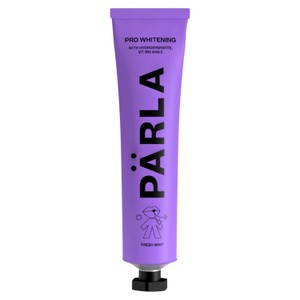
PÄRLA Pro Whitening Toothpaste 75ml
PÄRLA
- • 1,450ppm fluoride (sodium monofluorophosphate) plus hydroxyapatite
- • No sodium lauryl sulfate (SLS)
Honest caveat: The hydroxyapatite percentage is not disclosed, and the ’up to 65% stronger’ enamel claim comes from the brand, not an independent trial of this tube. It still contains a foaming agent (cocamidopropyl betaine) and added vitamins with no proven benefit in toothpaste.
Amazon · PÄRLA

Georganics Toothpaste with Hydroxyapatite Fresh Mint (Fluoride)
Georganics
- • 1,350ppm fluoride, the bottom of the NHS adult range
- • Hydroxyapatite and erythritol
Honest caveat: Calcium carbonate is the first ingredient and the hydroxyapatite percentage is not disclosed, so treat the hydroxyapatite as a minor extra. It contains peppermint oil and its fragrance allergens (limonene, linalool, citronellol).
Amazon · Georganics


Spotlight Oral Care Sensitivity + Rebuilding Toothpaste
Spotlight Oral Care
- • 1,450ppm sodium fluoride
- • Potassium citrate for sensitivity
Honest caveat: Hydroxyapatite is near the end of the ingredient list, so the amount is likely small. It contains titanium dioxide (a whitening pigment) and saccharin, and it is labelled for adult use only.
Spotlight Oral Care

Dimples Mint Hydroxyapatite Toothpaste 75ml
Dimples
- • Fluoride-free, micro hydroxyapatite (brand states)
- • Xylitol, stevia, glycolipid surfactant
Honest caveat: Without fluoride you lose a proven anti-decay ingredient, and the hydroxyapatite percentage is not stated, so we cannot match it to the 10% formulas used in trials. The bioplastic tube is from sugar cane but is still plastic.
Amazon · Dimples


truthpaste Hydroxyapatite Peppermint 100ml
truthpaste
- • Hydroxyapatite content stated: 5%
- • Fluoride-free, SLS-free
Honest caveat: 5% is half the 10% used in the main trials, and there is no fluoride. Cinnamon bark and clove oils are known mouth irritants for some people, and the jar-and-spatula format is less hygienic than a tube if shared.
Amazon · truthpaste


Gutology Hydroxyapatite Toothpaste 120ml
Gutology
- • Hydroxyapatite fourth on the ingredient list
- • Fluoride-free, SLS-free
Honest caveat: At £16 it is the priciest pick per tube and there is no fluoride. The ’Lactobacillus ferment’ is marketed for the oral microbiome, but we found no independent trial of this toothpaste for any outcome.
Amazon · Gutology
Georganics Kids Fluoride-Free Toothpaste with Hydroxyapatite Strawberry
Georganics
- • Fluoride-free with hydroxyapatite and erythritol
- • Non-foaming, strawberry flavour
Honest caveat: NHS advice is a fluoride toothpaste (at least 1,000ppm) for every child, and the children’s trial used a different, 10% hydroxyapatite paste three times a day. Discuss with your child’s dentist before switching.
Amazon · Georganics
We may earn a commission if you buy through our links. How we choose ›
How strong is the research? What our grades mean ›
- Strong research
- Independent certification or lab data for the specific claim.
- Promising research
- The material is well supported, but there is no product-level testing.
- Early research
- Little independent research.
- Mixed research
- Research findings disagree.
- £
- Under £20
- ££
- £20 to £79
- £££
- £80+
What is the best hydroxyapatite toothpaste in the UK?
Hydroxyapatite (HAp) is a calcium phosphate mineral, the same one that makes up most of your tooth enamel. In toothpaste it is used to fill tiny surface defects and to help repair early, chalky "white spot" decay. It has gone mainstream on social media as a "fluoride alternative", but you do not have to choose: several UK toothpastes now contain both.
Our overall pick is PÄRLA Pro Whitening Toothpaste, because it adds hydroxyapatite to the full 1,450ppm adult fluoride dose. If you have already decided to go fluoride-free, Dimples is our pick for a short, dentist-designed formula, and truthpaste is the only fluoride-free option we found that tells you how much hydroxyapatite is inside.
Our picks at a glance
| Product | Best for | Material/key feature | Price | Evidence grade |
|---|---|---|---|---|
| PÄRLA Pro Whitening Toothpaste 75ml | Best overall (fluoride + HAp) | 1,450ppm fluoride, hydroxyapatite, no SLS | £8.20 | Moderate |
| Georganics Toothpaste with Hydroxyapatite Fresh Mint (Fluoride) | Best budget | 1,350ppm fluoride, hydroxyapatite, erythritol | £4.90 | Moderate |
| Spotlight Oral Care Sensitivity + Rebuilding Toothpaste | Best for sensitive teeth | 1,450ppm fluoride, potassium citrate, HAp | £7.95 | Moderate |
| Dimples Mint Hydroxyapatite Toothpaste 75ml | Best fluoride-free | Micro HAp, xylitol, no SLS | £8.99 | Limited |
| truthpaste Hydroxyapatite Peppermint 100ml | Best for transparency | 5% micro HAp stated, fluoride-free | £13.95 | Limited |
| Gutology Hydroxyapatite Toothpaste 120ml | Best large tube | HAp high on list, xylitol, fluoride-free | £16.00 | Limited |
| Georganics Kids Fluoride-Free Toothpaste with Hydroxyapatite Strawberry | Children, with dentist agreement only | HAp, erythritol, non-foaming | £7.00 | Limited |
How we chose
We read the full ingredient list (INCI) of every candidate on a live UK page and recorded the price in October 2026. We prioritised products that:
- State their fluoride level in ppm (parts per million) if they contain fluoride, so you can check it against NHS guidance.
- List hydroxyapatite clearly, and ideally say how much and what particle size (nano or micro).
- Skip sodium lauryl sulfate (SLS), a foaming agent the NHS suggests avoiding if you get mouth ulcers.
- Are sold by a UK brand site or a major UK retailer, not only by third-party marketplace sellers.
We left out popular US brands such as Boka and RiseWell because their own shops either do not ship to the UK or charge in dollars, and we excluded unbranded "9.9% nano" listings on marketplaces because we could not verify who makes them or what particles they use. BioMin F (a UK fluoride toothpaste using bioactive glass, a different mineral technology from hydroxyapatite) was listed as temporarily unavailable when we checked.
Is hydroxyapatite as good as fluoride?
This is the question that matters, so here is the honest version.
Fluoride has the strongest evidence of any toothpaste ingredient. The UK government's dental prevention guidance says the decline in tooth decay over recent decades is "largely attributed to the daily use of fluoride toothpaste", and that patients who choose a non-fluoride toothpaste should be told about "the loss of dental caries preventive effect" (Delivering Better Oral Health, chapter 9).
Hydroxyapatite has promising but thinner evidence. The two key trials:
- In an 18-month trial of 189 adults, a fluoride-free hydroxyapatite toothpaste was not worse than a 1,450ppm fluoride toothpaste: 89.3% of the hydroxyapatite group and 87.4% of the fluoride group had no new decayed, missing or filled surfaces (Paszynska et al., 2023).
- In a one-year trial of 207 young children, a microcrystalline hydroxyapatite toothpaste was not worse than a fluoride toothpaste for early enamel decay (Paszynska et al., 2021).
A 2024 meta-analysis pooling 5 clinical trials and 8 mouth-based lab studies concluded hydroxyapatite works as an anti-decay ingredient without fluoride (Pawinska et al., 2024). An independent 2025 review of four trials in under-25s also found no significant difference between hydroxyapatite and fluoride for new or worsening lesions (Chatzidimitriou et al., 2025).
Important caveats: these are "non-inferiority" trials, which are designed to show something is not much worse, not that it is better. Several authors of the adult trial and the 2024 meta-analysis are employed by Dr Kurt Wolff, the German company that makes the hydroxyapatite toothpaste tested, and all authors of the meta-analysis received travel grants from it (declared in the papers). The trials used a specific 10% microcrystalline formula, and children in the 2021 trial brushed three times a day. A cheaper tube that lists hydroxyapatite at an unknown level is not the same product.
Nano vs micro hydroxyapatite: should you worry?
"Nano" means particles under 100 nanometres. The EU's Scientific Committee on Consumer Safety (SCCS) reviewed nano hydroxyapatite and in 2023 concluded it was acceptable in toothpaste up to 10% and in mouthwash up to 0.465%, but only for rod-shaped particles with a defined shape (at least 95.8% with an aspect ratio below 3) that are not coated. The opinion does not cover needle-shaped particles, or sprays that could be breathed in (SCCS/1648/22 summary).
In practice, most brands do not publish particle shape, so if this worries you, choose a toothpaste that says it uses micro hydroxyapatite (larger particles). Dimples and truthpaste both describe their hydroxyapatite as micro-sized.
Our picks in detail
1. PÄRLA Pro Whitening Toothpaste: best overall
PÄRLA, a London dental brand, combines 1,450ppm fluoride (as sodium monofluorophosphate) with hydroxyapatite, xylitol and no SLS, in a plastic-free aluminium tube. You get the full adult fluoride dose the NHS recommends plus hydroxyapatite on top. Caveat: the hydroxyapatite percentage is not stated, the "65% stronger" enamel claim is the brand's own, and it still uses a foaming agent (cocamidopropyl betaine).
2. Georganics Toothpaste with Hydroxyapatite (Fluoride): best budget
At £4.90 this is the cheapest way to get fluoride and hydroxyapatite together, with a 13-ingredient list, 1,350ppm sodium fluoride, erythritol and a glycolipid surfactant instead of SLS. Caveat: calcium carbonate leads the ingredient list and the hydroxyapatite amount is undisclosed; mint oil brings fragrance allergens such as limonene and linalool.
3. Spotlight Oral Care Sensitivity + Rebuilding: best for sensitive teeth
Founded by two Irish dentists, Spotlight pairs 1,450ppm sodium fluoride with potassium citrate, a well-established desensitising ingredient, and a little hydroxyapatite. Caveat: hydroxyapatite sits near the end of the list, so expect a small amount, and it contains titanium dioxide (a white pigment) and saccharin.
4. Dimples Mint Hydroxyapatite: best fluoride-free
Created by a UK dentist, Dimples uses micro hydroxyapatite with xylitol, stevia and a glycolipid surfactant, and nothing you would not expect in an 11-ingredient paste. Caveat: no fluoride and no stated percentage, so we cannot say it matches the 10% formula in the trials.
5. truthpaste Hydroxyapatite Peppermint: best for transparency
truthpaste is the only fluoride-free pick that tells you the dose: 5% hydroxyapatite, which it describes as 1.5-micron (micro) particles, in an organic aloe, glycerin and bentonite clay base. Caveat: 5% is half the trial dose; clove and cinnamon oils can irritate sensitive mouths; it comes in a jar with a spatula.
6. Gutology Hydroxyapatite Toothpaste: best large tube
A 120ml tube with hydroxyapatite fourth on the ingredient list, xylitol and a gentle glycolipid surfactant. Caveat: at £16 it is the most expensive, there is no fluoride, and the added "Lactobacillus ferment" has no independent trial behind it in this product.
7. Georganics Kids Fluoride-Free with Hydroxyapatite: children, only with your dentist's agreement
A non-foaming strawberry paste with hydroxyapatite and erythritol. We include it because the main children's trial of hydroxyapatite was in this age group. Caveat: NHS advice is a fluoride toothpaste of at least 1,000ppm for every child (NHS children's teeth); do not switch a child with any decay without talking to a dentist.
What fluoride level should your toothpaste have?
According to the NHS:
- Adults and children of any age: a family toothpaste with 1,350 to 1,500ppm fluoride.
- Children aged 3 and under without decay: a lower-strength children's toothpaste is fine, but it should contain at least 1,000ppm. Use a smear.
- Children aged 3 to 6: a pea-sized amount.
- Everyone: spit out after brushing and do not rinse, so the fluoride stays on your teeth.
What to avoid
- "Fluoride-free" as a default. If you have fillings, gum recession, a dry mouth, braces or a sugary diet, a fluoride-free paste is a bigger gamble. Ask your dentist first.
- Unverified "nano" claims. Marketplace listings with "9.9% nano-hydroxyapatite" rarely say anything about particle shape, which is exactly what the SCCS opinion depends on.
- SLS if you get ulcers. Evidence is limited, but a systematic review summary found people with recurrent mouth ulcers may benefit from SLS-free toothpaste (Cheng, 2019), and the NHS lists SLS toothpaste as something to avoid with ulcers.
- Whitening promises. Hydroxyapatite can make enamel look smoother and glossier, but it is not a bleach.
Bottom line
Hydroxyapatite is a reasonable, well-tolerated ingredient with a growing set of trials suggesting it can hold its own against fluoride for decay. The trials are few, mostly linked to one manufacturer, and used a specific 10% formula. For most people the lowest-regret choice is a toothpaste with both 1,350 to 1,500ppm fluoride and hydroxyapatite, such as PÄRLA or Georganics. If you have made an informed choice to avoid fluoride, pick a formula that is transparent about dose and particle size, keep sugar low and keep up with dental check-ups.
Frequently asked questions
Is hydroxyapatite toothpaste better than fluoride?
+
Not proven to be better. Two randomised trials found a 10% hydroxyapatite toothpaste was not worse than fluoride for new decay in adults and young children, but both were linked to the manufacturer and the evidence base is much smaller than for fluoride. UK guidance still recommends fluoride toothpaste. A paste with both is the lowest-regret option.
Is nano hydroxyapatite safe in toothpaste?
+
The EU's SCCS concluded in 2023 that nano hydroxyapatite is acceptable in toothpaste up to 10% and mouthwash up to 0.465%, but only for rod-shaped, uncoated particles of a defined shape. Needle-shaped particles and sprays were not covered. Most brands do not publish particle shape, so micro hydroxyapatite is the simpler choice if you are unsure.
Can I use hydroxyapatite toothpaste for children?
+
The NHS advises fluoride toothpaste for all children: at least 1,000ppm for under-3s without decay and 1,350 to 1,500ppm otherwise. A one-year trial in young children found a hydroxyapatite paste was not worse than fluoride, but it used a specific formula three times a day. Talk to your child's dentist before switching away from fluoride.
Can you use hydroxyapatite and fluoride together?
+
Yes. Several UK toothpastes, including PÄRLA Pro Whitening, Georganics Fresh Mint and Spotlight Sensitivity + Rebuilding, combine 1,350 to 1,450ppm fluoride with hydroxyapatite. This keeps the best-evidenced ingredient while adding hydroxyapatite. Some people also alternate a fluoride toothpaste at night with a hydroxyapatite one in the morning.
Does hydroxyapatite toothpaste help sensitive teeth?
+
It may. Hydroxyapatite particles can block the tiny tubes in exposed dentine that let hot and cold reach the nerve, and several brands market it for sensitivity. Ingredients with longer track records include potassium nitrate, potassium citrate and stannous fluoride. If sensitivity is new or severe, see a dentist, as it can signal decay or gum recession.
Why do some people avoid fluoride toothpaste?
+
Concerns usually relate to dental fluorosis (white marks from swallowing too much fluoride as a young child) or to high-dose fluoride exposure studies abroad. UK guidance addresses this by using a smear for under-3s, a pea-sized amount for 3 to 6s, and spitting not swallowing. Toothpaste fluoride used this way is considered low risk and strongly protective.
Last updated