Men's Health
Best Home Sperm Tests in the UK (2026)
Part of Men's health ›Quick answer
The most useful home sperm tests measure motility (movement) as well as count. Our top pick is the ExSeed Home Sperm Test (£94.99), which uses your phone. The cheapest option is a £10 Boots strip that checks concentration only. None replaces a full semen analysis, which a GP can arrange free on the NHS after a year of trying.
Our picks

ExSeed Home Sperm Test (2 tests)
ExSeed Health
- • Volume, concentration, progressive motility, TMSC
- • 2 tests in the kit
Honest caveat: It does not assess sperm shape or DNA, so it is not a full semen analysis. Published accuracy data includes papers with ExSeed staff as co-authors.
£94.99
shop.exseedhealth.com
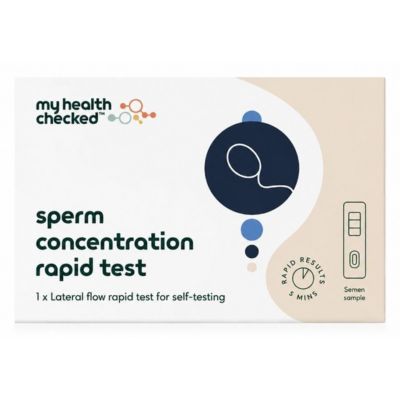
MyHealthChecked Sperm Concentration Rapid Test
MyHealthChecked
- • Concentration only
- • Threshold 15 million/mL
Honest caveat: It only answers one question. A ’normal’ result says nothing about whether sperm are moving well, which matters as much as numbers. Price was £9.99 on offer (usually £12.49) when we checked.
£9.99
boots.com

ExSeed Home Sperm Test Kit (5 tests)
ExSeed Health
- • 5 tests
- • Optional 15-minute specialist call
Honest caveat: Same limits as the 2-test kit: no shape or DNA results. Buy it only if you plan to retest regularly.
£149.99
shop.exseedhealth.com

Malebox At-Home Sperm Test
Malebox Health
- • 9 markers incl. morphology and vitality
- • Temperature-controlled postal kit
Honest caveat: The sample has to travel, and Malebox says results within 24 hours of reaching the lab. A GP can usually arrange a semen analysis free on the NHS, which is the route most couples should try first.
£180
maleboxhealth.com
We may earn a commission if you buy through our links. How we choose ›
How strong is the research? What our grades mean ›
- Strong research
- Independent certification or lab data for the specific claim.
- Promising research
- The material is well supported, but there is no product-level testing.
- Early research
- Little independent research.
- Mixed research
- Research findings disagree.
- £
- Under £20
- ££
- £20 to £79
- £££
- £80+
Home sperm tests range from a £10 yes/no strip to a postal lab analysis close to what a fertility clinic would run. Which one is worth buying depends on what you want to know.
Our picks at a glance
| Product | Best for | Key feature | Price | Evidence grade |
|---|---|---|---|---|
| Home sperm testExSeed Home Sperm Test (2 tests) | Most men | Phone-based count and motility | £94.99 | Moderate |
| Home sperm testMyHealthChecked Sperm Concentration Rapid Test | Cheapest first screen | Above or below 15 million/mL | £9.99 | Limited |
| Home sperm testExSeed Home Sperm Test Kit (5 tests) | Tracking changes | 5 tests plus specialist call | £149.99 | Moderate |
| Home sperm testMalebox At-Home Sperm Test | Closest to a clinic test | Postal lab analysis, 9 markers | £180 | Moderate |
How we chose
We looked for tests with a working UK buy page and a clear statement of what they measure. We checked each against the parameters in the WHO semen analysis manual, which is what NHS and private labs use. We left out tests we could not buy in the UK: the YO Home Sperm Test showed only US pricing and no UK retailer, Legacy is a US service, and the SpermCheck test listed at Boots had no price or stock when we checked.
What does a home sperm test measure?
A full semen analysis looks at several things:
- Volume: how much semen there is.
- Concentration (count): millions of sperm per millilitre. WHO's lower reference point is around 15 to 16 million/mL.
- Motility: how many sperm are moving, and how many are swimming forward (progressive motility). This matters as much as count.
- Morphology: the proportion with a normal shape.
- Vitality: how many are alive.
Cheap strip tests measure concentration only. Phone-based devices add motility and volume. Only lab analysis covers morphology and vitality.
Is a home test a substitute for an NHS semen analysis?
No. If you and your partner have been trying for a year without success (sooner if your partner is over 35), the NHS says to see a GP, who can arrange a semen analysis and a chlamydia test free of charge, following NICE fertility guidance. Home tests are useful for curiosity, reassurance, or tracking changes after lifestyle tweaks, but they are not diagnostic. Results also vary a lot from one sample to the next, so one abnormal home result is not a verdict.
Our picks
ExSeed Home Sperm Test, 2 tests (Best overall)
ExSeed uses a small device and your phone camera to film your sample, then reports semen volume, concentration, progressive motility and total motile sperm count (TMSC) against WHO values. Two tests let you repeat, which matters given day-to-day variation. Caveat: no morphology or DNA results, and published accuracy reviews include ExSeed staff among the authors.
MyHealthChecked Sperm Concentration Rapid Test (Budget pick)
Sold at Boots, this strip tells you whether concentration is above or below 15 million/mL, in minutes. It was £9.99 on offer (usually £12.49) when we checked. Caveat: it says nothing about whether sperm are moving, so a "normal" result can be falsely reassuring.
ExSeed Home Sperm Test Kit, 5 tests (Alternative)
The 5-test pack (£149.99) adds an optional 15-minute call with a medical specialist. Sperm take about three months to develop, so if you are changing habits (stopping smoking, cutting alcohol, losing weight), retesting over months is the only way to see a trend. Caveat: only worth it if you will actually retest.
Malebox At-Home Sperm Test (Premium pick)
Malebox (£180) is a postal test: you send your sample in temperature-controlled packaging to a partner lab, where an HCPC-registered andrologist runs a full analysis covering volume, count, concentration, three motility measures, immotile sperm, vitality and morphology. Results arrive within 24 hours of the lab receiving it. Caveat: your GP can usually arrange the same test free on the NHS; this is for people who want speed or privacy.
What the evidence says
Phone-based devices have been compared with lab analysers in published studies, such as a 2018 Fertility and Sterility comparison, and a 2021 review concluded devices like YO, SEEM and ExSeed can measure concentration and motile count reasonably well. That review included ExSeed employees as co-authors, so treat it as supportive rather than independent. Strip tests are simpler: they detect a sperm protein and give a threshold result, which can miss problems with movement or shape.
How much do home sperm tests cost?
Prices run from about £10 for a single strip to £180 for a postal lab analysis, and £240 or more if you add a consultation. Phone-based kits sit in the middle at around £95 to £150. Compare that with an NHS semen analysis, which is free through your GP. Private clinic semen analyses usually cost somewhere between a phone kit and a postal lab test, and give results a fertility specialist will accept.
Which test should you choose?
| If you want to... | Choose |
|---|---|
| A cheap first look at numbers | MyHealthChecked strip (about £10) |
| Count and movement at home, repeatable | ExSeed 2-test kit |
| To track change over months | ExSeed 5-test kit |
| Shape, vitality and a written lab report | Malebox postal analysis |
| A result your fertility clinic will act on | NHS semen analysis via your GP |
What can lower sperm quality?
The NHS lists poor-quality semen as a common cause of infertility, and links it to smoking, heavy drinking, being overweight, some medicines (including anabolic steroids and testosterone), infections such as chlamydia, and heat around the scrotum. Many cases are unexplained. If a home test suggests a problem, these are the things worth looking at while you wait for a proper analysis. Our guide to male fertility lifestyle changes and supplements covers what the evidence says about each.
How do I get the most reliable home result?
- Follow the abstinence window in the instructions (usually 2 to 7 days).
- Collect the whole sample into the pot provided; the first part of the ejaculate holds the most sperm.
- Avoid lubricants and condoms, which can harm sperm.
- Test within the time stated, keeping the sample at room or body temperature.
- Repeat at least once if the result is low, a few weeks apart.
What to avoid
- Treating a strip test as a fertility check. It measures one thing.
- Testing after a long gap or very short gap since ejaculating. Most kits ask for 2 to 7 days of abstinence; follow the instructions.
- Letting the sample get cold or hot, or testing late. Motility drops quickly.
- Delaying a GP visit because a home test looked fine. If you have been trying for a year, get both partners checked.
Bottom line
If you want a meaningful home result, choose a test that measures motility as well as count, such as ExSeed. The £10 Boots strip is a cheap first look but only answers one question. For the fullest picture short of a clinic, Malebox's postal lab test covers shape and vitality too. Whatever the result, a GP can arrange a proper semen analysis on the NHS, and that is the test fertility decisions should be based on.
Frequently asked questions
Are home sperm tests accurate?
+
Phone-based devices like ExSeed have been compared with lab analysers and perform reasonably for concentration and motile count, though some studies involve the makers. Strip tests only show whether concentration is above a threshold. Sperm results vary a lot between samples, so one result is never the full picture and should not replace a GP-arranged semen analysis.
What does a home sperm test not check?
+
Most home tests do not assess morphology (shape), vitality, DNA fragmentation or infections. Strip tests do not check movement either. A full semen analysis in a lab, available through your GP or a postal lab service such as Malebox, covers shape and vitality as well.
When should I see a GP about male fertility?
+
The NHS suggests seeing a GP if you have been trying to conceive for a year without success, or sooner if your partner is 36 or over or either of you has a known fertility issue. Both partners should be assessed. Men are usually offered a semen analysis and a chlamydia test.
Can I get a semen analysis free on the NHS?
+
Yes. If you have been trying for a baby without success, your GP can refer you for a semen analysis at an NHS lab, in line with NICE fertility guidance. Waiting times vary by area, which is why some couples use a private postal test while waiting.
How long before a sperm test should I avoid ejaculating?
+
Most kits and labs ask for 2 to 7 days without ejaculating. Too short a gap can lower count, while too long can reduce motility. Follow the instructions for your specific kit and keep the sample at body temperature until you test or post it.
Is the YO sperm test sold in the UK?
+
When we checked in October 2026, the YO website showed only US dollar pricing and we could not find a UK retailer, so we have not listed it. Check before ordering from abroad, as shipping, returns and customer support may not cover the UK.
Last updated


