Food & Kitchen
Best Chopping Board Material: Wood vs Plastic vs Bamboo (UK Guide)
Quick answer
For most UK kitchens a solid hardwood board, such as beech, oak, olive or teak, is the best choice. Lab tests show plastic boards shed microplastics into food, while studies find wood is at least as hygienic as plastic when washed in hot soapy water. Keep a separate board for raw meat, as the FSA advises.
Our picks

Lakeland Beech Chopping Board 45cm
Lakeland
- • Solid beech, oiled finish
- • 45 x 33cm work surface
Honest caveat: Lakeland does not state FSC certification or what oil is used. Like all wooden boards it needs hand washing, drying on its edge and occasional oiling, or it can warp and crack.
£19.99
lakeland.co.uk
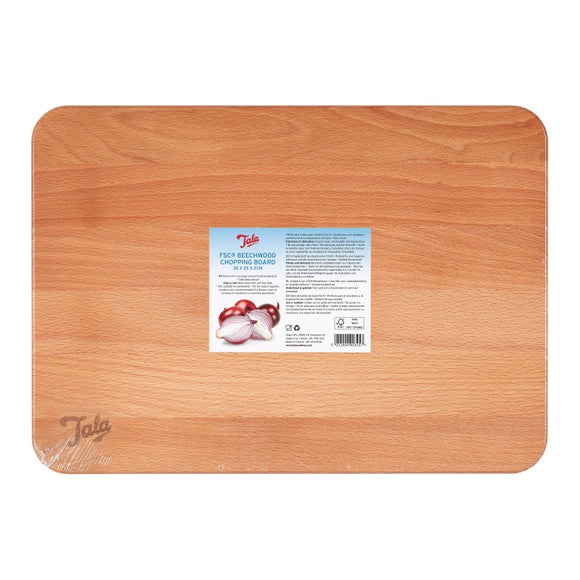
Tala Beech Wood Chopping Board
Tala
- • Oiled beech
- • 35 x 25 x 2cm
Honest caveat: At 2cm thick it is lighter than a butcher’s block and may slide unless you put a damp cloth underneath. Dunelm’s title mentions FSC but the product details do not confirm it.
£10
dunelm.com

GT Woodshop Oak End Grain Chopping Board, Large
GT Woodshop
- • End grain oak, 4cm thick
- • Made in Cornwall
Honest caveat: It is made to order (allow up to two to three weeks) and costs ten times our budget pick. End grain boards are glued together; the maker says the glues are suitable for food contact but does not name them.
£199.90
buymeonce.co.uk

John Lewis X Deliciously Ella Large Chopping Board, FSC-Certified Oak
John Lewis
- • FSC 100% oak
- • 40 x 31.5 x 3cm
Honest caveat: FSC checks where the wood came from, not what the board is finished with. Oak is open-grained, so it needs regular oiling and should never be soaked.
£45
johnlewis.com

Selbrae House Olive Wood Carving Board 47cm
Selbrae House
- • Single piece of olive wood
- • 47 x 23 x 2cm
Honest caveat: At 23cm wide it is long and narrow, better for carving and bread than for big piles of veg. John Lewis advises not leaving cheese or moist food on it for long, and it is not dishwasher-proof.
£50
johnlewis.com

Tramontina Teak Chopping Board 33cm x 20cm
Tramontina
- • Solid teak
- • Deep juice rim
Honest caveat: Teak contains natural silica, which blunts knife edges a little faster than beech or maple. The UK page does not state FSC certification, so check sourcing if that matters to you.
£29.99
tramontina.co.uk

Tala Beech Spatula Set
Tala
- • Three beech spatulas
- • Gentle on non-stick pans
Honest caveat: Cheap wooden spatulas can split or go furry if left soaking. Hand wash and dry straight away, and replace if cracked.
£3.49
lakeland.co.uk

OXO Good Grips Beech Wood Spatula
OXO
- • One-piece beech
- • Natural oil finish
Honest caveat: It costs over three times as much per spatula as our budget pick. Wood needs hand washing and will darken over time.
£11
johnlewis.com
We may earn a commission if you buy through our links. How we choose ›
How strong is the research? What our grades mean ›
- Strong research
- Independent certification or lab data for the specific claim.
- Promising research
- The material is well supported, but there is no product-level testing.
- Early research
- Little independent research.
- Mixed research
- Research findings disagree.
- £
- Under £20
- ££
- £20 to £79
- £££
- £80+
Our picks at a glance
| Product | Best for | Material/key feature | Price | Evidence grade |
|---|---|---|---|---|
| Lakeland Beech Chopping Board 45cm | Best overall everyday board | Solid oiled beech, 45 x 33cm | £19.99 | Promising |
| Tala Beech Wood Chopping Board | Budget second board | Oiled beech, 35 x 25cm | £10 | Promising |
| Tramontina Teak Chopping Board | Carving with a juice rim | Solid teak | £29.99 | Promising |
| John Lewis X Deliciously Ella Oak Board | Checked timber sourcing | FSC 100% oak, 3cm thick | £45 | Promising |
| Selbrae House Olive Wood Carving Board | Olive wood, carve and serve | Single piece of olive wood | £50 | Promising |
| GT Woodshop Oak End Grain Board, Large | Premium buy-for-life | End grain oak, made in Cornwall | £199.90 | Promising |
| Tala Beech Spatula Set | Cheapest black plastic swap | Three beech spatulas | £3.49 | Promising |
| OXO Good Grips Beech Wood Spatula | Sturdy one-piece turner | Solid beech, oil finish | £11 | Promising |
Which chopping board material is best: wood, plastic, bamboo or glass?
For most home kitchens, a solid hardwood board (beech, maple, oak, olive or teak) is the best all-round choice. It is kind to knives, cleans well with hot soapy water and does not shed plastic. Here is how the main materials compare.
| Material | Knife wear | Hygiene (when washed properly) | Sheds plastic? | Main downside |
|---|---|---|---|---|
| Hardwood (beech, maple, oak, olive) | Gentle | Good | No | Hand wash only, needs oiling |
| End grain hardwood | Gentlest | Good | No | Expensive, heavy |
| Plastic (polyethylene, polypropylene) | Gentle when new | Good when new, poor when deeply scored | Yes | Knife scars trap food and shed particles |
| Bamboo | Harder on knives | Good | No, but uses glue | Glue binders, harder surface |
| Glass or stone | Very harsh | Easy to clean | No | Blunts and chips knives quickly |
Bamboo is technically a grass, pressed into boards with glue. It is cheap and renewable but harder on knives than most hardwoods. Glass and marble boards look clean but dull knife edges fast; they are better for serving than chopping.
Do plastic chopping boards release microplastics?
Yes, according to lab tests. In a 2023 study in Environmental Science & Technology, researchers at North Dakota State University chopped carrots on polyethylene and polypropylene boards and measured the plastic that came off. Polypropylene boards shed 5% to 60% more by weight than polyethylene. Based on their assumptions, they estimated a person could take in 7.4 to 50.7 g of microplastics a year from a polyethylene board and about 49.5 g from a polypropylene board.
Two honest caveats. First, those yearly figures rest on assumptions about chopping habits and are estimates, not measurements of what people swallow. Second, the same team's preliminary cell test found no harm to mouse cells over 72 hours. The UK's Committee on Toxicity, which advises the Food Standards Agency, has said there is too little data on swallowed microplastics to do a full risk assessment. So the evidence shows plastic boards shed particles into food; it does not show what that means for health. Choosing wood is a simple way to avoid the question.
Are wooden chopping boards hygienic?
They are, if you wash and dry them properly. In a 1994 study in the Journal of Food Protection, bacteria such as E. coli and Salmonella put onto clean wooden blocks could not be recovered after 3 to 10 minutes, as the wood drew the liquid in. Plastic boards were easy to clean when new, but knife-scarred plastic was hard to clean by hand. Hot water and detergent removed bacteria from both.
A later review by the same lead researcher noted that one study of home kitchens linked plastic boards, not wooden ones, with salmonella. That is one study, so we would not overstate it, but there is no good evidence that wood is less hygienic than plastic at home.
The bigger risk is how boards are used. The Food Standards Agency advises separate boards for raw meat and ready-to-eat food, and washing with warm soapy water. In its own observation study, households often reused a board after raw meat without washing it with detergent. Two wooden boards, clearly marked, solve this.
What about black plastic spatulas?
In 2024 a study in Chemosphere tested 203 black plastic household items sold in the US, including kitchen utensils. Flame retardants, which are added to electronics casings, were found in 85% of the products analysed, suggesting recycled electronics plastic had ended up in kitchenware. The authors estimated a median intake of 34,700 nanograms a day of one flame retardant (BDE-209) from using contaminated utensils.
The paper then compared that figure with the US Environmental Protection Agency's reference dose and said it came close to the limit. That was a maths error. The reference dose is 7,000 ng per kg of body weight per day, which for a 60 kg adult is 420,000 ng a day, not 42,000. As R&D World explains, the estimate is about 8% of the reference dose, not 80%. The journal published a correction.
So the scary headline was wrong by a factor of ten. But the core finding stands: some black plastic utensils contain flame retardants that have no business being near food, and you cannot tell which by looking. Old, melted or chipped black spatulas are an easy thing to replace with wood or stainless steel, and a set of beech spatulas costs a few pounds.
How we chose
We looked for solid wood boards and utensils sold by UK retailers or brand shops, checked each live page and price in October 2026, and covered budget to premium. We favoured close-grained hardwoods and single-piece or end grain construction, and gave credit for FSC-certified timber. We did not include bamboo or composite boards, because both rely on glues or resins.
Lakeland Beech Chopping Board 45cm: best overall
A big, solid beech board for under £20. At 45 x 33cm it is large enough for a full veg prep and doubles as a bread or cheese board. Beech is close-grained, so it does not soak up as much as open-grained woods. Caveat: Lakeland does not name the oil finish or confirm FSC sourcing, and like all wood it needs hand washing and oiling.
Tala Beech Wood Chopping Board: budget pick
At £10 from Dunelm, this is the easy way to have a second board just for raw meat, as the FSA advises. Caveat: at 2cm thick it is light and can slide, so put a damp cloth underneath, and FSC status is unclear on the listing.
Tramontina Teak Chopping Board: best for carving
Teak's natural oils help it resist water, and this board has a deep juice rim for roasts and steaks. Caveat: teak contains silica, which blunts knives a little faster than beech, and the UK page does not mention FSC.
John Lewis X Deliciously Ella Oak Board: best for checked sourcing
A thick 3cm oak board made from 100% FSC-certified wood, heavy enough to stay put. Caveat: FSC covers where the wood came from, not the finish, and oak needs regular oiling.
Selbrae House Olive Wood Carving Board: best olive wood
Cut from one piece of olive wood with no glue lines, and it looks good enough to serve on. Caveat: it is long and narrow, and John Lewis warns that leaving moist food on it can stain it.
GT Woodshop Oak End Grain Board: premium pick
Handmade in Cornwall, end grain up, finished with mineral oil and beeswax. End grain is the gentlest surface for knives and hides cut marks. Caveat: it is made to order, costs nearly £200 and is glued from blocks, though the maker says the glues are suitable for food contact.
Tala Beech Spatula Set and OXO Beech Spatula: swaps for black plastic
Tala's three beech spatulas cost £3.49 at Lakeland; OXO's one-piece beech turner (£11, John Lewis) is sturdier. Both are gentle on non-stick pans and will not melt. Caveat: wood must be hand washed and dried, and cheap spatulas can split if left soaking.
How do you care for a wooden chopping board?
- Wash in hot soapy water straight after use, rinse and stand on its edge to dry.
- Never soak it or put it in the dishwasher.
- Rub in a food-grade oil (mineral oil or a board oil) every few weeks, or when it looks dry.
- Use a separate board for raw meat, fish and poultry, and wash it straight after.
- Replace any board with deep cracks you cannot clean.
What to avoid
- Deeply scored plastic boards: they shed more particles and are harder to clean.
- Black plastic utensils that are melted, chipped or very old.
- Glass, marble or slate boards for chopping (fine for serving).
- Boards with unknown lacquers or varnish on the cutting surface.
Bottom line
A solid hardwood board and a couple of wooden spatulas are a cheap, well-supported swap. Lab work shows plastic boards shed microplastics into food, and studies since the 1990s show wood is at least as hygienic as plastic when washed properly. The black spatula scare was overstated by a factor of ten, but swapping to wood still costs very little. Whatever you choose, keep a separate board for raw meat, as the FSA advises.
Frequently asked questions
Is a wooden or plastic chopping board better?
+
For home use, solid hardwood is a good all-round choice. It is gentle on knives, does not shed plastic, and lab studies find it is at least as hygienic as plastic when washed in hot soapy water and dried. Plastic boards are easy to clean when new but become hard to clean once deeply scored, and they shed microplastics as you chop.
Do plastic chopping boards put microplastics in food?
+
A 2023 study in Environmental Science & Technology found that chopping on polyethylene and polypropylene boards released microplastics, and estimated up to around 50 g a year per person. These are lab estimates based on assumptions. The UK Committee on Toxicity says there is not yet enough data to judge the health effects of swallowed microplastics.
Should I throw away my black plastic spatula?
+
A 2024 study found flame retardants in many black plastic utensils, but its headline risk figure was ten times too high because of a maths error, later corrected. Estimated exposure is about 8% of the US reference dose. Replacing old, melted or chipped black utensils with wood or steel is cheap and sensible, but there is no need to panic.
Is bamboo a good chopping board material?
+
Bamboo is renewable and cheap, but boards are made from strips pressed together with glue, and the surface is harder than most hardwoods, so it blunts knives faster. It is a reasonable choice, though we prefer solid beech, maple, oak or olive wood for daily chopping.
How often should I oil a wooden chopping board?
+
Oil it when it starts to look pale or dry, typically every few weeks with regular use. Use a food-grade mineral oil or a board oil, rub it in, leave it to soak overnight and wipe off the excess. Never soak the board or put it in the dishwasher, as that causes warping and cracks.
Can I use one board for raw meat and vegetables?
+
The Food Standards Agency advises using separate boards for raw meat, fish and poultry and for ready-to-eat food, and washing boards in warm soapy water. If you only have one, wash it thoroughly with hot soapy water before using it for anything else. A second cheap wooden board makes this much easier.
Last updated