Supplements, Fact-Checked
Best Probiotics UK (2026): What the research Says by Use
Quick answer
The best probiotic depends on why you want it. Evidence is strongest for taking live cultures, such as L. rhamnosus or S. boulardii, alongside antibiotics. For IBS, results vary by strain, so try one product for four weeks. Healthy people with no gut symptoms are unlikely to notice any benefit.
Our picks
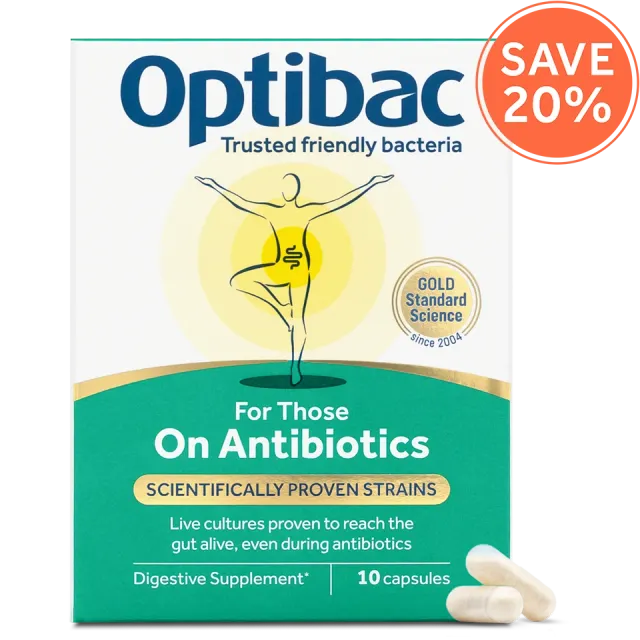
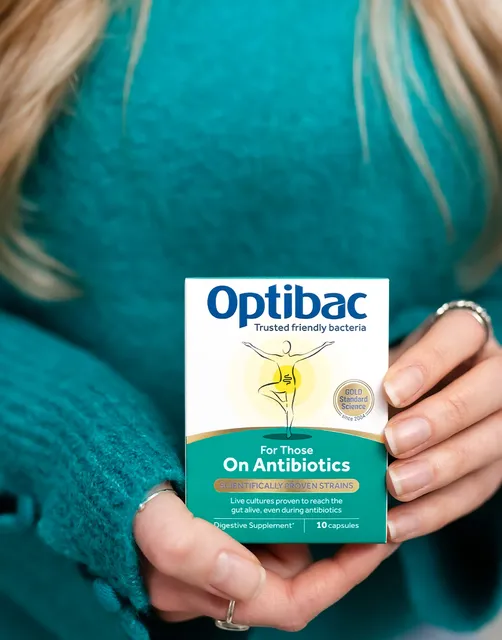
Optibac For Those On Antibiotics (30 capsules)
Optibac Probiotics
- • Two named strains, 4 to 5 billion per capsule
- • One capsule a day, can be taken with antibiotics
Honest caveat: The strong evidence is for live cultures as a group in antibiotic-associated diarrhoea; the trials behind this exact strain pair are smaller. RRP is £25.99 for 30, often discounted.
£25.99
optibacprobiotics.com

Optibac Saccharomyces Boulardii (40 capsules)
Optibac Probiotics
- • Single organism: Saccharomyces boulardii
- • 5 billion per capsule
Honest caveat: Rare but serious bloodstream yeast infections linked to S. boulardii are reported, almost always in very ill or hospitalised people; check with a doctor if that applies to you.
£20.99
optibacprobiotics.com
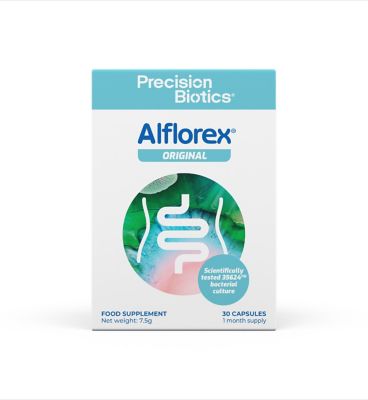
Alflorex Original 30 Capsules
Alflorex (PrecisionBiotics)
- • One named strain: B. longum 35624
- • 1 billion live bacteria per capsule
Honest caveat: A 2017 meta-analysis found single-strain B. infantis 35624 had not been confirmed to help IBS symptoms; earlier trials were positive. Treat it as a one-month experiment.
£25.50
boots.com
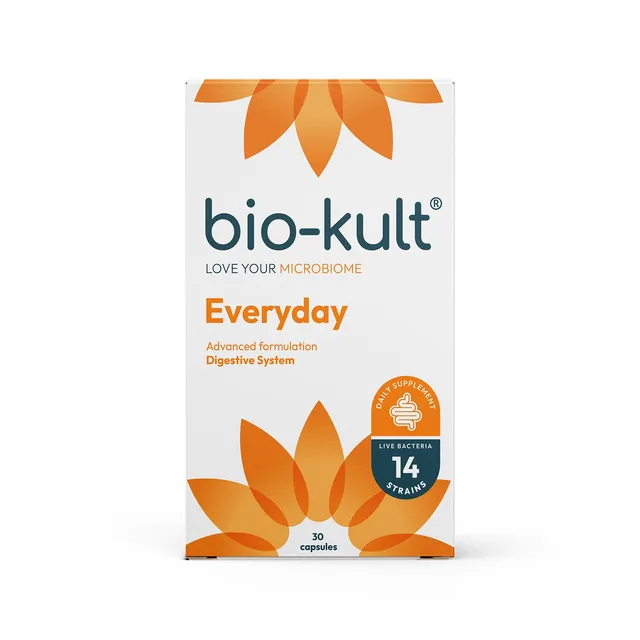
Bio-Kult Everyday (60 capsules)
Bio-Kult
- • 14 live strains, 2 billion per capsule
- • No refrigeration needed
Honest caveat: More strains does not mean better results; the best IBS evidence is for specific strains and the product-level trials are small. Brand site stock varies by size; also sold in pharmacies.
£21.99
bio-kult.com
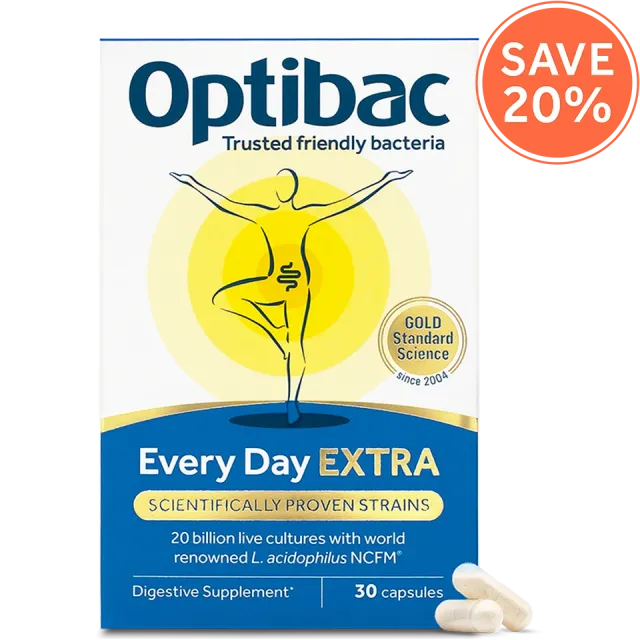
Optibac Every Day EXTRA (30 capsules)
Optibac Probiotics
- • 20 billion live cultures per capsule
- • Named strains listed on pack
Honest caveat: In healthy adults, trials show live cultures rarely change the make-up of gut bacteria at all. This is the weakest-use case on the page. RRP £27.99, frequently discounted.
£27.99
optibacprobiotics.com
We may earn a commission if you buy through our links. How we choose ›
How strong is the research? What our grades mean ›
- Strong research
- Independent certification or lab data for the specific claim.
- Promising research
- The material is well supported, but there is no product-level testing.
- Early research
- Little independent research.
- Mixed research
- Research findings disagree.
- £
- Under £20
- ££
- £20 to £79
- £££
- £80+
Do probiotics actually work?
It depends on what you want them for. "Probiotic" covers hundreds of different bacteria and yeasts, and a result found for one strain does not carry over to another. The NHS puts it plainly: there is some evidence they may help in some cases, such as easing some IBS symptoms, but little evidence for many of the health claims made about them. They are sold as food, not medicine, so quality and the bacteria count can vary.
You will often see "live cultures" or "friendly bacteria" on UK packs rather than "probiotic". That is largely because claims rules treat "probiotic" as implying a health benefit, and no such claim is on the GB nutrition and health claims register.
What the evidence shows, use by use
| Use | Our grade | Best evidence |
|---|---|---|
| Alongside antibiotics (to reduce antibiotic-associated diarrhoea) | Promising | Cochrane review, children, 33 trials; meta-analysis in adults |
| Lowering the risk of C. difficile diarrhoea in people on antibiotics | Promising | Cochrane review, 31 trials |
| IBS symptoms | Mixed research | Gastroenterology meta-analysis, 82 trials |
| "Gut health" in healthy adults | Early | Systematic review, healthy adults |
Alongside antibiotics
This is the strongest use. The Cochrane review in children found a moderate protective effect against antibiotic-associated diarrhoea, with higher doses (5 billion or more live cultures a day) working best; about six children needed to take them for one to avoid diarrhoea. Lactobacillus rhamnosus and Saccharomyces boulardii were the stand-out organisms. A meta-analysis in adults points the same way. A separate Cochrane review found moderate-certainty evidence for fewer cases of C. difficile diarrhoea, although around 42 people needed to take them for one to benefit.
IBS
The largest recent meta-analysis, led from Leeds, pooled 82 trials with more than 10,000 people. Only 24 trials had a low risk of bias. Some strains showed a benefit for overall symptoms, pain or bloating, but the certainty was mostly low or very low, and results differed strain by strain. The NHS IBS page suggests trying probiotics for a month, which is sensible: give one product four weeks, then stop if nothing changes.
Healthy people
If your gut is fine, there is little to fix. A systematic review of seven trials in healthy adults found live cultures did not change the diversity or make-up of gut bacteria compared with placebo in any of them. Fibre-rich food (beans, oats, vegetables) and fermented foods such as kefir and live yoghurt are cheaper ways to feed the bacteria you already have; Biotiful kefir is sold in most UK supermarkets.
Our picks at a glance
| Product | Best for | Key feature | Price | Evidence grade |
|---|---|---|---|---|
| Optibac For Those On Antibiotics | Antibiotic courses | Two named Lactobacillus strains | £25.99 | Promising |
| Optibac Saccharomyces Boulardii | Antibiotics and travel | Single studied yeast, 5 billion | £20.99 | Promising |
| Alflorex Original | Trying one strain for IBS | B. longum 35624, 1 billion | £25.50 | Mixed research |
| Bio-Kult Everyday | Budget multi-strain | 14 strains, 2 billion | £21.99 | Early |
| Optibac Every Day EXTRA | General daily use | 20 billion, named strains | £27.99 | Early |
How we chose
We started with the use, then looked for products that name their strains (not just the species), state a live count, and are sold by UK pharmacies or the brand directly. We favoured products whose specific strains or formula appear in published trials, and we downgraded anything relying only on "more strains" or "more billions". We did not include products we could not find on a live UK store; Seed DS-01, for example, had no official UK shop we could verify.
The picks
Optibac For Those On Antibiotics: best for an antibiotic course
Two named strains (L. acidophilus Rosell-52 and L. rhamnosus Rosell-11) at 4 to 5 billion a capsule, designed to be taken with antibiotics. This lines up with the strongest use in the research.
Caveat: the review-level evidence is for live cultures as a group; trials of this exact pair are smaller.
Optibac Saccharomyces Boulardii: best yeast option
S. boulardii is a yeast, so antibiotics do not kill it, and it is one of the two organisms that keeps showing up in antibiotic reviews. 5 billion per capsule.
Caveat: rare but serious bloodstream yeast infections have been reported, almost always in very ill or hospitalised people, or those with a central line. Do not use it in those situations without medical advice.
Alflorex Original: one strain to test for IBS
A single strain, B. longum 35624, first studied in a 2006 trial in women with IBS.
Caveat: a 2017 meta-analysis said the benefit of this single strain on its own had not yet been confirmed. Give it a month and judge for yourself.
Bio-Kult Everyday: budget multi-strain
Fourteen strains at 2 billion a capsule, sold almost everywhere.
Caveat: more strains is not the same as more benefit; the cultures are grown on milk and soya, which matters for allergies.
Optibac Every Day EXTRA: if you want a daily culture anyway
20 billion per capsule with named strains.
Caveat: for healthy people this is the weakest use on the page, and we would rather you spent the money on food.
Who should be careful
- Weakened immune system, serious illness, a central line, or recent surgery: the NHS advises talking to a doctor first.
- Premature babies and very ill children: only under medical supervision.
- Allergies: many capsules contain milk or soya; check the label.
- Bloating and wind in the first week or two are common and usually settle.
- Ongoing symptoms such as blood in your poo, weight loss you cannot explain, or a change in bowel habit lasting weeks need a GP, not a supplement.
How should you take them?
- Timing with antibiotics: most trials started live cultures within a day or two of the antibiotic and continued for a week or so after the course ended. Many brands suggest leaving a couple of hours between the antibiotic dose and a bacterial culture; a yeast such as S. boulardii is not affected by antibiotics in the same way.
- Storage: capsules marked "no refrigeration" are fine at room temperature, but heat and damp shorten their life. Check the storage instructions on the current pack.
- How long: for IBS, four weeks is a fair test. For an antibiotic course, the length of the course plus about a week. There is no good evidence that taking them for years is useful if you are well.
- One at a time: if you change several things at once (diet, fibre, a new product), you will not know what helped.
- Food sources: live yoghurt, kefir, sauerkraut and kimchi contain live bacteria, but the strains and counts are rarely stated, so they are not a like-for-like swap for a studied product. They are still a sensible part of a varied diet.
What to look for
- The full strain name (letters or numbers after the species), not just "Lactobacillus".
- A live count at the end of shelf life, not "at manufacture".
- A pick matched to your use: antibiotics, IBS, or nothing in particular.
- A trial run of four weeks, then a decision.
Bottom line
If you are taking antibiotics, a well-dosed product with L. rhamnosus or S. boulardii is reasonable. For IBS, pick one studied product, try it for a month and stop if it does nothing. If you feel fine, a varied, high-fibre diet is the better buy.
Liquid blends containing preservatives and flavourings are excluded under our UPF selection policy. The remaining picks stay matched to their stated use.
Frequently asked questions
Should I take a probiotic with antibiotics?
+
It is reasonable. A Cochrane review found live cultures reduced antibiotic-associated diarrhoea, especially at 5 billion or more a day, with L. rhamnosus and S. boulardii performing best. Start within a day or two of the antibiotic and continue for about a week after. Check with your doctor first if you are seriously ill or have a weakened immune system.
Do probiotics help IBS?
+
Some do, for some people. A 2023 meta-analysis of 82 trials found benefits varied by strain and the certainty of evidence was mostly low. The NHS suggests trying a probiotic for a month. Choose one product with named strains, take it daily for four weeks, and stop if your symptoms have not improved.
Are probiotics worth it if I am healthy?
+
Probably not. A systematic review of trials in healthy adults found live cultures did not change the diversity of gut bacteria compared with placebo. A varied diet with plenty of fibre from vegetables, beans, oats and wholegrains, plus fermented foods such as kefir and live yoghurt if you enjoy them, is a cheaper way to support your gut.
Do more billions or more strains mean a better probiotic?
+
No. Research results apply to specific strains at specific doses, so a product with one well-studied strain can beat one with 14 untested ones. Look for full strain names, a live count guaranteed to the end of shelf life, and a product matched to your reason for taking it, rather than the biggest number on the box.
Who should not take probiotics?
+
The NHS says people with a weakened immune system or an existing health condition should talk to a doctor first. That includes people having chemotherapy, those with a central line, very ill hospital patients and premature babies. Rare but serious infections have been reported in these groups, particularly with the yeast S. boulardii.
Is kefir as good as a probiotic supplement?
+
Kefir contains a wide range of live bacteria and yeasts, but the strains and amounts are rarely stated and vary by batch, so it is not directly comparable to a studied supplement. It is still a nutritious fermented food. If you want the specific effects seen in trials, such as with antibiotics, a product with named, studied strains is a better match.
Last updated