Home, Air & Renovation
Radon and Mould Testing UK (2026): What Works and What to Skip
Quick answer
To test for radon, check your postcode with UKHSA's £3.90 Radon Risk Report, then, if advised, run a three-month test from a validated lab, such as UKHSA's £52.80 pack. Act at 200 Bq/m³ or above. For mould, skip DIY swab kits: measure humidity, find the moisture source and fix it, using a professional for structural damp.
Our picks
UKHSA Radon Home Measurement Pack
UKHSA (UKradon)
- • Run by UKHSA, a validated laboratory
- • 2 detectors, 3-month measurement
Honest caveat: It takes three months plus about four weeks for results, and detectors must stay put. A cheaper validated lab is fine too; what matters is a three-month test from a validated laboratory.
UKHSA (UKradon)
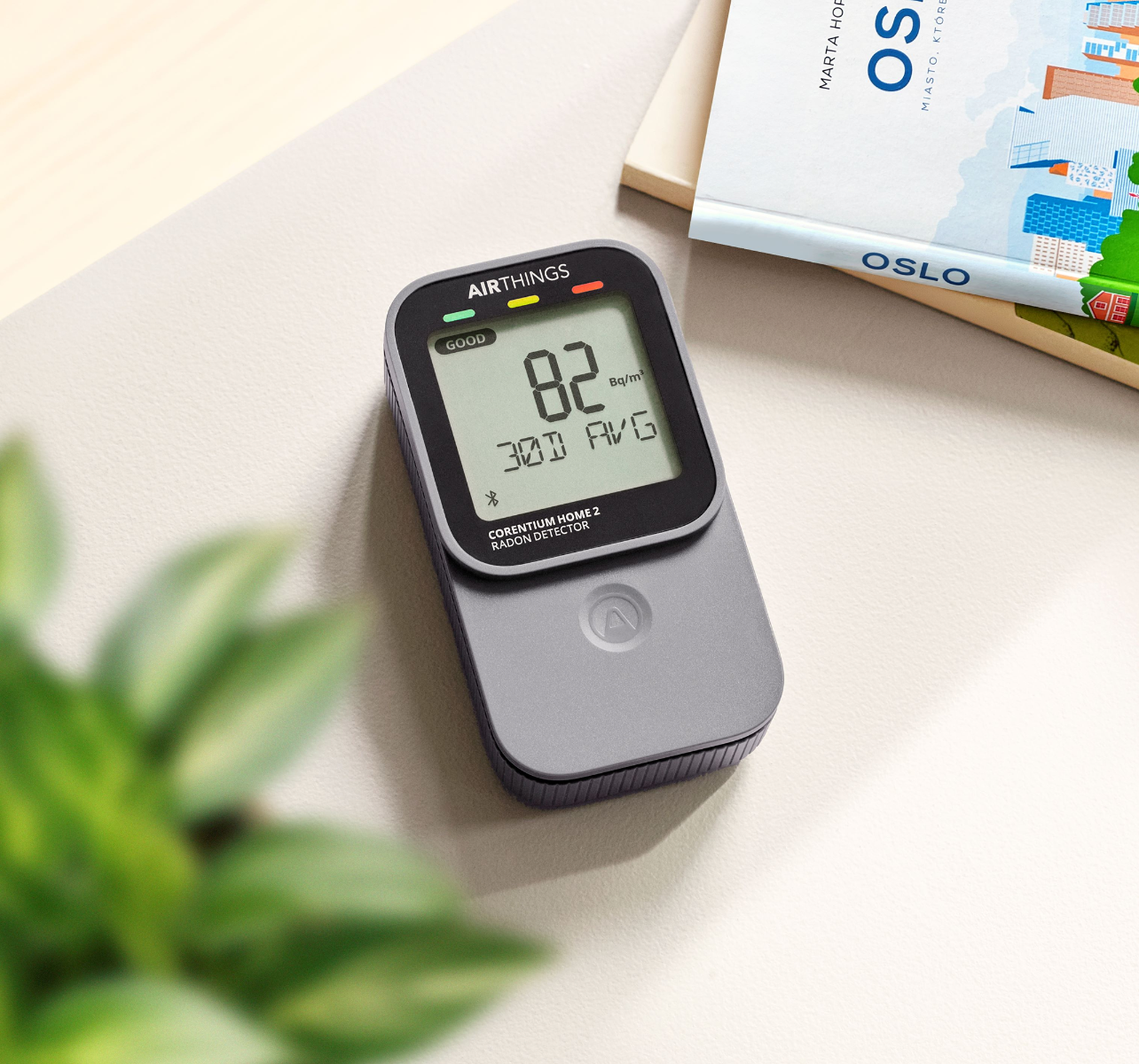
Airthings Corentium Home 2
Airthings
- • Continuous radon readings
- • Battery powered, Bluetooth
Honest caveat: Short-term readings swing with weather and season, so do not act on a few days of data. UKHSA advises measuring with a validated laboratory; this device is a follow-up tool, not a replacement.
Airthings


Govee Bluetooth Hygrometer Thermometer H5075
Govee
- • Humidity and temperature with app history
- • Bluetooth
Honest caveat: Consumer hygrometers drift by a few percent, so look at trends rather than single numbers. It tells you about air moisture, not damp inside walls.
Govee
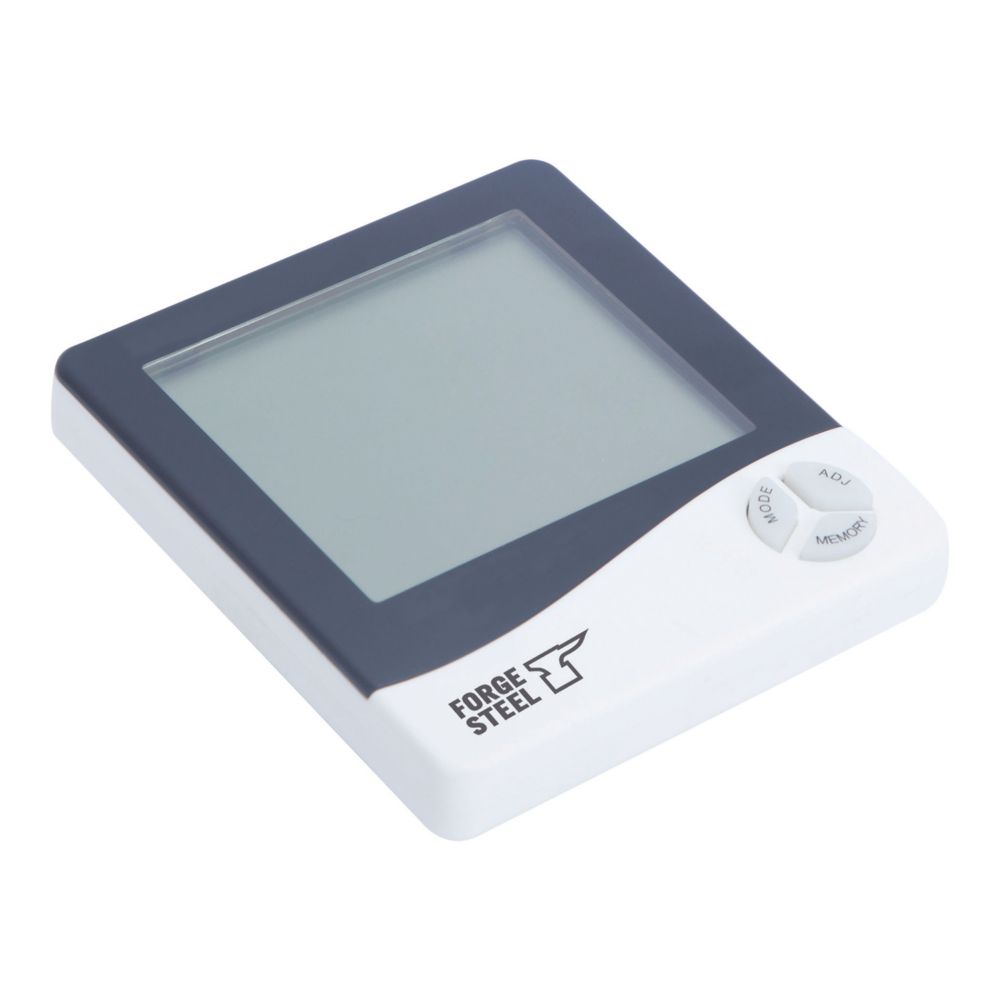
Forge Steel Thermometer & Hygrometer
Forge Steel
- • Digital humidity and temperature
- • Data hold function
Honest caveat: There is no data logging, and Screwfix does not publish its humidity accuracy. Like any hygrometer it measures air moisture, not damp in the building fabric.
Forge Steel
We may earn a commission if you buy through our links. How we choose ›
How strong is the research? What our grades mean ›
- Strong research
- Independent certification or lab data for the specific claim.
- Promising research
- The material is well supported, but there is no product-level testing.
- Early research
- Little independent research.
- Mixed research
- Research findings disagree.
- £
- Under £20
- ££
- £20 to £79
- £££
- £80+
How do I test my home for radon in the UK?
Start with your postcode, then test properly if needed. A UKHSA Radon Risk Report costs £3.90 and tells you whether your home is in a radon Affected Area. If it is, or you have an occupied basement, order a three-month test from a laboratory validated by UKHSA, such as the UKHSA Home Measurement Pack at £52.80. If the yearly average is at or above the Action Level of 200 Bq/m³, UKHSA recommends reducing it.
Mould is different. Home mould test kits (swabs or settle plates) are not a reliable way to judge a home, because mould spores are everywhere and there are no agreed limits to compare results with. The better approach is to measure humidity, find the moisture source and fix it.
Our picks at a glance
| Product | Best for | Material/key feature | Price | Evidence grade |
|---|---|---|---|---|
| UKHSA Radon Home Measurement Pack | Best radon test | 2 passive detectors, 3 months, UKHSA lab | £52.80 | Strong |
| Airthings Corentium Home 2 | Ongoing radon checks | Digital radon monitor, battery | £149 | Moderate |
| Govee H5075 Hygrometer | Best humidity monitor | Humidity and temperature with app history | £9.99 | Moderate |
| Forge Steel Thermometer & Hygrometer | No-app humidity checks | Digital meter, in store at Screwfix | £17.99 | Limited |
How we chose
For radon, we followed UKHSA's advice: a long-term measurement from a validated laboratory is the standard, and digital monitors are a useful extra. For mould, we followed GOV.UK damp and mould guidance and the US EPA, which both focus on finding and fixing moisture rather than sampling spores. Prices were checked in October 2026.
What is radon and why does it matter?
Radon is a colourless, odourless radioactive gas that seeps out of the ground from small amounts of uranium in rocks and soils. UKHSA says radon is linked to over 1,100 lung cancer deaths in the UK each year, and the risk is much higher for people who smoke. The average UK home has about 20 Bq/m³ (becquerels per cubic metre). Below 100 Bq/m³, UKHSA says individual risk is relatively low, and risk rises with the level and the length of exposure.
Levels vary hugely by area and even between neighbouring houses, which is why a measurement is the only way to know. Parts of Cornwall, Devon, Derbyshire, Northamptonshire and other areas have higher levels; the UKradon maps and the £3.90 address report show your property's estimated probability.
Why does a radon test take three months?
Radon levels swing from hour to hour and season to season with weather, heating and ventilation. A three-month passive test, with one detector in a living area and one in an occupied bedroom, averages out those swings and is adjusted to a yearly figure you can compare with the Action Level. UKHSA posts results about four weeks after you return the detectors (UKradon). Short tests of a few days, whether passive or electronic, are useful for screening or after remedial work but can mislead if used alone.
What if my radon level is high?
At or above 200 Bq/m³, UKHSA recommends action. The most common fixes are a radon sump (a small pit under the floor with a fan that draws radon away), positive ventilation (a fan that gently pressurises the house with fresh air), or better under-floor ventilation for suspended floors, according to UKradon's guidance. Retest afterwards; UKHSA sometimes offers a free re-measurement.
Our picks
UKHSA Radon Home Measurement Pack: best radon test
This is the official UKHSA test: two small detectors through your letterbox, three months in place, then posted back in a prepaid envelope for analysis in UKHSA's own laboratory. UKHSA also runs the validation scheme for radon labs, so the result is the standard reference.
Honest caveat: from ordering to result takes about four months. Other validated labs can be cheaper; what matters is a three-month test from a validated laboratory.
Airthings Corentium Home 2: best for ongoing radon checks
The Corentium Home 2 is a battery digital radon detector with Bluetooth, giving rolling readings. It is ideal for checking whether a sump or ventilation change is working, or watching seasonal changes.
Honest caveat: it is not part of UKHSA's lab validation scheme, and short-term readings swing, so do not act on a few days of data. For house sales or landlord records, use a validated three-month test. If you also want CO2 and particles, the Airthings View Plus (covered in our air quality monitor guide) includes radon.
Govee H5075 Hygrometer: best humidity monitor
A humidity monitor is the most useful mould tool for most homes. The US EPA advises keeping indoor humidity below 60%, ideally 30 to 50%, and says an inexpensive meter is enough to check. The Govee H5075 logs history to an app, so you can see which rooms stay damp overnight.
Honest caveat: consumer hygrometers drift by a few percent; watch the trend. It measures air moisture, not damp inside walls.
Forge Steel Thermometer & Hygrometer: no-app option
Sold at Screwfix, this simple digital meter is handy for spot checks in a bathroom, bedroom or wardrobe where mould keeps coming back.
Honest caveat: no logging, and Screwfix does not publish its humidity accuracy.
Are DIY mould test kits worth it?
Mostly no. Mould spores are present in all indoor and outdoor air, so a swab or settle plate will nearly always grow something. Without agreed limits there is nothing meaningful to compare it with. The US EPA says that if mould is visible, sampling is usually unnecessary, that there are no federal limits for mould or spores, and that sampling should be done by experienced professionals with a clear purpose. UK GOV.UK guidance likewise says microbial sampling is something professionals may use in complex cases, not the first step.
A positive kit result can create worry without telling you the cause; a negative one can falsely reassure you while damp continues inside a wall.
What actually works for damp and mould?
The 2023 GOV.UK guidance, written after the death of two-year-old Awaab Ishak from prolonged exposure to mould in his home, is clear that damp and mould mainly affect the airways and lungs, and that people with lung conditions, weakened immune systems, babies and older people are at greater risk. It says simply removing surface mould will not stop it returning: the underlying cause has to be found and fixed.
- Measure humidity in the affected room for a week. Readings regularly above 60%, especially overnight, point to condensation.
- Look for the type of damp. Condensation shows on cold walls, window frames and behind furniture. Rising damp affects the base of ground-floor walls. Penetrating damp follows leaks from gutters, roofs or pipes. The GOV.UK guidance lists checks such as visible staining, peeling paper, defective plaster and blocked or switched-off extractor fans.
- Reduce moisture: use extractor fans while cooking and showering and leave them running afterwards, dry clothes outdoors or in a vented dryer, keep trickle vents open, and heat rooms steadily rather than in short bursts.
- Get professional help for structural damp. Rising or penetrating damp needs a qualified surveyor, not a gadget.
- If you rent, report damp and mould to your landlord in writing. Social landlords have specific legal duties to investigate and fix damp and mould within set timescales, and the GOV.UK guidance says landlords should not wait for medical evidence before acting.
See a GP if someone in the home has breathing problems, asthma or a weakened immune system and the home is damp or mouldy.
Bottom line
For radon, check your postcode with UKHSA's £3.90 report and, if advised, run a three-month test from a validated lab such as the £52.80 UKHSA pack. Use a digital monitor like the Airthings Corentium Home 2 for follow-up checks, not as a substitute. For mould, skip the swab kits: a £10 humidity monitor and a hunt for the moisture source will tell you far more, and structural damp needs a professional.
Frequently asked questions
How much does a radon test cost in the UK?
+
A UKHSA Radon Risk Report for your address costs £3.90 and shows whether you are in a radon Affected Area. A UKHSA Home Measurement Pack, with two detectors, three months of measurement, return postage and lab analysis, costs £52.80 including VAT. Other validated laboratories offer similar three-month tests, sometimes for less.
What radon level is too high?
+
The UK Action Level for homes is 200 Bq/m³ as a yearly average. At or above this, UKHSA recommends reducing the level. The average UK home has about 20 Bq/m³, and UKHSA says individual risk below 100 Bq/m³ is relatively low. Risk rises with both the level and how long you are exposed, and is far higher for smokers.
Are electronic radon monitors accurate enough?
+
They are useful for watching trends and checking remedial work, but radon swings with weather and season, so a few days of readings can mislead. UKHSA advises measuring with a validated laboratory, normally over three months. Use a digital monitor alongside a validated test, not instead of one, especially for house sales or landlord records.
Do home mould test kits work?
+
They are not a reliable guide. Mould spores are in all indoor air, so swabs and settle plates almost always grow something, and there are no agreed limits to compare results with. The US EPA says sampling is usually unnecessary if mould is visible. Finding and fixing the moisture source is far more useful.
What humidity level causes mould?
+
Mould grows where surfaces stay damp, which usually happens when indoor humidity stays high. The US EPA advises keeping indoor humidity below 60%, ideally between 30% and 50%. A cheap digital hygrometer shows which rooms run high, especially overnight in bedrooms and after showers or cooking.
What should I do if my rented home has mould?
+
Report it to your landlord in writing, with photos and dates, and keep a copy. GOV.UK guidance says landlords should find and fix the underlying cause promptly and should not wait for medical evidence. Social landlords have specific legal duties and timescales. If nothing happens, contact your local council's private housing or environmental health team.
Last updated