Food & Kitchen
Is Teflon Safe? What the research Says About Nonstick Pans
Quick answer
Teflon (PTFE) is unlikely to harm you at normal cooking temperatures, according to Germany's risk assessor BfR. Problems arise if an empty pan overheats past about 360°C, releasing fumes linked to polymer fume fever and deaths of pet birds. PFOA, once used to make PTFE, is now restricted, and the EU is assessing a wider PFAS restriction.
Our picks
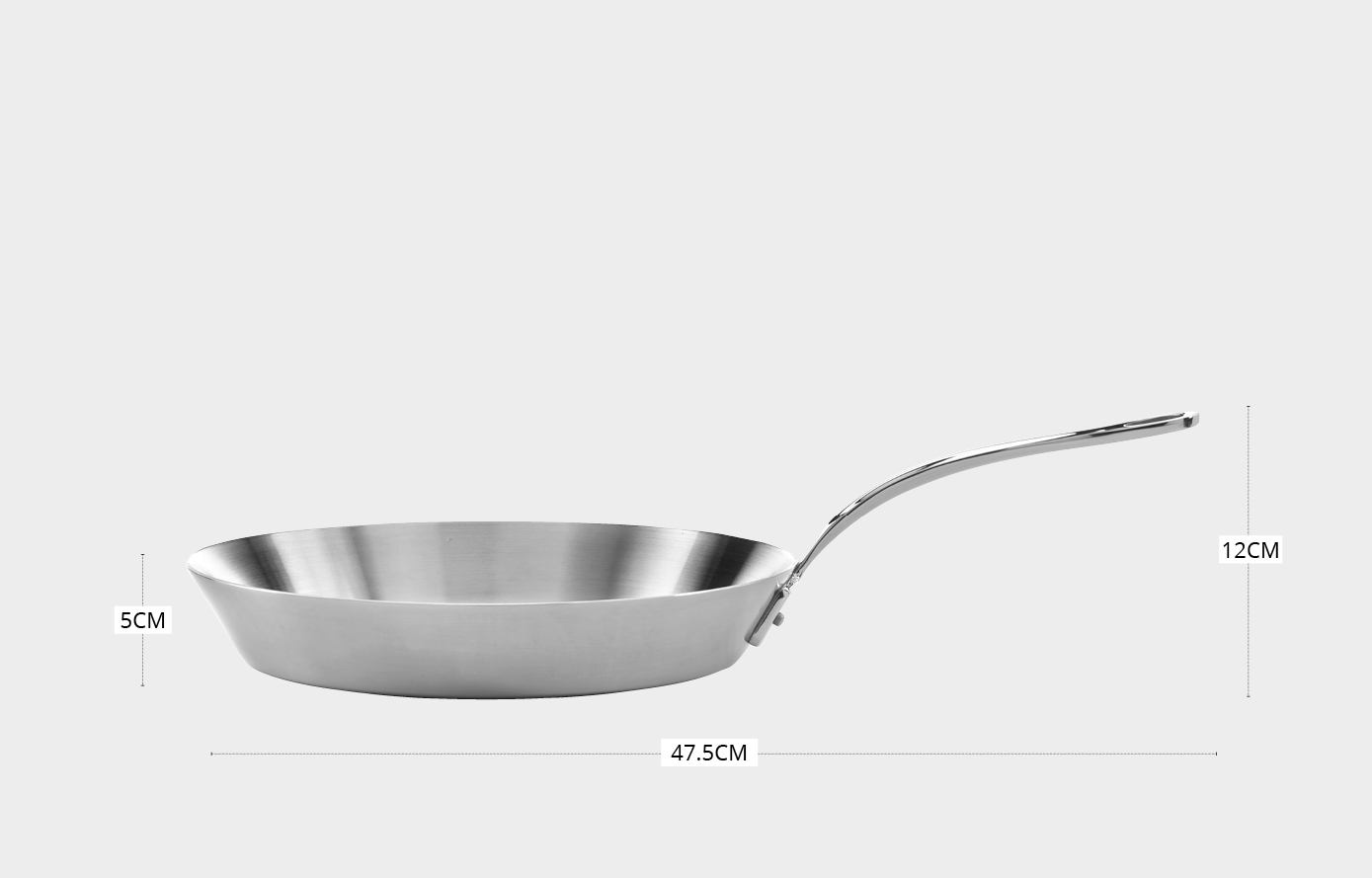
28cm Stainless Steel 3-Ply Frying Pan
Samuel Groves
- • 3-ply stainless with aluminium core
- • Uncoated cooking surface
Honest caveat: At £113 it costs about double the ProCook equivalent for a similar material. As with any stainless pan, expect some sticking until you master preheating, and small nickel and chromium transfer with acidic foods.
Samuel Groves


Mineral B Carbon Steel Frying Pan 28cm
de Buyer
- • Carbon steel, no factory coating
- • Beeswax finish protects against rust
Honest caveat: Must be seasoned before use and kept dry. Acidic food strips seasoning and picks up iron. Heavy for its size and the handle gets hot in the oven.
de Buyer


Valencia Pro Ceramic Non-Stick 20cm and 26cm Frypan Set
GreenPan
- • Ceramic coating, no PTFE
- • Hard-anodised aluminium body
Honest caveat: Ceramic coatings lose their slickness faster than PTFE, often within a year or two of daily use. Lab work on similar silica-based coatings found titanium nanoparticle release with acidic simulants and scratching (Golja et al., 2017). No independent testing of this product is published.
GreenPan
We may earn a commission if you buy through our links. How we choose ›
How strong is the research? What our grades mean ›
- Strong research
- Independent certification or lab data for the specific claim.
- Promising research
- The material is well supported, but there is no product-level testing.
- Early research
- Little independent research.
- Mixed research
- Research findings disagree.
- £
- Under £20
- ££
- £20 to £79
- £££
- £80+
The short answer
Teflon is a brand name for PTFE (polytetrafluoroethylene), a slippery plastic used as a non-stick coating. Used normally, it is unlikely to harm you: Germany's Federal Institute for Risk Assessment says PTFE cookware "only poses a health risk when it is strongly heated while unfilled" (BfR). The real issues are overheating, worn and scratched coatings, and the wider family of PFAS chemicals PTFE belongs to, which regulators in the EU and UK are now acting on.
PTFE vs PFOA vs PFAS: what is the difference?
- PFAS (per- and polyfluoroalkyl substances) are thousands of man-made chemicals with very strong carbon-fluorine bonds. Many barely break down, hence the nickname "forever chemicals".
- PTFE is one PFAS: a large, stable polymer (a long-chain plastic). It is the non-stick coating itself. Because the molecule is so large and inert, swallowed flakes pass through the body unchanged, according to BfR.
- PFOA is a small PFAS that was used to make PTFE until the 2010s. It is the chemical behind most of the alarming headlines. In 2023 the WHO's cancer agency classified PFOA as carcinogenic to humans, Group 1 (IARC). It has been restricted in the EU under persistent organic pollutant rules since 2020 (Regulation 2020/784).
So "PFOA-free" on a modern pan tells you little: PFOA is already restricted, and the pan is still coated with PTFE. Consumer Reports even found PFOA in a PTFE pan labelled PFOA-free, and now advises looking for "PTFE-free" instead.
What happens if you overheat a non-stick pan?
PTFE starts to break down at around 360°C according to BfR. With food or water in the pan, temperatures stay far lower (water holds the pan near 100°C). The danger is an empty pan on a high gas flame or powerful induction zone, which can pass that point in a few minutes.
The fumes can cause polymer fume fever: flu-like symptoms such as fever, chills, headache and aching muscles, usually starting a few hours after exposure and clearing within a day or two. A review in Clinical Toxicology notes that overheating Teflon-coated cookware is one of the more common routes of exposure (Greenberg and Vearrier, 2015). BfR says reported illness has come from industrial PTFE manufacture rather than private homes, so household cases appear rare.
Pet birds are far more sensitive. Overheated PTFE fumes have been linked to sudden deaths of pet birds, including a case report in which the owner also developed polymer fume fever (Veterinary Record, 1975). If you keep birds, the simplest choice is to avoid PTFE altogether.
Is it harmful to eat flakes from a scratched pan?
Regulators say swallowed PTFE flakes are not expected to harm health, because the polymer is inert and passes through the gut unchanged (BfR). The US FDA says studies show negligible amounts of PFAS migrate from non-stick coatings into food.
Newer research adds nuance. A 2022 lab study using Raman imaging estimated that a scratched coating may release thousands to millions of micro and nanoplastic particles during simulated cooking (Luo et al., 2022). What those particles do in the body is not yet known. A 2017 review called for more research into PTFE, PFOA and replacement chemicals such as GenX (Sajid and Ilyas, 2017). Replacing a flaking pan is sensible either way, since a damaged coating also stops working.
What is the EU doing about PFAS in cookware?
In January 2023, five countries (Germany, the Netherlands, Denmark, Sweden and Norway) proposed restricting virtually all PFAS across the EU, including fluoropolymers like PTFE (ECHA). BfR notes the proposal could restrict PTFE coatings for household and restaurant cookware.
Where it stands in 2026, according to ECHA's June 2026 update (ECHA):
- 2 March 2026: ECHA's Committee for Risk Assessment (RAC) adopted its opinion, confirming PFAS hazards and that "further EU-wide restriction is needed".
- 10 March 2026: the Committee for Socio-economic Analysis (SEAC) agreed a draft opinion favouring a ban with use-specific exemptions.
- 25 May 2026: public consultation on SEAC's draft closed with 3,511 comments.
- By end of 2026: SEAC's final opinion is due. The European Commission then drafts the restriction, which EU member states vote on, with transition periods likely.
Nothing has been banned yet, and the final scope for consumer cookware is not settled.
What is the UK position?
Great Britain runs its own chemicals system (UK REACH) since Brexit, so the EU decision will not apply automatically. The Health and Safety Executive published a PFAS regulatory management option analysis in April 2023 (HSE), and Defra published the UK's first cross-government PFAS Plan in February 2026, updated in August 2026, covering sources, pathways and reducing exposure (GOV.UK). As of October 2026, PTFE cookware remains legal to sell in the UK.
Our picks at a glance
If you decide to move away from PTFE, these are lower-exposure replacements.
| Product | Best for | Material/key feature | Price | Evidence grade |
|---|---|---|---|---|
| Samuel Groves 28cm Stainless Steel 3-Ply Frying Pan | Replacing a PTFE frying pan | Uncoated tri-ply stainless | £113 | Moderate |
| de Buyer Mineral B Carbon Steel Frying Pan 28cm | Natural non-stick without a coating | Seasoned carbon steel | £62 | Moderate |
| GreenPan Valencia Pro 20cm and 26cm Frypan Set | Easy release, no PTFE | Ceramic coating | £89.90 | Limited |
How we chose
We picked one replacement for each common reason people use non-stick: a long-lasting everyday pan (stainless steel), a pan that becomes slick with use (carbon steel), and a coated pan for easy release without PTFE (ceramic). Prices were checked on UK brand or retailer sites in October 2026.
Samuel Groves 28cm Stainless Steel 3-Ply Frying Pan
Fully clad, uncoated and backed by a lifetime guarantee, so there is no coating to overheat or scratch. Caveat: food sticks until you learn to preheat, and stainless releases small amounts of nickel and chromium into long-cooked acidic food (Kamerud et al., 2013).
de Buyer Mineral B Carbon Steel Frying Pan 28cm
Becomes naturally non-stick as you season it, and handles heat no coating can. Caveat: needs seasoning, drying and oiling, and is heavier than a non-stick pan.
GreenPan Valencia Pro Frypan Set
A ceramic (silica-based) coating made without PTFE; Consumer Reports found no PFAS in the ceramic pans it tested. Caveat: ceramic wears out faster than PTFE, and lab work on similar coatings found titanium nanoparticle release in acidic conditions (Golja et al., 2017). See our ceramic cookware explainer.
How to use PTFE pans with less risk
- Never heat an empty pan; add oil or food first.
- Cook on low to medium heat; use a stainless or cast iron pan for searing.
- Turn on the extractor or open a window.
- Keep PTFE out of kitchens with pet birds.
- Use wooden or silicone utensils, and replace pans that are flaking or deeply scratched.
- Do not put PTFE pans under a hot grill.
Bottom line
Is Teflon safe? For everyday cooking at normal temperatures, regulators say intact PTFE is not expected to harm health. The genuine concerns are overheating (polymer fume fever and danger to birds), particles from damaged coatings, and the persistence of PFAS in the environment, which is why the EU is moving towards a restriction. If you want to reduce exposure, replace your frying pan first, since it is the pan you heat hardest.
Frequently asked questions
Is it OK to use a scratched non-stick pan?
+
Regulators say swallowed PTFE flakes pass through the body unchanged and are not expected to harm health. However, a 2022 study estimated that scratched coatings can shed large numbers of micro and nanoplastic particles, and their effects are not yet understood. A badly scratched pan also sticks, so replacing it, ideally with an uncoated pan, is a sensible step.
What is Teflon flu?
+
Teflon flu, or polymer fume fever, is a short flu-like illness with fever, chills, headache and muscle aches after breathing fumes from overheated PTFE. It usually starts a few hours after exposure and clears within a day or two. Overheating an empty non-stick pan is a common household route. Seek medical advice if breathing is affected.
Is PFOA still used in non-stick pans?
+
PFOA was phased out of PTFE manufacturing in the 2010s and has been restricted in the EU since 2020. IARC classified it as carcinogenic to humans in 2023. Consumer Reports still detected PFOA in one PTFE pan labelled PFOA-free, possibly as a by-product, so 'PFOA-free' does not guarantee none is present.
Will the UK ban Teflon pans?
+
There is no UK ban. Great Britain regulates chemicals under UK REACH, separately from the EU. HSE published a PFAS regulatory analysis in 2023 and Defra published a PFAS Plan in February 2026, but neither restricts PTFE cookware. The EU's broad PFAS restriction is still being assessed, with a key committee opinion due by the end of 2026.
At what temperature does Teflon become dangerous?
+
Germany's BfR says PTFE coatings can decompose and release harmful gases at about 360°C. Normal frying with oil or food in the pan stays well below that, and water keeps the pan near 100°C. An empty pan on a high gas flame or powerful induction zone can reach that temperature within minutes, so never preheat a coated pan empty.
Are non-stick pans bad for birds?
+
Yes. Pet birds are extremely sensitive to fumes from overheated PTFE, and case reports describe sudden deaths of birds in kitchens where coated pans or ovens overheated. If you keep birds, the simplest approach is to use uncoated stainless steel, cast iron or carbon steel, and keep birds well away from the kitchen when cooking.
Last updated