Pregnancy & TTC
Do You Actually Need a Water Filter?
Quick answer
Most UK addresses, most of the time, don't strictly need a filter for safety - tap water is among the most regulated in the world. A filter becomes evidence-led, not optional, in three situations: older plumbing with potential lead pipes, living near a known PFAS source, and being on a private supply. Taste and chlorine reduction are reasonable lifestyle reasons too, but those are separate from safety.
Our picks
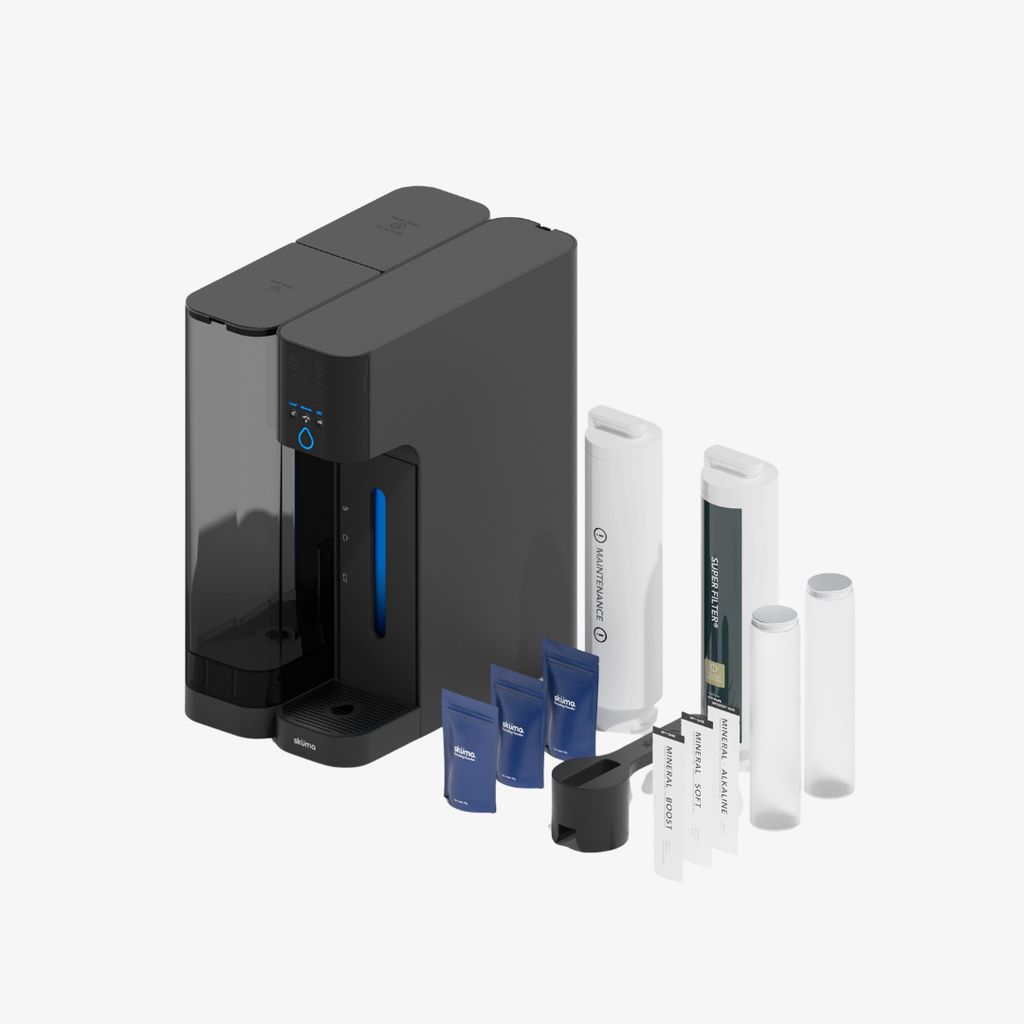

Sküma MY™ Station Countertop Reverse Osmosis
Sküma
- • Countertop RO with swappable mineral profiles
- • Brand claims 20 PFAS reduced, lab not named
Honest caveat: Sküma names no certifier, no NSF/ANSI 58 certification and no lab, and publishes no waste-water ratio. A Healf customer review says the waste tank fills quickly. Until test reports are public, we grade the evidence as limited.
Sküma · Amazon
We may earn a commission if you buy through our links. How we choose ›
How strong is the research? What our grades mean ›
- Strong research
- Independent certification or lab data for the specific claim.
- Promising research
- The material is well supported, but there is no product-level testing.
- Early research
- Little independent research.
- Mixed research
- Research findings disagree.
- £
- Under £20
- ££
- £20 to £79
- £££
- £80+
What's actually in UK tap water
The Drinking Water Inspectorate (DWI) regulates and tests UK mains supply against ~50 parameters. Compliance rates published annually are typically above 99.9%. Your water company publishes a postcode-level quality report on request.
What's usually present at trace levels:
- Chlorine or chloramine (intentional, for disinfection).
- Trihalomethanes (disinfection by-products) - regulated but present.
- Small amounts of nitrates, fluoride (regional), hardness minerals.
- In some areas: low-level PFAS detections.
What's usually not present at meaningful levels in regulated mains supply:
- Lead, except where it leaches from old internal plumbing.
- Pesticide residues above regulatory limits.
- Pathogens (the disinfection step is what stops these).
The three situations where filtering is evidence-led
1. Pre-1970s plumbing. If your home has lead service pipes or lead solder, the metal can leach into water that sits in pipes overnight. Run the tap for 30 seconds first thing, and use an NSF 53 lead-certified filter for drinking water. Your water company will test for lead on request.
2. Known local PFAS sources. Areas near former firefighting training sites, certain manufacturing or military sites can have elevated PFAS in groundwater. The DWI publishes monitoring data. If you're in an affected area, an NSF 53 or 58 PFAS-certified filter is the highest-evidence option.
3. Private water supply. Borehole or spring supplies aren't regulated like mains. Annual testing and appropriate filtration are necessary.
Reasonable lifestyle reasons
- Taste and chlorine odour. A basic carbon jug or under-sink filter handles this.
- Reducing limescale in kettles in hard-water areas.
- Filtering out fluoride if that's a personal choice (RO is the only consistent way to do this).
What we don't think the evidence supports
- 'Detox' framing. Drinking water isn't a meaningful detox pathway - your liver and kidneys handle that.
- Alkaline or hydrogen-infused water for health claims. The mainstream evidence base is weak.
- Generic 'reduces impurities' jug filters marketed for safety. They're really taste filters unless NSF 53 certified.
Frequently asked questions
Is bottled water safer than UK tap water?
+
Generally no. Bottled water is regulated to similar standards but isn't tested as frequently as mains supply, and many bottled brands are simply filtered tap water. The environmental cost is the bigger differentiator.
Do I need a filter if I live in a flat?
+
Depends on the building's age. Pre-1970s plumbing may have lead components. A free lead test from your water company answers the question directly.
What about microplastics in tap water?
+
They've been detected at very low levels in both tap and bottled water, with bottled often higher. Long-term health effects aren't well understood. A carbon block or RO filter reduces them; current evidence doesn't make this an urgent intervention for most households.
Last updated
Sources
- UK Drinking Water Inspectorate Annual Report
- World Health Organization Guidelines for Drinking-water Quality
- DEFRA PFAS in drinking water guidance
- NHS drinking water quality information