Food & Kitchen
Best Stainless Steel Frying Pan UK (2026): Uncoated Pans Compared
Quick answer
The best stainless steel frying pan for most UK kitchens is a 28cm fully clad tri-ply pan with an uncoated interior. Our best overall is the Samuel Groves 28cm 3-ply (£113, lifetime guarantee); the best value is ProCook's Professional Uncoated 28cm (£55, 25-year guarantee). Clad pans heat more evenly than base-only designs.
Our picks
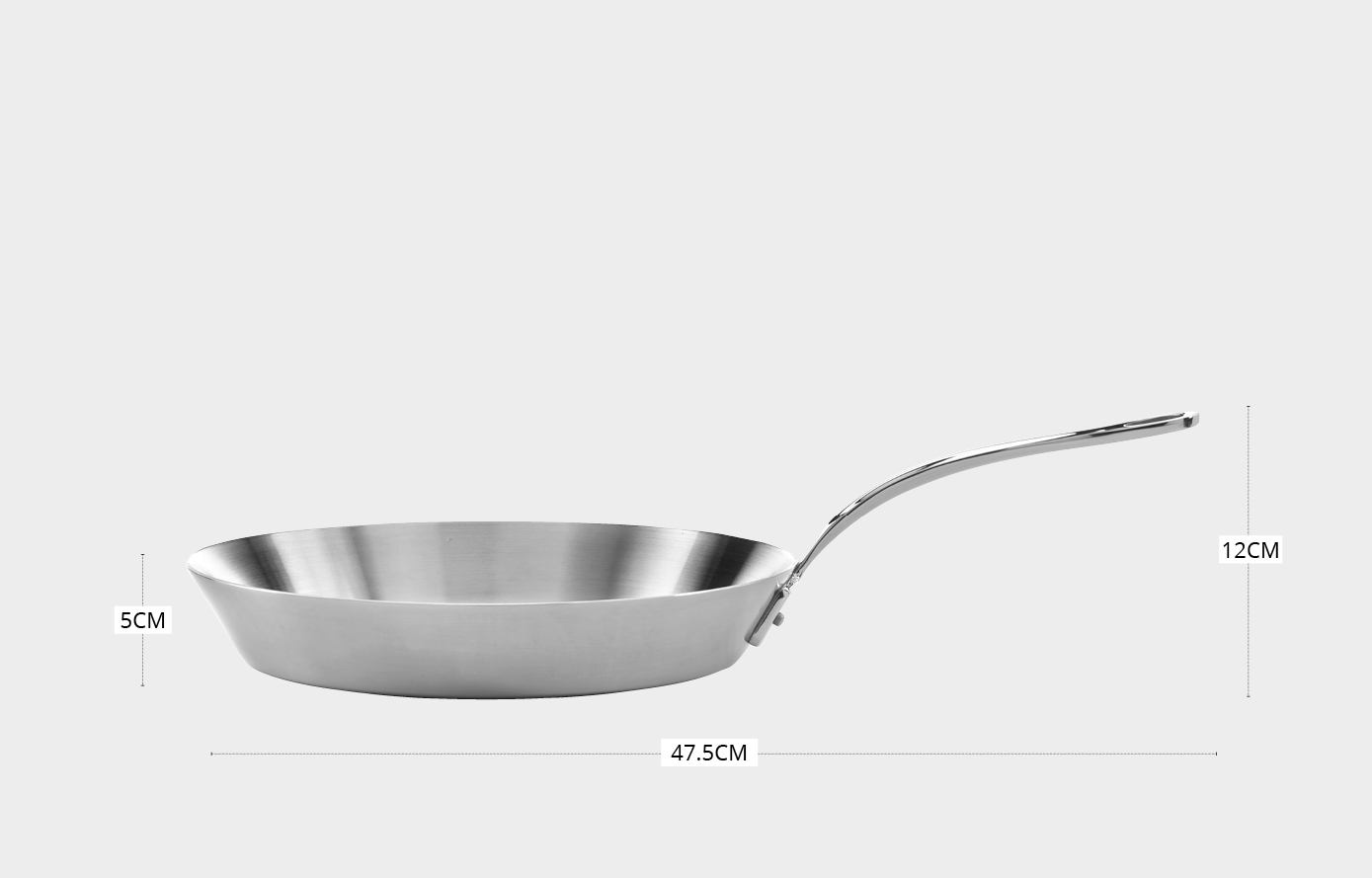
28cm Stainless Steel 3-Ply Frying Pan
Samuel Groves
- • 3-ply stainless with aluminium core
- • Uncoated cooking surface
Honest caveat: At £113 it costs about double the ProCook equivalent for a similar material. As with any stainless pan, expect some sticking until you master preheating, and small nickel and chromium transfer with acidic foods.
£113
Samuel Groves · Amazon

Professional Stainless Steel Frying Pan Uncoated 28cm
ProCook
- • 18/10 stainless, no coating
- • 7mm impact-bonded base
Honest caveat: The aluminium layer is only in the base, not the walls, so sides heat less evenly than fully clad pans. Price was a sale price (typical £79) when we checked.
£55
ProCook · Amazon


Stellar Profile Uncoated 28cm Frying Pan
Stellar
- • Uncoated 18/10 stainless
- • Encapsulated conductive base
Honest caveat: Encapsulated base rather than full cladding, so it is slower to respond than tri-ply. Oven-proof only to 240°C.
£72 typical price
Amazon · Stellar


316 Series Cookware Frying Pan 28cm
Robert Welch
- • 316 stainless cooking surface
- • Fully clad tri-ply to the rim
Honest caveat: 316 steel still contains nickel, and there is no published migration data showing this pan releases less metal than 18/10 pans. The corrosion advantage is well established for the alloy, not tested for this product.
£80 typical price
Amazon · Robert Welch


Stainless Steel Tri-Ply 24cm Chef’s Pan
ProWare Kitchen
- • Tri-ply: steel, aluminium core, steel
- • No coating on the cooking surface
Honest caveat: Stainless steel releases small amounts of nickel and chromium, most noticeably with long, acidic cooking in a new pan (Kamerud et al., 2013). No product-level migration data is published, and food will stick until you learn to preheat and use fat.
£78 typical price
Amazon · ProWare Kitchen


Stainless Clad Frying Pan 25cm
Made In
- • 5-ply stainless and aluminium
- • Made in Italy
Honest caveat: Pricier than 3-ply pans that perform similarly in home use. Sizes jump from 25cm to 30cm, with no 28cm option.
£109 typical price
Amazon · Made In


D3 TriPly Frying Pan with Lid 25cm
All-Clad
- • Tri-ply through base and walls
- • Includes lid
Honest caveat: You pay a brand premium; UK-brand tri-ply pans cost roughly half. The handle shape divides opinion.
£135
All-Clad · Amazon

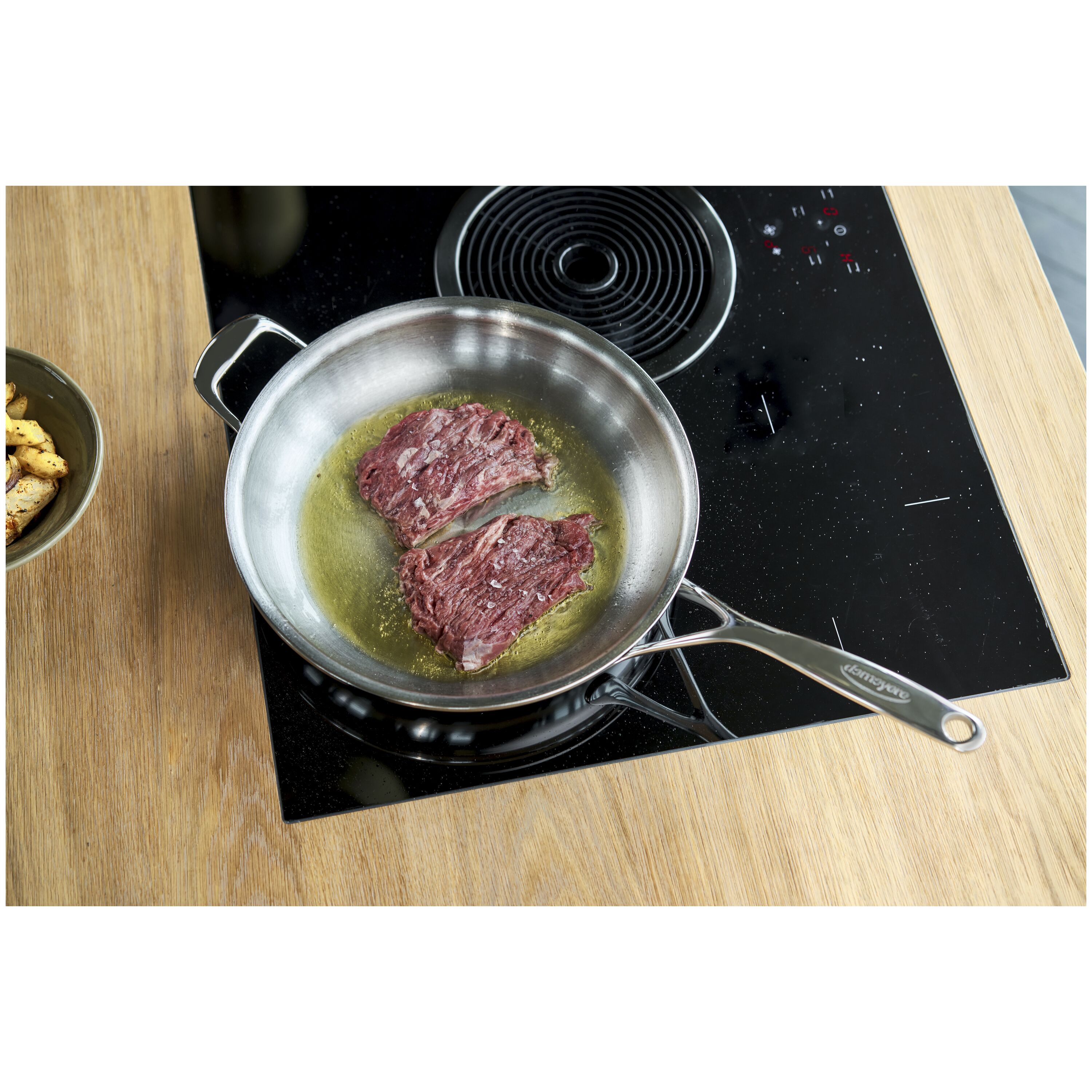
Proline 7 28cm Stainless Steel Frying Pan
Demeyere
- • 7-ply construction to the rim
- • Welded, rivet-free interior
Honest caveat: Expensive and heavy. Its Silvinox surface treatment is a finish on the steel rather than a coating, but the maker publishes no migration data for it.
£289 typical price
Amazon · Demeyere
We may earn a commission if you buy through our links. How we choose ›
How strong is the research? What our grades mean ›
- Strong research
- Independent certification or lab data for the specific claim.
- Promising research
- The material is well supported, but there is no product-level testing.
- Early research
- Little independent research.
- Mixed research
- Research findings disagree.
- £
- Under £20
- ££
- £20 to £79
- £££
- £80+
Why choose a stainless steel frying pan?
A stainless steel frying pan has no coating, so there is nothing to scratch, flake or overheat into fumes. It goes in the oven and dishwasher, takes metal utensils and, if well made, lasts decades. It is also the best pan for building a pan sauce, because the browned bits (fond) that stick to the surface carry the flavour.
The catch is technique. Food sticks if the pan is not hot enough or the food goes in wet and cold. Once you learn to preheat, stainless becomes a reliable everyday pan.
Why swap a non-stick frying pan for stainless steel?
PTFE (polytetrafluoroethylene, the Teflon-type coating) is considered low risk when used as intended: Germany's BfR says it only poses a health risk when strongly heated while empty, and the US FDA says negligible PFAS migrates into food. But the frying pan is the pan most likely to be preheated empty on high heat, which is exactly when PTFE can break down and give off fumes linked to polymer fume fever (Greenberg and Vearrier, 2015). PTFE is also a PFAS, and an EU-wide PFAS restriction is moving through ECHA's committees, with a final socio-economic opinion due by the end of 2026 (ECHA). A stainless pan sidesteps all of this, and outlasts several coated pans.
Our picks at a glance
| Product | Best for | Material/key feature | Price | Evidence grade |
|---|---|---|---|---|
| Samuel Groves 28cm Stainless Steel 3-Ply Frying Pan | Best overall | Fully clad 3-ply, lifetime guarantee | £113 | Moderate |
| ProCook Professional Stainless Steel Frying Pan Uncoated 28cm | Best value | 7mm bonded base, 25-year guarantee | £55 | Moderate |
| Stellar Profile Uncoated 28cm Frying Pan | Best under £75 from a heritage brand | Encapsulated base, lifetime guarantee | £72 typical price | Moderate |
| Robert Welch 316 Series Frying Pan 28cm | Best corrosion resistance | 316 steel surface, clad to rim | £80 | Moderate |
| ProWare Stainless Steel Tri-Ply 24cm Chef's Pan | Best deep-sided pan | Tri-ply, curved sides | £78 typical price | Moderate |
| Made In Stainless Clad Frying Pan 25cm | Best 5-ply | 5-ply, made in Italy | £109 typical price | Moderate |
| All-Clad D3 TriPly Frying Pan with Lid 25cm | Best with a lid | Original bonded tri-ply | £135 | Moderate |
| Demeyere Proline 7 28cm | Premium | 7-ply, welded rivet-free interior | £289 | Moderate |
How we chose
We only included pans with an uncoated stainless steel cooking surface (some "stainless" pans hide a non-stick coating inside, so check the listing says "uncoated"). We compared construction, guarantee length, oven limits and verified UK prices on brand sites or established retailers in October 2026, and covered a range of budgets.
Construction matters most. Stainless steel is a poor conductor of heat on its own, so good pans add aluminium or copper:
- Clad (tri-ply, 5-ply, 7-ply): layers bonded through the base and up the walls. More even heat, including at the edges.
- Encapsulated or impact-bonded base: an aluminium disc sealed under the base only. Cheaper and fine for most frying, but the walls run cooler.
Steel grade. Most pans use 18/10 (also called 304: 18% chromium, 10% nickel). 316 grade adds molybdenum for better resistance to salt and acid corrosion.
All picks are graded "moderate": stainless steel is a well-studied material, but none of these specific pans has published independent migration testing.
Our picks
Best overall: Samuel Groves 28cm Stainless Steel 3-Ply Frying Pan
Fully clad from base to rim, oven-proof to 250°C, induction-ready, and backed by a lifetime guarantee plus the brand's refurbishment service. A 28cm size suits family cooking. Caveat: at £113 it is double the ProCook price for a broadly similar job.
Best value: ProCook Professional Stainless Steel Frying Pan Uncoated 28cm
18/10 steel with a 7mm bonded base, oven-proof to 260°C and a 25-year guarantee, at £55 on offer (typically £79). Caveat: heat is concentrated in the base, so the outer edge and sides cook more slowly than clad pans.
Best under £75 from a heritage brand: Stellar Profile Uncoated 28cm Frying Pan
Stellar's long-running uncoated range (formerly called 7000) has a high-conductivity encapsulated base, a cast handle and a lifetime guarantee. Caveat: oven-proof only to 240°C, and as a base-only design it is less responsive than tri-ply.
Best corrosion resistance: Robert Welch 316 Series Frying Pan 28cm
Fully clad tri-ply with a 316-grade cooking surface. 316 steel resists pitting from salty and acidic foods better than 18/10. Caveat: 316 still contains nickel, and there is no product data showing lower metal transfer than standard pans; the advantage is known for the alloy, not tested for this pan.
Best deep-sided pan: ProWare Stainless Steel Tri-Ply 24cm Chef's Pan
Curved, deeper sides make it a cross between a frying pan and a sauté pan, good for stir-fries and sauces. Oven-proof to 260°C, lifetime guarantee. Caveat: 24cm is a little small for frying for four.
Best 5-ply: Made In Stainless Clad Frying Pan 25cm
Five bonded layers give very even heat and good heat retention, and it is made in Italy with a lifetime warranty. Caveat: £109 for a 25cm pan, with no 28cm option.
Best with a lid: All-Clad D3 TriPly Frying Pan with Lid 25cm
The original bonded tri-ply design, sold with a lid, which is handy for steaming greens or finishing eggs. Caveat: you pay for the name; UK tri-ply pans cost roughly half.
Premium: Demeyere Proline 7 28cm Stainless Steel Frying Pan
Seven layers to the rim (4.8mm thick), a welded handle with no rivets inside, made in Belgium with a 30-year warranty. Caveat: £289 and 2.3kg; this is a specialist's pan.
What the evidence says about stainless steel and metals
The main research on stainless steel cookware is a 2013 Oregon State University study (Kamerud et al.). Cooking tomato sauce for six hours raised nickel up to 26-fold and chromium up to 7-fold compared with sauce cooked without stainless steel, depending on steel grade. Leaching was highest in brand-new pans, fell with each use and levelled off after about six cooking cycles, though some transfer continued.
What this means in practice:
- For most people, the amounts are small. Short frying jobs with oil transfer far less than hours-long acidic simmering.
- If you have a diagnosed nickel allergy, use enamelled cast iron or carbon steel for long tomato, wine or vinegar dishes.
- Season new pans with use. Cooking a few non-acidic meals first is a sensible step given the study's finding that leaching drops over the first cycles.
All cookware sold in the UK and EU must not transfer constituents to food in amounts that could harm health (Regulation 1935/2004). Buying from established brands means there is a maker accountable for that.
How do you stop food sticking to stainless steel?
- Preheat the empty pan on medium for one to two minutes.
- Test with a few drops of water: if they bead up and skate, it is ready.
- Add oil, let it shimmer, then add dry, room-temperature food.
- Leave it alone. Protein releases naturally once a crust forms.
- Deglaze any stuck bits with stock, wine or water for a quick sauce.
What to avoid
- "Stainless" pans with a non-stick coating inside. Several ranges sell coated and uncoated versions side by side; check for "uncoated".
- Thin single-layer stainless with no aluminium base or cladding. It scorches in the centre and warps.
- Overheating on high when empty. Stainless will not give off fumes like PTFE, but it can discolour and warp.
- Abrasive steel wool on polished exteriors. Use a non-scratch scourer or a stainless cleaner for stains.
Bottom line
For most UK kitchens, a 28cm tri-ply pan is the sweet spot. The Samuel Groves 28cm is our best overall for its full cladding, lifetime guarantee and refurbishment service; the ProCook Professional 28cm is the best value at £55. Either avoids PTFE entirely and will outlast several coated pans.
Frequently asked questions
Is tri-ply better than an encapsulated base?
+
Tri-ply (clad) pans have aluminium running through the base and up the walls, so heat spreads evenly to the edges and the pan responds quickly when you change the heat. Encapsulated-base pans only have aluminium under the base, which is cheaper and fine for most frying, but the sides run cooler. For sauces and large pans, clad construction is worth paying for.
What is the difference between 18/10 and 316 stainless steel?
+
18/10 (also called 304) contains about 18% chromium and 10% nickel and is the standard for cookware. 316 adds molybdenum, which improves resistance to corrosion from salt and acids. Both contain nickel. There is no published testing showing 316 pans release less metal into food in home use, so treat it as a durability benefit.
Does stainless steel leach into food?
+
Yes, in small amounts. A 2013 study found long-simmered tomato sauce in stainless steel picked up nickel and chromium, with the most from new pans and levels stabilising after about six uses. Short frying jobs transfer much less. It mainly matters if you have a diagnosed nickel allergy, in which case use enamel or carbon steel for acidic dishes.
Can stainless steel frying pans go in the dishwasher?
+
Most uncoated stainless pans, including the Stellar, ProWare and Demeyere picks, are listed as dishwasher-proof. Hand washing keeps polished exteriors brighter, and dishwasher tablets can leave a rainbow tint over time. That tint is cosmetic and can be removed with a little white vinegar or a stainless steel cleaner.
Why does everything stick to my stainless steel pan?
+
Usually the pan is not hot enough, the food is wet or fridge-cold, or it is moved too soon. Preheat the empty pan on medium for one to two minutes, add oil, then add dry food and let it sear until it releases. Water drops that bead and skate across the surface show the pan is ready.
Last updated