Food & Kitchen
Best Plastic-Free Kettles UK (2026): Electric and Stovetop
Quick answer
The Cosori Plastic-Free Water Contact Kettle (about £33) has a 304 stainless steel body, inner lid and filter with internal fill marks, so no plastic touches the water. For temperature control, the Saki Luna is steel inside with a silicone lid ring. Stovetop kettles from La Cafetière, Bresor and Le Creuset remove plastic from the water path entirely.
Our picks

Cosori Plastic-Free Water Contact Kettle 1.7L
Cosori
- • 304 stainless steel body, inner lid and filter
- • Internal fill markings, no plastic window
Honest caveat: The listing does not name the material of the lid seal, so a small silicone or rubber gasket cannot be ruled out. The outer handle and base are plastic, which do not touch the water. Stainless steel can release small amounts of nickel, mostly when new.
Cosori

Saki Luna Electric Kettle 1.75L
Saki
- • 304 stainless steel reservoir, spout and lid underside
- • Silicone ring at lid edge
Honest caveat: Saki’s own materials page says a silicone ring seals the lid edge, so silicone is present at the rim even though the UK listing title says no silicone contact. The boil-sensor material is not stated. Expensive for a kettle.
Saki
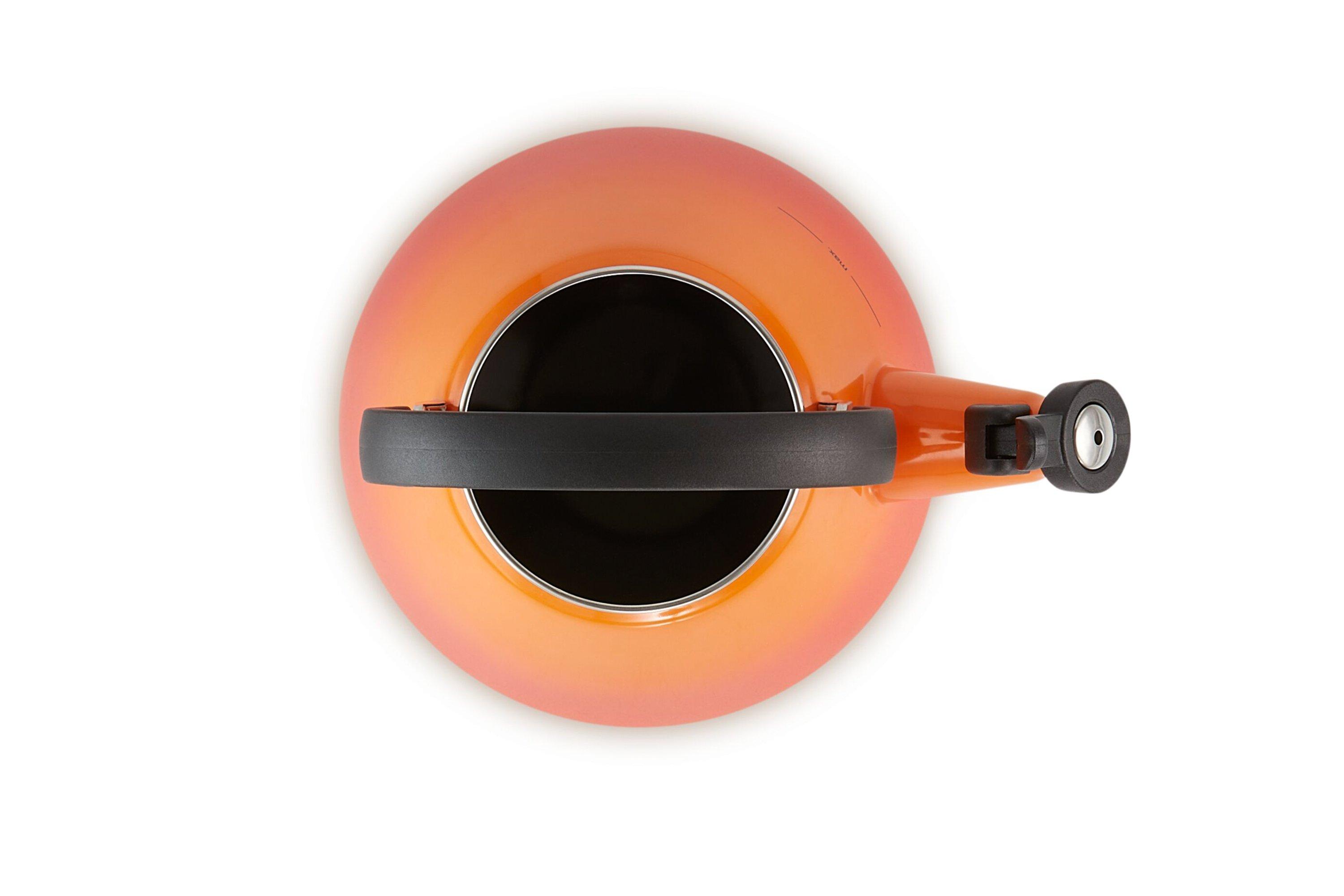
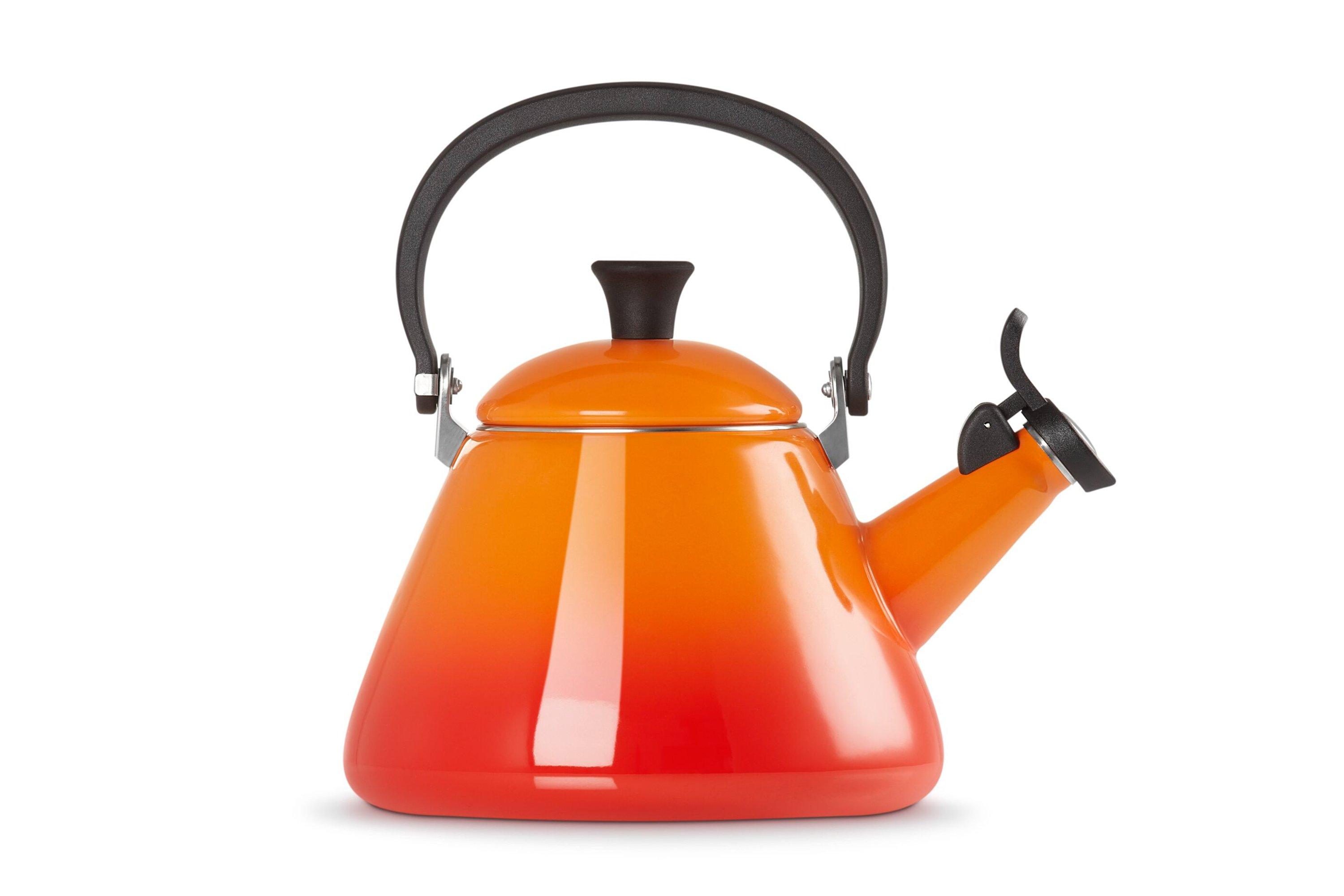
Le Creuset Kone Stovetop Kettle 1.6L
Le Creuset
- • Enamelled steel body and lid
- • Induction compatible
Honest caveat: The handle is plastic (phenolic trim) and the fixed whistle cap material is not stated, though neither sits in the water. Chipped enamel exposes steel that can rust; stop using it for water if the inside chips. Prices vary widely by colour and retailer.
Amazon · Le Creuset

Bresor Polished Stovetop Kettle
Bresor
- • 18/10 stainless steel
- • Thermic base for even heating
Honest caveat: The retailer does not list handle, whistle or lid knob materials. A stovetop kettle needs watching and is slower than a 3kW electric kettle.
Bresor

La Cafetière Stainless Steel Whistling Stovetop Kettle 1.3L
La Cafetière
- • Stainless steel body
- • Gas and induction
Honest caveat: The steel grade is not stated, and the handle looks to be plastic (John Lewis’s archived listing of a La Cafetière 1.3L whistling kettle describes a heat-resistant plastic handle). Small 1.3 litre capacity, and the whistle lid can get hot.
La Cafetière
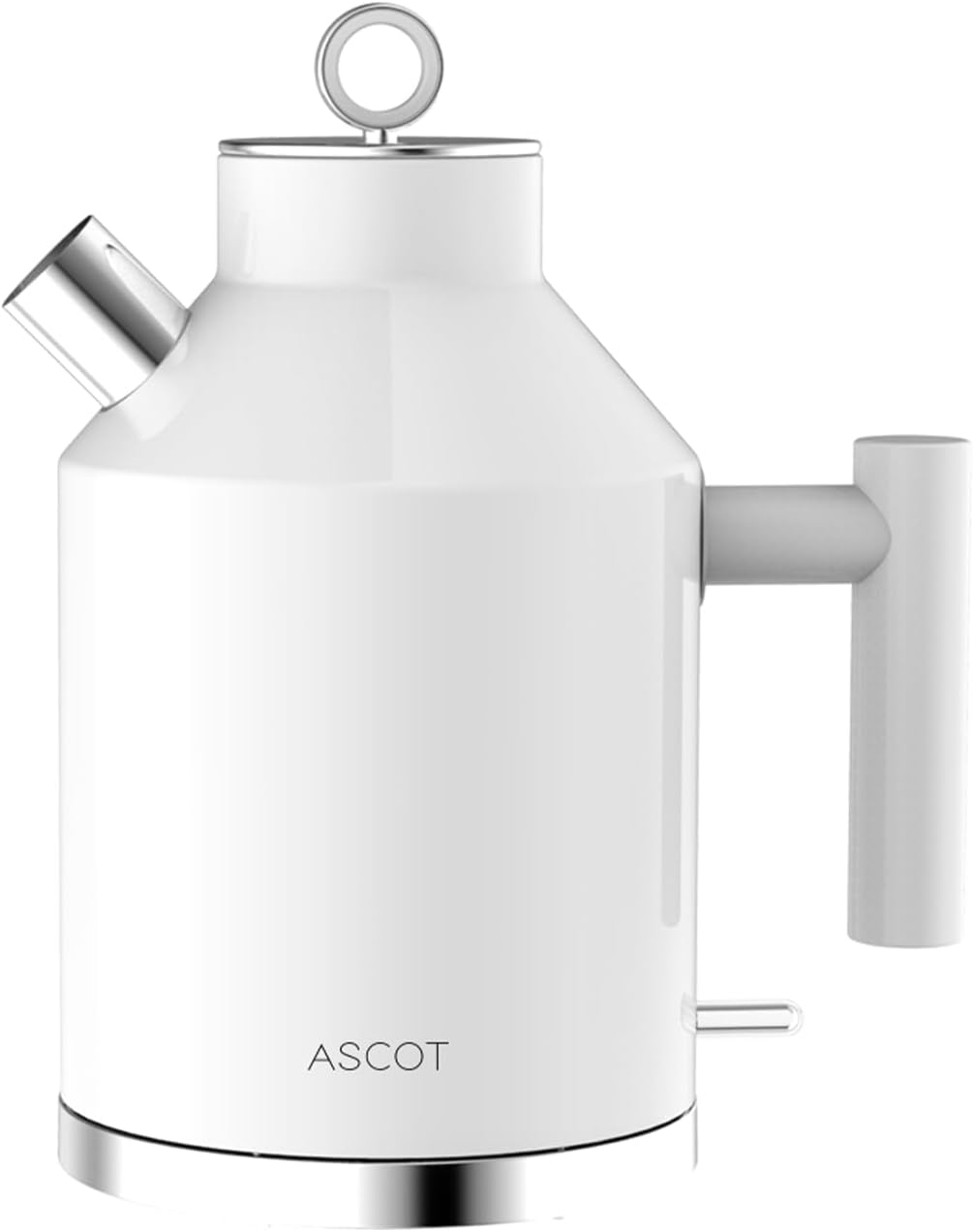
ASCOT Stainless Steel Electric Kettle 1.5L
ASCOT
- • 304 stainless steel interior and inner lid
- • Stainless steel spout filter
Honest caveat: The listing contradicts itself on power (2200W in the title, 1500W in the description), and the brand is marketplace-only with no UK brand site we could check. Some reviewers report early faults.
ASCOT
We may earn a commission if you buy through our links. How we choose ›
How strong is the research? What our grades mean ›
- Strong research
- Independent certification or lab data for the specific claim.
- Promising research
- The material is well supported, but there is no product-level testing.
- Early research
- Little independent research.
- Mixed research
- Research findings disagree.
- £
- Under £20
- ££
- £20 to £79
- £££
- £80+
Our picks at a glance
| Product | Best for | Material/key feature | Price | Evidence grade |
|---|---|---|---|---|
| Cosori Plastic-Free Water Contact Kettle 1.7L | Best overall electric | 304 steel body, inner lid and filter; internal fill marks | £33 | Moderate |
| Saki Luna Electric Kettle 1.75L | Premium, temperature control | 304 steel interior and lid underside; silicone lid ring | £175 | Moderate |
| Le Creuset Kone Stovetop Kettle 1.6L | Best enamel stovetop | Enamelled steel body and lid | £83.99 | Moderate |
| Bresor Polished Stovetop Kettle | Best steel stovetop | 18/10 stainless steel, thermic base | £72 | Moderate |
| La Cafetière Stainless Steel Whistling Kettle 1.3L | Budget pick | Stainless steel stovetop | £13.79 | Moderate |
| ASCOT Stainless Steel Electric Kettle 1.5L | Also consider | 304 steel interior and inner lid | £50.99 | Limited |
Prices checked on UK retailer pages in October 2026.
How we chose
We looked only at what touches the water: the body, the inside of the lid, the spout filter, the water-level window and any seals. The outer handle and the electric base do not touch the water, so we ignored them. We read each UK listing or brand materials page and excluded kettles whose "stainless" label hid a plastic lid lining, a plastic filter or a plastic window. Where a seal or part was not specified, we say so. No kettle here has independent migration testing, so the best grade is "moderate": metal and enamel are well-understood materials, but no product-level lab data exists.
Where is the plastic in a "stainless steel" kettle?
Most electric kettles sold as stainless steel still have plastic in contact with hot water. The usual places are:
- The water-level window, a clear plastic strip on the side.
- The inside of the lid, often a plastic liner even when the outside is metal.
- The limescale filter in the spout, frequently a plastic mesh.
- Seals and gaskets around the lid, usually silicone.
Glass electric kettles have the same problem in a different place: the glass jug normally sits in a plastic collar at the base and has a plastic lid. That is why we have not picked a glass electric kettle.
Does boiling water in plastic matter?
Heat and repeated use increase the shedding of microplastics from polypropylene, a common kettle and baby bottle plastic. A Nature Food study found polypropylene infant feeding bottles released up to 16.2 million particles per litre during formula preparation, with sterilisation and hot water significantly increasing release (Li et al., 2020). The authors cite earlier work on particles from plastic kettles, but large peer-reviewed kettle studies are still thin, and the health effects of swallowed microplastics are not yet established.
Metal is not entirely inert either. Stainless steel contains nickel and chromium, and EFSA has assessed nickel in food and drinking water and set a tolerable daily intake for it (EFSA, 2020). Metal release from new stainless items tends to be highest in the first uses, and soft or acidic water increases it. Practical step: boil and discard two or three full kettles before first use, and descale regularly so the element and body stay clean.
All of these kettles are covered by the same UK rule as any food-contact item: they must not transfer substances into food or drink in amounts that could endanger health (Regulation (EC) 1935/2004; SI 2012/2619).
The best plastic-free kettles in the UK
Cosori Plastic-Free Water Contact Kettle 1.7L: best overall electric
Cosori states every water-contact part, including the spout, inner lid and filter, is 304 stainless steel, and the fill markings are etched inside instead of a plastic window. It is a fast 3kW kettle for around £33. Caveat: the lid seal material is not listed, and owners consistently describe it as loud.
Saki Luna Electric Kettle 1.75L: premium with temperature control
For tea and coffee at set temperatures, Saki says the reservoir, spout and underside of the lid are 304 stainless steel. Caveat: Saki's own materials page confirms a silicone ring seals the lid edge, so "no silicone contact" on the UK listing is not quite right. It is also expensive.
Le Creuset Kone Stovetop Kettle 1.6L: best enamel stovetop
The body and lid are enamelled steel (a glass layer fused onto metal), and it works on gas, electric and induction hobs. Caveat: the handle trim is plastic, the whistle material is not stated, and chipped enamel exposes steel that can rust.
Bresor Polished Stovetop Kettle: best steel stovetop
An 18/10 stainless steel stovetop kettle with a thermic base for even heating, chosen by durability-focused UK retailer Buy Me Once. Caveat: the handle and whistle materials are not listed, and it is slower than an electric kettle.
La Cafetière Stainless Steel Whistling Kettle 1.3L: budget pick
The cheapest route to boiling water without plastic touching it: a plain steel stovetop kettle that works on gas and induction. Caveat: the steel grade is not stated, the handle appears to be plastic, and 1.3 litres is small.
ASCOT Stainless Steel Electric Kettle 1.5L: also consider
The listing states a 304 stainless interior, inner lid and spout filter. Caveat: the listing contradicts itself on wattage, and the brand has no UK site we could check, so we rate it "limited".
Electric or stovetop: which is better for lower plastic?
| Type | Plastic in water path | Speed | Running cost |
|---|---|---|---|
| Stovetop steel or enamel | Usually none | Slow, needs watching | Depends on hob; induction is efficient |
| Electric, fully steel interior | Little to none; check seals | Fast, auto switch-off | Efficient for small volumes |
| Electric with plastic window or lid lining | Yes | Fast | Efficient |
| Glass electric | Usually plastic lid and base collar | Fast | Efficient |
Stovetop kettles are the simplest way to remove plastic from the water path. Electric models with all-steel interiors are now available at everyday prices, so you no longer need a hob kettle to avoid plastic.
Can I reduce plastic contact with the kettle I already own?
You do not have to replace a working kettle to cut exposure. Boil only the water you need and pour it straight away, rather than leaving water to sit against plastic parts. Descale regularly with citric acid or vinegar, then boil and discard one full kettle of fresh water. If the inside of the lid, the filter or the window is cracked, cloudy or brittle, that is a good moment to replace it, ideally with a model that has a steel water path. When you do replace it, recycle the old kettle at a household waste centre as electrical waste.
What to avoid
- "BPA-free" as the only claim. It tells you the plastic is not polycarbonate, not that there is no plastic.
- External water windows on otherwise stainless kettles.
- Plastic mesh filters and lids with plastic undersides.
- Glass kettles marketed as plastic-free without a full materials list; check the lid and base collar.
- Leaving water to stand in any kettle for long periods. Empty and refill instead.
Bottom line
For most people the Cosori 1.7L is the best-value way to get a steel water path in an electric kettle. If you want temperature control, the Saki Luna is the metal-interior option, with a silicone lid ring. If you are happy to boil on the hob, a steel or enamelled stovetop kettle from La Cafetière, Bresor or Le Creuset removes plastic from the water path entirely. Whatever you choose, run a few boils before first use and descale regularly.
Frequently asked questions
Is there an electric kettle with no plastic inside?
+
Yes. The Cosori Plastic-Free Water Contact Kettle states that its body, spout, inner lid and filter are all 304 stainless steel, with fill markings inside instead of a plastic window. The Saki Luna is similar but uses a silicone ring at the lid edge. Check seals: most listings do not name the gasket material.
Are glass kettles plastic free?
+
Rarely. Most glass electric kettles have a plastic lid and a plastic collar where the glass meets the heating base, and some have plastic filters. The glass itself is inert, but water still contacts plastic in those spots. A steel-interior electric kettle or a steel or enamel stovetop kettle is a more reliable way to avoid plastic.
Does boiling water in a plastic kettle release microplastics?
+
Research on polypropylene baby bottles found heat and sterilisation sharply increased microplastic release, up to millions of particles per litre. Kettle-specific peer-reviewed data are limited, and the health effects of swallowed microplastics are not yet established. Choosing a steel water path is a simple lower-exposure step rather than a proven health intervention.
Do stainless steel kettles leach nickel?
+
They can release small amounts, mainly when new and with very soft or acidic water. EFSA has assessed nickel from food and drinking water. Boiling and discarding a few full kettles before first use, descaling regularly and not leaving water standing reduce what ends up in your drink. People with a nickel allergy may prefer an enamelled stovetop kettle.
Is a stovetop kettle better than an electric one?
+
For avoiding plastic, usually yes, because a basic steel or enamel stovetop kettle has no window, filter or electronics. It is slower and needs watching. On an induction hob it can be fairly efficient. An electric kettle with an all-steel interior is the convenient middle ground.
What does 304 stainless steel mean?
+
304 is a common food-grade stainless steel, also called 18/8 (about 18% chromium and 8% nickel). 18/10 has slightly more nickel. Both resist rust and are widely used for cookware. The grade matters less than whether other parts, such as the lid liner, filter and window, are also metal.
Last updated