Food & Kitchen
Best Non-Toxic Frying Pans UK (2026): PTFE-Free Picks Compared
Quick answer
A lower-exposure frying pan is one with no PTFE (Teflon-type) coating: uncoated stainless steel, cast iron, carbon steel, or a ceramic-coated pan. Our best overall is the Samuel Groves 28cm tri-ply stainless pan (£113); the de Buyer Blue Steel pan is the best under £20. Ceramic offers easy release but wears out sooner.
Our picks
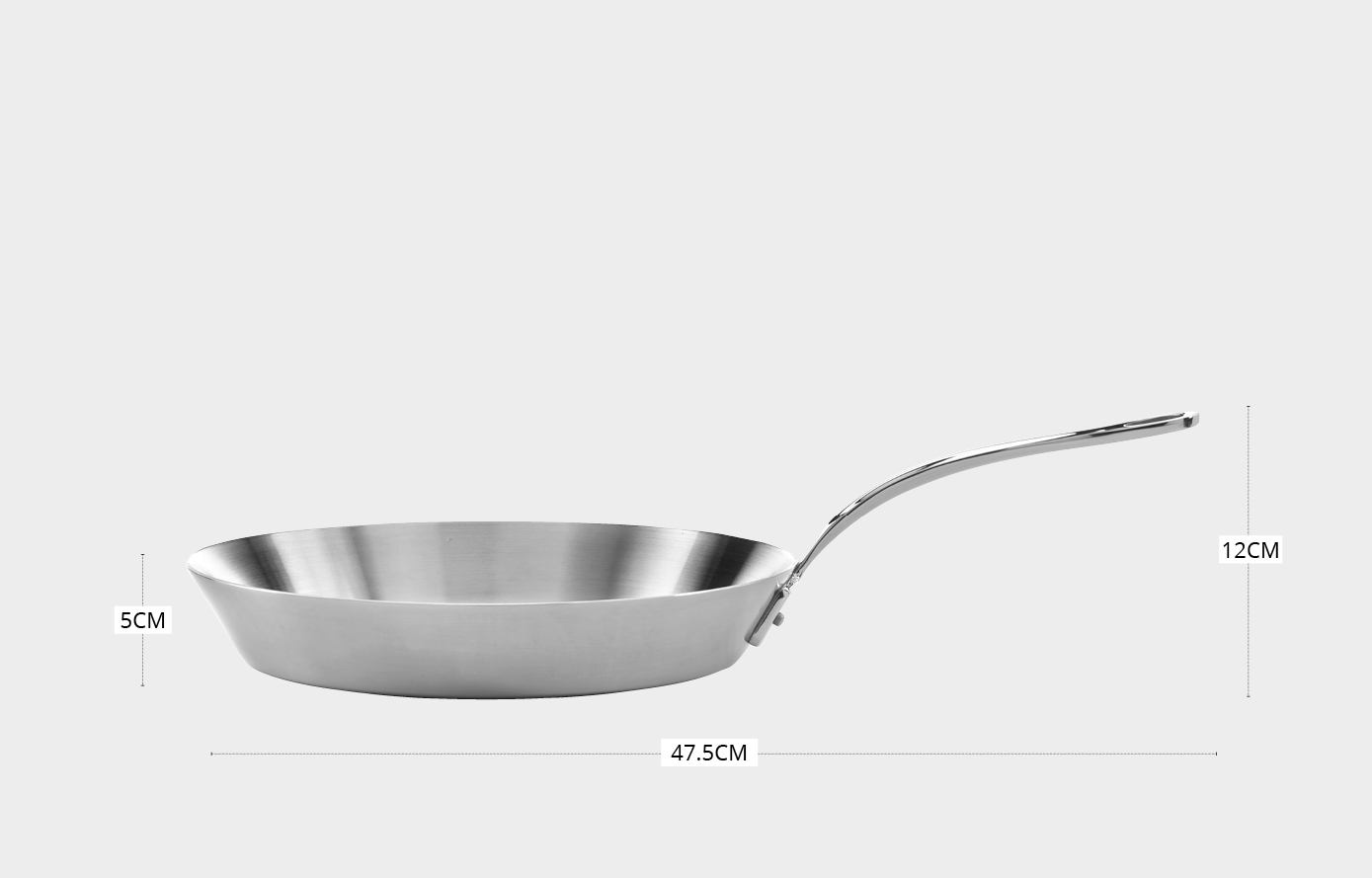
28cm Stainless Steel 3-Ply Frying Pan
Samuel Groves
- • 3-ply stainless with aluminium core
- • Uncoated cooking surface
Honest caveat: At £113 it costs about double the ProCook equivalent for a similar material. As with any stainless pan, expect some sticking until you master preheating, and small nickel and chromium transfer with acidic foods.
Samuel Groves · Amazon


Blue Steel Frying Pan 24cm
de Buyer
- • Under £20
- • Light, fast-heating carbon steel
Honest caveat: Thinner steel can warp under very high heat and has hotter spots than Mineral B. Needs seasoning and drying like any carbon steel.
de Buyer · Amazon

Professional Stainless Steel Frying Pan Uncoated 28cm
ProCook
- • 18/10 stainless, no coating
- • 7mm impact-bonded base
Honest caveat: The aluminium layer is only in the base, not the walls, so sides heat less evenly than fully clad pans. Price was a sale price (typical £79) when we checked.
ProCook · Amazon


Mineral B Carbon Steel Frying Pan 28cm
de Buyer
- • Carbon steel, no factory coating
- • Beeswax finish protects against rust
Honest caveat: Must be seasoned before use and kept dry. Acidic food strips seasoning and picks up iron. Heavy for its size and the handle gets hot in the oven.
Amazon · de Buyer


Original Cast Iron Skillet 26cm
Lodge
- • Bare cast iron, factory seasoned
- • Hob, oven and barbecue
Honest caveat: Heavy, slow to heat and needs drying and oiling. Food cooked in iron picks up some iron, which matters if you have been told to limit iron (Brittin and Nossaman, 1986).
Amazon · Lodge


Essence Frying Pan 24cm
GreenPan
- • Ceramic coating, no PTFE
- • Induction base
Honest caveat: Oven limit is just 160°C. Expect the coating to wear and stick sooner than an uncoated pan, at which point it needs replacing. No published independent testing.
Amazon · GreenPan

Titanium Always Pan Pro 26cm
Our Place
- • No sprayed coating, textured titanium surface
- • Fully clad 3mm construction
Honest caveat: The ’NoCo’ non-stick technology is patent-pending and we found no independent lab or peer-reviewed data on its food release, durability or metal migration. At £170 it costs far more than proven uncoated pans.
Amazon · Our Place

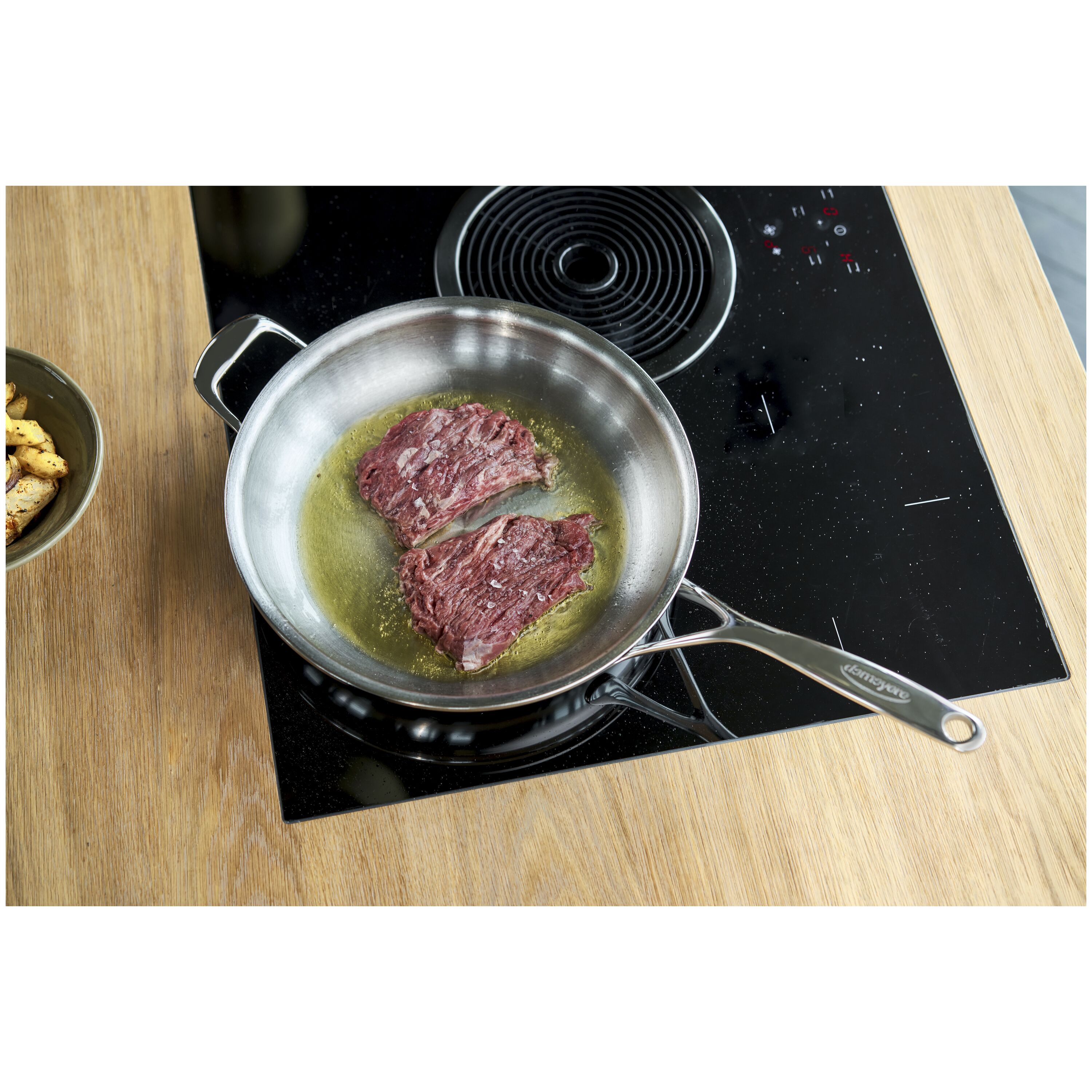
Proline 7 28cm Stainless Steel Frying Pan
Demeyere
- • 7-ply construction to the rim
- • Welded, rivet-free interior
Honest caveat: Expensive and heavy. Its Silvinox surface treatment is a finish on the steel rather than a coating, but the maker publishes no migration data for it.
Amazon · Demeyere
We may earn a commission if you buy through our links. How we choose ›
How strong is the research? What our grades mean ›
- Strong research
- Independent certification or lab data for the specific claim.
- Promising research
- The material is well supported, but there is no product-level testing.
- Early research
- Little independent research.
- Mixed research
- Research findings disagree.
- £
- Under £20
- ££
- £20 to £79
- £££
- £80+
What makes a frying pan "non-toxic"?
For most shoppers, a "non-toxic" frying pan means one without PTFE (polytetrafluoroethylene, the Teflon-type coating) or other PFAS (per- and polyfluoroalkyl substances). The frying pan matters more than any other pan because it is the one most often heated hard and, sometimes, heated empty. That is exactly when PTFE coatings can break down: Germany's risk assessor BfR puts decomposition at around 360°C, which an empty pan on a powerful gas or induction ring can reach in minutes.
Four kinds of frying pan avoid PTFE entirely: uncoated stainless steel, cast iron, carbon steel, and ceramic-coated pans. A fifth, newer type uses a textured metal surface instead of a coating.
Our picks at a glance
| Product | Best for | Material/key feature | Price | Evidence grade |
|---|---|---|---|---|
| Samuel Groves 28cm Stainless Steel 3-Ply Frying Pan | Best overall | Fully clad stainless, no coating | £113 | Moderate |
| de Buyer Blue Steel Frying Pan 24cm | Under £20 | Thin carbon steel | £19.99 | Moderate |
| ProCook Professional Stainless Steel Frying Pan Uncoated 28cm | Best value stainless | Impact-bonded base, 25-year guarantee | £55 | Moderate |
| de Buyer Mineral B Carbon Steel Frying Pan 28cm | Best carbon steel | Thick carbon steel, beeswax finish | £62 | Moderate |
| Lodge Original Cast Iron Skillet 26cm | Best cast iron | Pre-seasoned cast iron | £36 | Moderate |
| GreenPan Essence Frying Pan 24cm | Budget ceramic | Ceramic coating, no PTFE | £39.99 | Limited |
| Our Place Titanium Always Pan Pro 26cm | Coating-free non-stick (new tech) | Textured titanium surface | £170 | Limited |
| Demeyere Proline 7 28cm | Premium | 7-ply stainless, welded handle | £289 | Moderate |
How we chose
We shortlisted pans with no PTFE on the cooking surface, sold by brand sites or established UK retailers, and checked prices in October 2026. We then graded evidence: "moderate" where the material is well studied but the specific pan has no independent testing, and "limited" where both the material and product have thin evidence. We favoured long guarantees and covered every budget from under £20.
We did not rely on "PFAS-free" labels alone. Consumer Reports found PFOA in a PTFE pan sold as PFOA-free, and advises that "PTFE-free" is the more meaningful claim.
Our picks
Best overall: Samuel Groves 28cm Stainless Steel 3-Ply Frying Pan
Stainless steel wrapped around an aluminium core through base and walls gives even heat and a surface that will not wear off. Lifetime guarantee and a refurbishment service from a British brand. Caveat: expensive for what it is, and like all stainless steel it releases small amounts of nickel and chromium, most in a new pan used for acidic food (Kamerud et al., 2013).
Best under £20: de Buyer Blue Steel Frying Pan 24cm
A light, heat-treated carbon steel pan that heats fast and builds its own non-stick layer (seasoning) over time. Caveat: thinner steel can warp on very high heat and suits gas better than induction. Needs seasoning and drying.
Best value stainless: ProCook Professional Stainless Steel Frying Pan Uncoated 28cm
18/10 stainless steel with a thick 7mm bonded base, oven-proof to 260°C, with a 25-year guarantee. At £55 (on offer from £79) it is the cheapest decent uncoated 28cm pan we found from a UK brand. Caveat: the aluminium is only in the base, so the sides heat less evenly than clad pans.
Best carbon steel: de Buyer Mineral B Carbon Steel Frying Pan 28cm
The thicker, heavier sibling of Blue Steel, made for searing steak and crisping potatoes, and slick enough for eggs once seasoned. Caveat: needs seasoning before first use and gentle care, and acidic food strips the seasoning and adds iron.
Best cast iron: Lodge Original Cast Iron Skillet 26cm
Pre-seasoned, practically indestructible and about £36. Excellent heat retention for searing. Caveat: heavy and slow to heat; cooking in iron adds iron to food (Brittin and Nossaman, 1986), which matters only if you have been told to limit iron.
Budget ceramic: GreenPan Essence Frying Pan 24cm
If you want eggs to glide with minimal oil and no PTFE, this is an affordable ceramic option from a brand that pioneered the category. Caveat: oven-proof only to 160°C, and ceramic coatings lose slickness quicker than PTFE. A lab study found similar silica-based coatings released titanium particles in acidic conditions (Golja et al., 2017).
Coating-free non-stick, new tech: Our Place Titanium Always Pan Pro 26cm
Instead of a sprayed coating, the cooking surface is a pressed texture in titanium on a fully clad stainless body. The maker says it uses no PTFE or other PFAS. Caveat: it is new, patent-pending, and we found no independent testing of its release or durability, so we grade it "limited". At £170 you are paying for promise rather than proof.
Premium: Demeyere Proline 7 28cm Stainless Steel Frying Pan
Seven layers of metal to the rim and a welded handle, so there are no rivets inside to trap food. Made in Belgium with a 30-year warranty. Caveat: £289 and 2.3kg; most home cooks will not need this much pan.
What the evidence says
- PTFE is low risk at normal temperatures but becomes a problem when overheated. BfR says it poses a risk only when strongly heated while empty, and the FDA says negligible PFAS migrates into food. Polymer fume fever, a short flu-like illness from overheated PTFE fumes, is well documented (Greenberg and Vearrier, 2015).
- Scratched PTFE sheds particles. A 2022 lab study estimated thousands to millions of micro and nanoplastic particles may come from a damaged coating during simulated cooking (Luo et al., 2022). Health effects of swallowing these are not established.
- PFAS is under regulatory review. In the EU, the risk committee (RAC) adopted its opinion on a broad PFAS restriction in March 2026, and the socio-economic committee's final opinion is due by the end of 2026 (ECHA, June 2026). The UK published its PFAS Plan in February 2026.
- Uncoated metals transfer small amounts of metal. Nickel and chromium from stainless steel, iron from cast iron and carbon steel. These are measurable but modest.
What to avoid
- Heating any coated pan empty, and using PTFE on high heat near pet birds (case report).
- Relying on "PFOA-free", which does not tell you whether the pan is coated with PTFE.
- Very cheap "granite" or "stone" effect pans. These names usually describe the look of a coating, which is often PTFE-based. Check the listing for the words "PTFE-free".
- Keeping a flaking pan. Once the coating is lifting, replace it.
Which material should you pick?
- You cook eggs and fish daily and want an easy life: ceramic, accepting replacement every couple of years.
- You want one pan for life and are happy to learn heat control: stainless steel.
- You sear a lot and do not mind maintenance: carbon steel or cast iron.
For a deeper comparison of stainless pans see our best stainless steel frying pan guide, and for carbon steel see our carbon steel pan guide.
Bottom line
Swapping your frying pan is the single most useful change if you want less PTFE exposure, because it is the pan you heat hardest. A well-made uncoated stainless pan such as the Samuel Groves 28cm, or a £20 to £60 carbon steel pan from de Buyer, will cook better over time and never need replacing for a worn coating.
Frequently asked questions
What is the healthiest frying pan to use?
+
Uncoated stainless steel, cast iron and carbon steel are the most studied PTFE-free options, and each adds only small amounts of metal to food. Stainless steel is the easiest to clean and needs no seasoning. Cast iron and carbon steel build a natural non-stick layer with use. Ceramic is PTFE-free too, but its coating wears out within a few years.
Is a stainless steel frying pan non-toxic?
+
A stainless pan has no coating, so there is nothing to flake or overheat into fumes. It does release traces of nickel and chromium, most in the first few uses and with long acidic cooking, according to a 2013 study in the Journal of Agricultural and Food Chemistry. Levels stabilised after about six cooks. People with nickel allergy may prefer cast iron or enamel.
What does PFAS-free cookware mean?
+
It means the maker says no PFAS, the 'forever chemicals' family that includes PTFE, is used in the cooking surface. It is a self-declared claim, not a certification. Consumer Reports notes most tests check fewer than 100 of thousands of PFAS, so it recommends looking for 'PTFE-free', or simply choosing uncoated stainless steel, cast iron or carbon steel.
Is there a non-stick pan without PTFE?
+
Yes. Ceramic non-stick pans from brands such as GreenPan use a silica-based coating instead of PTFE, and seasoned carbon steel or cast iron become naturally slick with use. Newer textured titanium pans, such as Our Place's Titanium Always Pan Pro, claim non-stick performance with no applied coating, but have little independent testing so far.
How do I stop food sticking to a stainless steel pan?
+
Heat the empty pan over medium heat for one to two minutes, add oil and let it shimmer, then add food that is dry and not fridge-cold. Leave it to sear until it releases naturally before turning. A few drops of water that skate across the surface as balls show the pan is hot enough. Deglaze stuck bits with stock or wine for a sauce.
Are granite or stone frying pans PTFE-free?
+
Usually not. 'Granite' and 'stone' typically describe the speckled look of the coating, and many are PTFE-based non-stick. Some are ceramic. Check the product listing for an explicit 'PTFE-free' statement, and treat 'PFOA-free' as uninformative, since PFOA has been restricted in the EU since 2020 and most PTFE pans now carry that label.
Last updated