Food & Kitchen
Best Non-Toxic Cookware UK (2026): An research-led Guide
Quick answer
The lowest-exposure cookware is mostly uncoated: tri-ply stainless steel for frying and saucepans, enamelled cast iron for acidic slow cooking, and cast iron or carbon steel for searing. These avoid PTFE (Teflon) coatings entirely. Ceramic non-stick is PTFE-free but wears faster and is less studied. Our top pick is ProWare's £78 tri-ply chef's pan.
Our picks


Stainless Steel Tri-Ply 24cm Chef’s Pan
ProWare Kitchen
- • Tri-ply: steel, aluminium core, steel
- • No coating on the cooking surface
Honest caveat: Stainless steel releases small amounts of nickel and chromium, most noticeably with long, acidic cooking in a new pan (Kamerud et al., 2013). No product-level migration data is published, and food will stick until you learn to preheat and use fat.
ProWare Kitchen


Original Cast Iron Skillet 26cm
Lodge
- • Bare cast iron, factory seasoned
- • Hob, oven and barbecue
Honest caveat: Heavy, slow to heat and needs drying and oiling. Food cooked in iron picks up some iron, which matters if you have been told to limit iron (Brittin and Nossaman, 1986).
Lodge
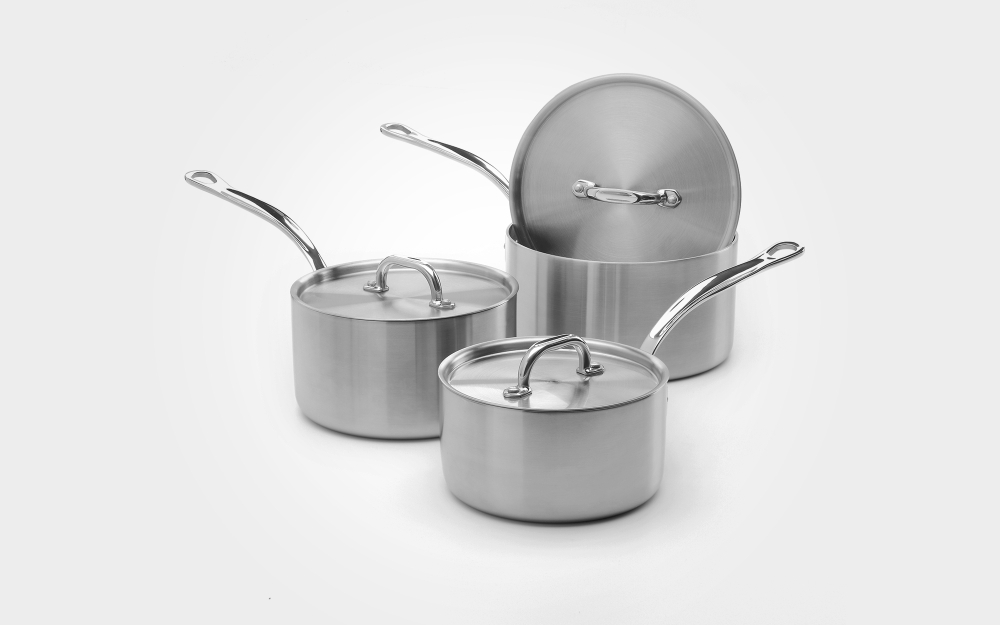
3 Piece Stainless Steel Tri-Ply Saucepan Set
Samuel Groves
- • Three lidded tri-ply saucepans
- • No coating on any cooking surface
Honest caveat: A big outlay compared with buying two or three single pans from ProWare or ProCook. No independent migration testing is published for these specific pans.
Samuel Groves


Stainless Steel Tri-ply 18cm Saucepan
ProWare Kitchen
- • 2.4 litre capacity, 1.53kg
- • Bare stainless interior, stainless lid
Honest caveat: Like all stainless steel, it can add small amounts of nickel and chromium to food, especially long-simmered tomato dishes in the first few uses. People with a diagnosed nickel allergy may prefer enamelled cast iron for acidic dishes.
ProWare Kitchen
Cast Iron Round Casserole
Le Creuset
- • Enamelled inside and out, no PTFE
- • Sand enamel interior shows browning
Honest caveat: Heavy (a 24cm pot holds 4.2 litres) and expensive. Enamel can chip if dropped or overheated empty, and chipped interiors should be retired from cooking. Price shown is the 24cm at John Lewis.
Le Creuset


Mineral B Carbon Steel Frying Pan 28cm
de Buyer
- • Carbon steel, no factory coating
- • Beeswax finish protects against rust
Honest caveat: Must be seasoned before use and kept dry. Acidic food strips seasoning and picks up iron. Heavy for its size and the handle gets hot in the oven.
de Buyer
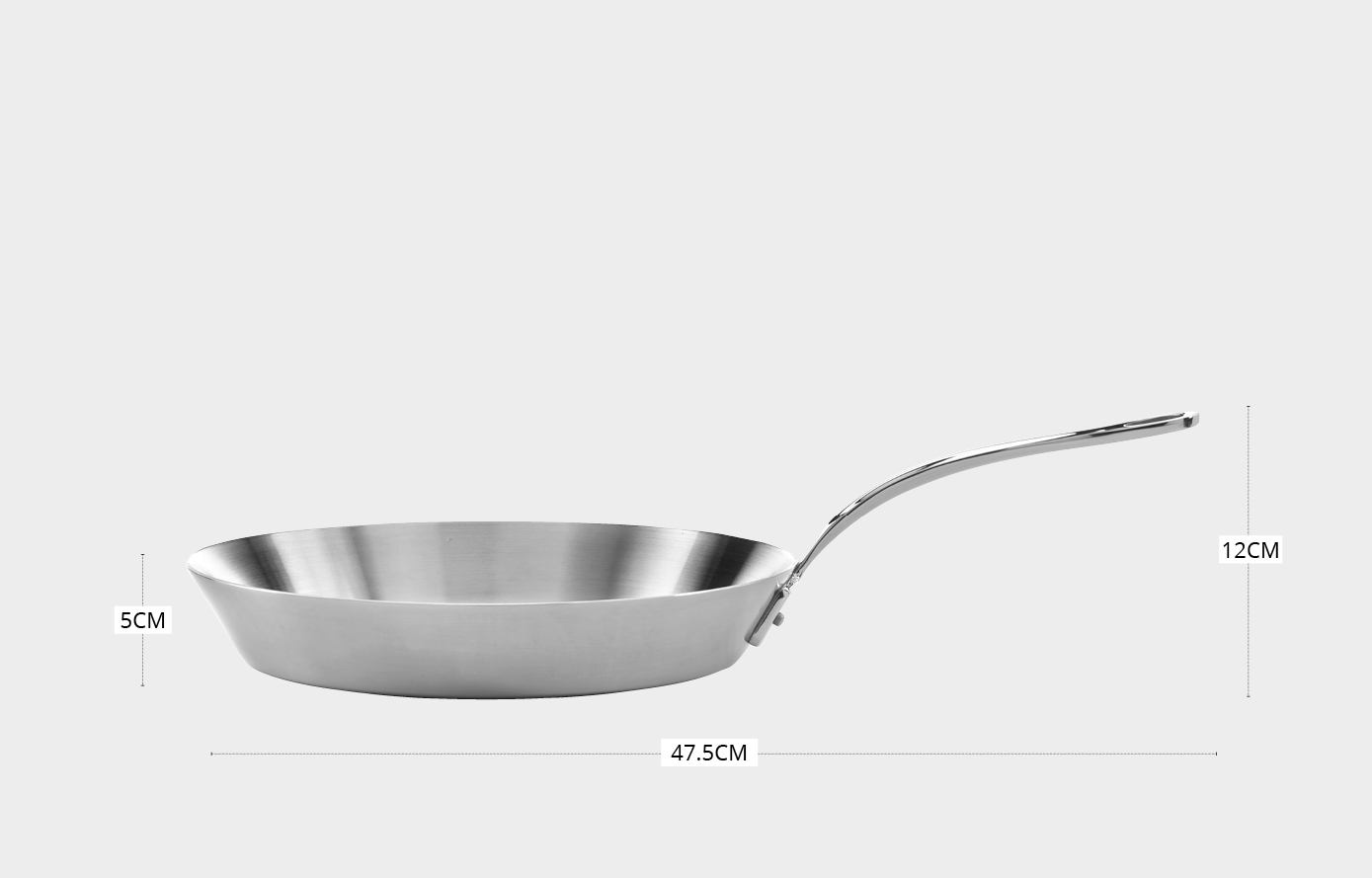
28cm Stainless Steel 3-Ply Frying Pan
Samuel Groves
- • 3-ply stainless with aluminium core
- • Uncoated cooking surface
Honest caveat: At £113 it costs about double the ProCook equivalent for a similar material. As with any stainless pan, expect some sticking until you master preheating, and small nickel and chromium transfer with acidic foods.
Samuel Groves


Valencia Pro Ceramic Non-Stick 20cm and 26cm Frypan Set
GreenPan
- • Ceramic coating, no PTFE
- • Hard-anodised aluminium body
Honest caveat: Ceramic coatings lose their slickness faster than PTFE, often within a year or two of daily use. Lab work on similar silica-based coatings found titanium nanoparticle release with acidic simulants and scratching (Golja et al., 2017). No independent testing of this product is published.
GreenPan

Cast Iron Shallow Casserole
Le Creuset
- • Enamelled cast iron, no PTFE
- • Wide base for shallow braising
Honest caveat: Le Creuset notes the enamel is not ideal for dry cooking, so it is not a substitute for a searing pan. Very heavy when full. Price shown is the 30cm at John Lewis.
Le Creuset
We may earn a commission if you buy through our links. How we choose ›
How strong is the research? What our grades mean ›
- Strong research
- Independent certification or lab data for the specific claim.
- Promising research
- The material is well supported, but there is no product-level testing.
- Early research
- Little independent research.
- Mixed research
- Research findings disagree.
- £
- Under £20
- ££
- £20 to £79
- £££
- £80+
What is non-toxic cookware, really?
"Non-toxic" is a marketing phrase, not a legal standard. In practice, most people searching for it want cookware that does not rely on PTFE (polytetrafluoroethylene, the plastic behind Teflon-style coatings) or other PFAS (per- and polyfluoroalkyl substances, often called "forever chemicals"), and that does not shed much of anything into food. The good news is that the oldest cookware materials already meet that brief: stainless steel, cast iron, carbon steel and enamelled cast iron. Ceramic-coated pans are a newer, PTFE-free option with more trade-offs.
Every material puts something into food in tiny amounts. Stainless steel adds traces of nickel and chromium, iron pans add iron, and coatings can wear. The goal is not zero, it is choosing the lowest-exposure material for each job and avoiding the known problem of overheated PTFE.
Our picks at a glance
| Product | Best for | Material/key feature | Price | Evidence grade |
|---|---|---|---|---|
| ProWare Stainless Steel Tri-Ply 24cm Chef's Pan | Everyday all-rounder | Tri-ply stainless, no coating | £78 | Moderate |
| Lodge Original Cast Iron Skillet 26cm | Best budget | Bare cast iron, pre-seasoned | £36 | Moderate |
| Samuel Groves 3 Piece Stainless Steel Tri-Ply Saucepan Set | Replacing coated saucepans | Tri-ply stainless, lidded | £330.75 | Moderate |
| ProWare Stainless Steel Tri-ply 18cm Saucepan | Single saucepan | Tri-ply stainless, 2.4L | £54 | Moderate |
| Le Creuset Cast Iron Round Casserole | Slow cooking, acidic dishes | Enamelled cast iron | £285 (24cm) | Moderate |
| de Buyer Mineral B Carbon Steel Frying Pan 28cm | Searing | Carbon steel, seasons with use | £62 | Moderate |
| Samuel Groves 28cm Stainless Steel 3-Ply Frying Pan | Large frying pan | 3-ply stainless, lifetime guarantee | £113 | Moderate |
| GreenPan Valencia Pro 20cm and 26cm Frypan Set | Easy egg release | Ceramic coating, no PTFE | £89.90 | Limited |
| Le Creuset Cast Iron Shallow Casserole | Hob-to-oven one-pan meals | Enamelled cast iron | £335 (30cm) | Moderate |
How we chose
We started from what regulators and peer-reviewed studies say about each material, then looked for pans sold by UK brands or major UK retailers at checked prices (October 2026). We favoured:
- No PTFE on the cooking surface. PTFE is not dangerous at normal cooking temperatures according to Germany's risk assessor BfR, but it is a PFAS, it can give off harmful fumes if an empty pan is overheated, and it is inside the scope of the EU's proposed PFAS restriction (ECHA).
- Materials with a long track record, where any metal transfer is measured and modest.
- Durability and guarantees, because a pan you keep for 30 years beats replacing a worn coating every two.
- A spread of budgets, from £36 to premium.
None of these products has independent, product-level testing for migration (what moves from pan to food), so most are graded "moderate": the material choice is well supported, but the individual pan is not lab-tested by a third party.
Our picks
Best all-rounder: ProWare Stainless Steel Tri-Ply 24cm Chef's Pan
A chef's pan has deeper, curved sides, so this one handles frying, sautéing, stir-fries and quick sauces. It is fully clad tri-ply (stainless steel wrapped around an aluminium core), induction-ready and oven-proof to 260°C, with a lifetime guarantee. Caveat: stainless steel needs preheating and a little fat to stop sticking, and new pans release the most nickel and chromium into long-simmered acidic food (Kamerud et al., 2013).
Best budget: Lodge Original Cast Iron Skillet 26cm
At about £36 this is the cheapest way to own a coating-free frying pan that will outlive you. It arrives seasoned (oil baked onto the surface to form a natural slick layer) and works on any hob, in the oven or on a barbecue. Caveat: it is heavy and slow to heat, and food cooked in iron picks up extra iron, especially acidic, wet dishes cooked for a long time (Brittin and Nossaman, 1986).
Best saucepan set: Samuel Groves 3 Piece Stainless Steel Tri-Ply Saucepan Set
If your saucepans are coated and worn, this lidded tri-ply set replaces them in one go, with no coating on any cooking surface and a lifetime guarantee from a British brand. Caveat: at £330.75 it is a big outlay, and buying two single pans may be enough for smaller households.
Best single saucepan: ProWare Stainless Steel Tri-ply 18cm Saucepan
A 2.4 litre tri-ply saucepan with a stainless lid and helper handle, at £54. It is the pan most households use daily for vegetables, rice and porridge. Caveat: for hours-long tomato or wine sauces, enamelled cast iron is a lower-nickel choice.
Best for slow cooking: Le Creuset Cast Iron Round Casserole
Enamel is a glass-like layer fused onto the iron, so the food touches enamel rather than bare metal. That makes it a good fit for acidic stews and braises, needs no seasoning, and carries a lifetime guarantee. Caveat: heavy and expensive (£285 for 24cm at John Lewis), and chipped enamel inside the pot means it should be retired from cooking.
Best for searing: de Buyer Mineral B Carbon Steel Frying Pan 28cm
Carbon steel behaves like a lighter cast iron. Once seasoned it becomes slick enough for eggs, with no applied coating. Caveat: it must be seasoned before first use, dried after washing, and kept away from long acidic cooking, which strips the seasoning.
Best large frying pan: Samuel Groves 28cm Stainless Steel 3-Ply Frying Pan
Fully clad, uncoated and built to last, with a refurbishment service if you ever need it. Caveat: £113 is roughly double ProCook's uncoated 28cm pan; see our stainless steel frying pan guide for cheaper options.
If you want a slick coating: GreenPan Valencia Pro Frypan Set
Ceramic coatings are made from silica (a sand-derived material) rather than PTFE. When Consumer Reports tested two ceramic pans for 96 PFAS, it found none. Caveat: ceramic coatings wear out faster than PTFE, and a lab study of similar silica-based coatings found titanium nanoparticles could be released with acidic food and scratching (Golja et al., 2017). We grade it "limited".
Best for one-pan meals: Le Creuset Cast Iron Shallow Casserole
A wide enamelled pan for risotto, shakshuka and dishes that start on the hob and finish in the oven. Caveat: Le Creuset itself says the enamel is not ideal for dry cooking, so it does not replace a frying pan.
What the evidence says about each material
PTFE (Teflon-style) non-stick. Regulators agree normal use is low risk. BfR says PTFE only poses a health risk when strongly heated while empty, decomposing at about 360°C, and that swallowed flakes pass through the body unchanged. The US FDA says negligible amounts of PFAS migrate from the coating into food. The concerns are overheating (polymer fume fever, a short flu-like illness from fumes, Greenberg and Vearrier, 2015), plastic particles from scratched pans (Luo et al., 2022), and the wider PFAS life cycle in factories and the environment. PFOA, once used to make PTFE, is now classed as carcinogenic to humans by IARC and restricted in the EU (Regulation 2020/784). Read more in our guide Is Teflon safe?.
Stainless steel. Releases small amounts of nickel and chromium, most in the first few uses and with long acidic cooking, then levels off (Kamerud et al., 2013). Relevant mainly if you have a diagnosed nickel allergy.
Cast iron and carbon steel. Add iron to food (Brittin and Nossaman, 1986). For most people this is harmless or even helpful: a systematic review found iron pots raised haemoglobin in iron-deficient people. If you have been told to limit iron, ask your GP.
Enamel. Glass-like and inert when intact. All food contact materials sold in the UK and EU must not transfer constituents in harmful amounts (Regulation 1935/2004); buy from established brands rather than unbranded imports.
Ceramic coatings. PTFE-free and, in testing, PFAS-free, but less durable and less studied. See our ceramic cookware explainer.
What to avoid
- Overheating any PTFE pan when empty, especially near pet birds, which are very sensitive to the fumes (case report).
- Vague labels. "PFOA-free" says little: Consumer Reports found PFOA in a PTFE pan labelled PFOA-free. Look for "PTFE-free" or simply buy uncoated.
- Chipped enamel or flaking coatings. Replace them.
- Unbranded, very cheap ceramic or enamel imports with no traceable maker.
Is it worth throwing out your current pans?
Not necessarily. If your PTFE pans are in good condition and you never heat them empty, regulators expect no harm. Replace them as they wear, starting with the pan you use hottest (usually the frying pan), and choose stainless steel, cast iron or carbon steel next time.
Bottom line
The lowest-exposure kitchen is mostly uncoated: a tri-ply stainless frying or chef's pan, a stainless saucepan, an enamelled cast iron pot for acidic slow cooking, and a cast iron or carbon steel pan for searing. Add a ceramic pan only if you want easy egg release and accept it will wear out. Whatever you use, keep PTFE away from high, empty heat.
Frequently asked questions
What is the least toxic cookware?
+
There is no official ranking, but uncoated stainless steel, cast iron, carbon steel and intact enamelled cast iron have the longest track records and no PTFE. Each adds small, measured amounts of metal to food: nickel and chromium from stainless steel, iron from cast iron and carbon steel. For most people those amounts are minor, so the choice comes down to cooking style and care.
Is stainless steel cookware non-toxic?
+
Stainless steel has no coating, but it does release small amounts of nickel and chromium, mainly in the first few uses and during long, acidic cooking such as tomato sauce, according to a 2013 Oregon State University study. Leaching dropped and levelled off after about six uses. It mainly matters for people with a diagnosed nickel allergy, who may prefer enamelled cast iron for acidic dishes.
Are ceramic pans better than Teflon?
+
Ceramic coatings are made without PTFE, and Consumer Reports found no PFAS in the ceramic pans it tested. The trade-offs are durability, since ceramic loses its slickness faster, and limited research: one lab study found titanium nanoparticles released from a similar coating with acidic simulants. If you want easy release with no PTFE, ceramic is reasonable, but uncoated pans last longer.
Does the UK ban Teflon pans?
+
No. PTFE cookware is legal in the UK. The government published a cross-government PFAS Plan in February 2026, and HSE analysed PFAS regulation options in 2023, but neither bans PTFE pans. In the EU, a broad PFAS restriction is still being assessed, with ECHA's socio-economic committee due to give its final opinion by the end of 2026.
Is cast iron good for people with anaemia?
+
Cooking in iron pans raises the iron content of most foods, and a systematic review found some evidence that eating food cooked in iron pots increases haemoglobin in iron-deficient people. It is not a treatment, so follow your GP's advice. If you have been told to limit iron, for example with haemochromatosis, check with your doctor before cooking acidic dishes in bare iron.
Should I throw away my non-stick pans?
+
Not if they are in good condition and you never heat them empty. Germany's BfR says intact PTFE coatings used as intended are not expected to harm health. Replace pans that are flaking or deeply scratched, and when you do replace them, consider uncoated stainless steel, cast iron or carbon steel for a longer lifespan.
Last updated