Trends Explained
Best LED Face Mask UK (2026): Which Masks Have Real Research?
How we grade ›Sources checked on Our independence ›
Our top pick
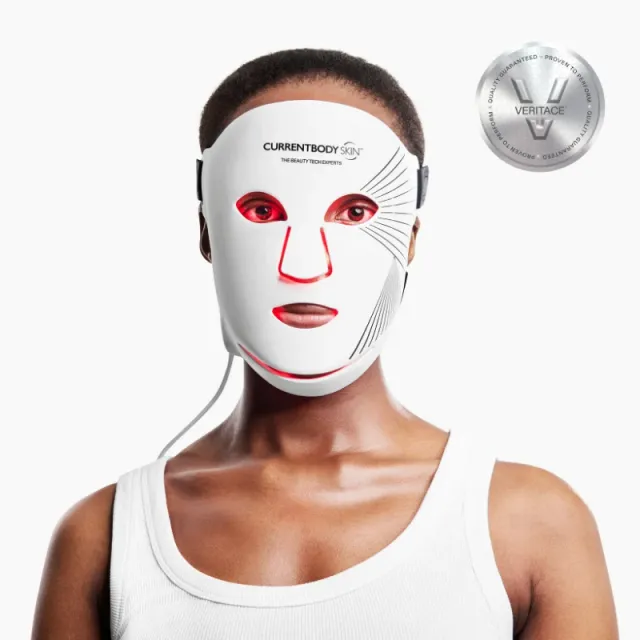
LED face mask · £399.99 typical price
Budget: StylPro Wavelength LED Face Mask · £99.90 ›Premium: The Light Salon Boost LED Face Mask · £395 ›
Quick answer
LED face masks with red and near-infrared light have promising but modest evidence for fine lines, mixed evidence for acne and little for pigmentation. Our top pick is the CurrentBody Skin LED Face Mask Series 2 for its trial-matched wavelengths and specs. The caveat: most mask studies are small and paid for by device makers.
Our picks
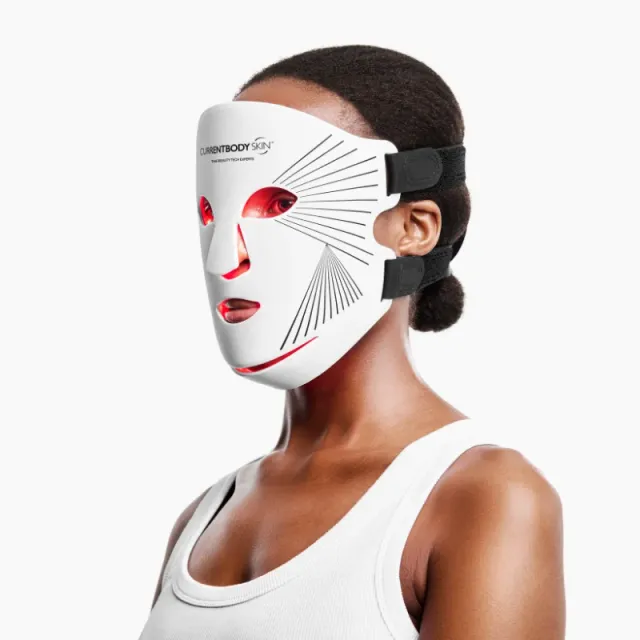
CurrentBody Skin LED Red Light Therapy Face Mask: Series 2
CurrentBody Skin
- • Red 633nm, near-infrared 830nm and 1072nm
- • Stated irradiance 30 mW/cm2, 10-minute sessions (about 18 J/cm2)
Honest caveat: The headline wrinkle figures come from brand-commissioned testing, not an independent published trial of this mask. Results need consistent use for about 8 weeks and fade if you stop.
£399.99 typical price
Amazon · CurrentBody
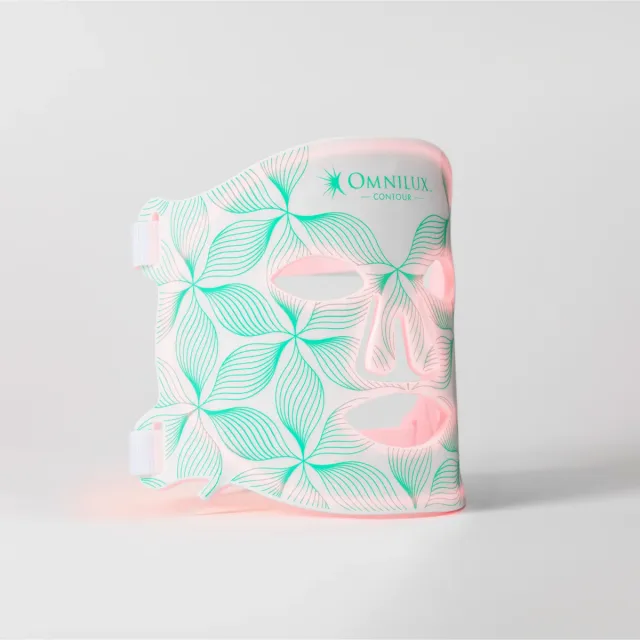
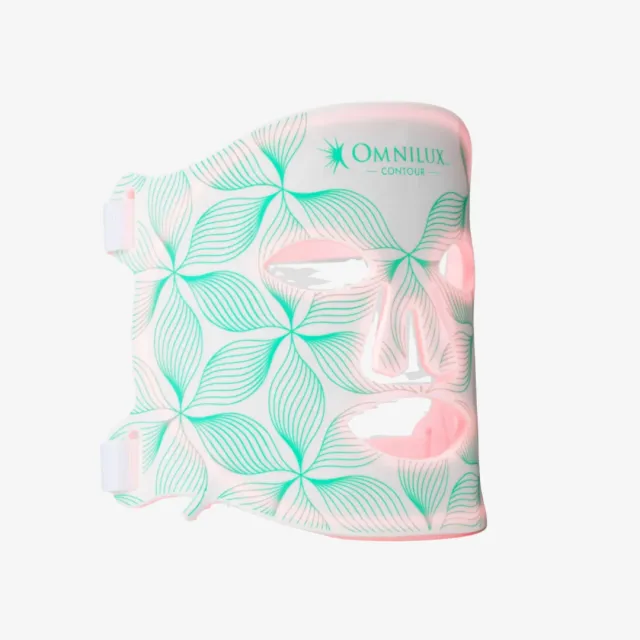
Omnilux Contour Face
Omnilux
- • Red 633nm and near-infrared 830nm
- • 132 LEDs, 10-minute sessions 3 to 5 times a week
Honest caveat: The UK retailer page does not state irradiance, and the brand’s ’over 40 studies’ mostly involve clinic devices rather than this home mask. FDA clearance means low risk, not proof it works well.
£348 typical price
Amazon · Healf
The Light Salon Boost LED Face Mask
The Light Salon
- • 633 and 830nm
- • 19.2 J/cm2 per 10-minute session (brand)
Honest caveat: Irradiance and the eye-safety standard are not published, and it is expensive for modest results.
£395
Cult Beauty · Thelight Salon
Philips ReAura LED Face Mask
Philips
- • 415, 630 and 830nm
- • Separate face, eye and neck parts
Honest caveat: Irradiance, dose and recommended frequency are not published on the pages we checked.
See price on Amazon
Amazon
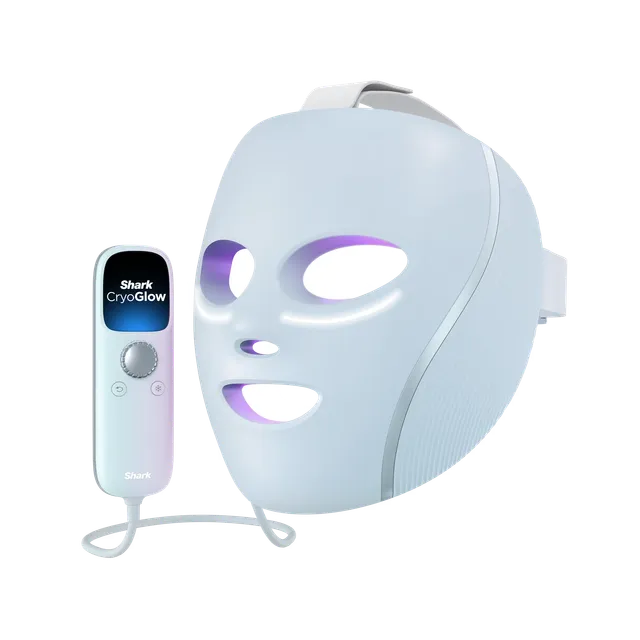
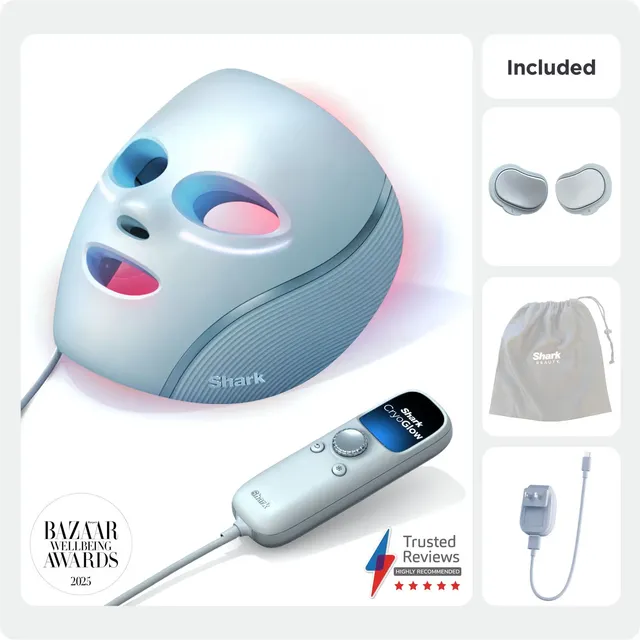
Shark CryoGlow LED Face Mask
Shark
- • Red, blue and infrared LED modes
- • Better Ageing mode: 6 minutes
Honest caveat: The UK product page does not give wavelengths in nanometres or irradiance, so you cannot compare its dose with published studies. Improvement claims come from Shark’s own user trials.
£299.99 typical price
Amazon · SharkNinja
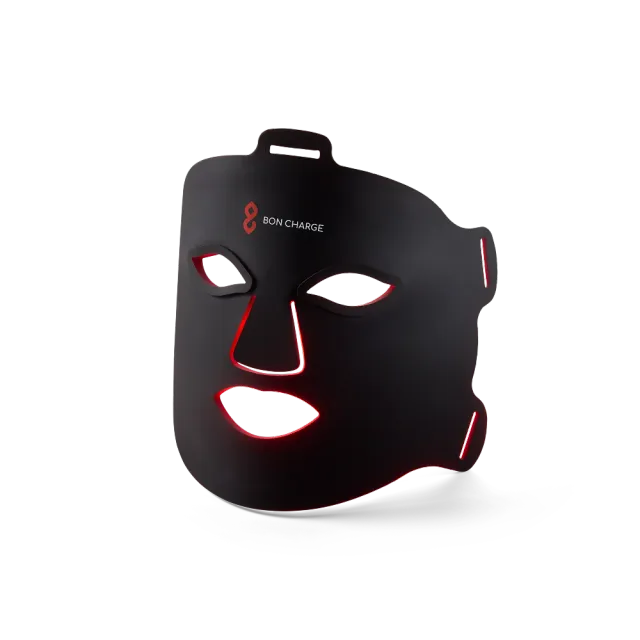
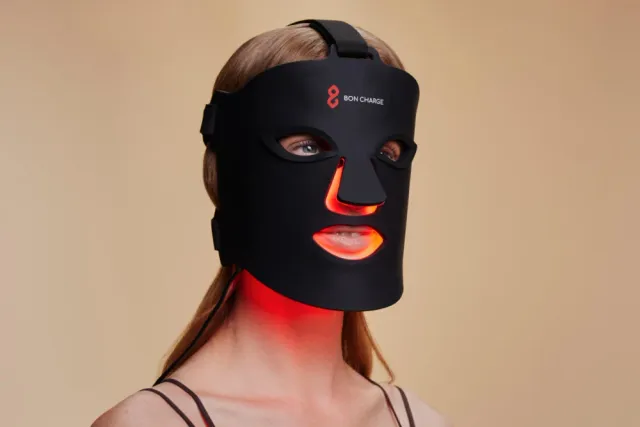
BON CHARGE Red Light Face Mask
BON CHARGE
- • Red 630nm and near-infrared 850nm
- • 10-minute sessions
Honest caveat: No irradiance figure or device-level study is published, so the dose per 10-minute session is unknown. Wavelength alone does not tell you whether enough light reaches the skin.
£275
BON CHARGE
StylPro Wavelength LED Face Mask
STYLPRO
- • 415, 633 and 830nm
- • 10-minute sessions
Honest caveat: Irradiance and dose are not published, and results come from a consumer perception study.
£99.90
LOOKFANTASTIC · StylPro
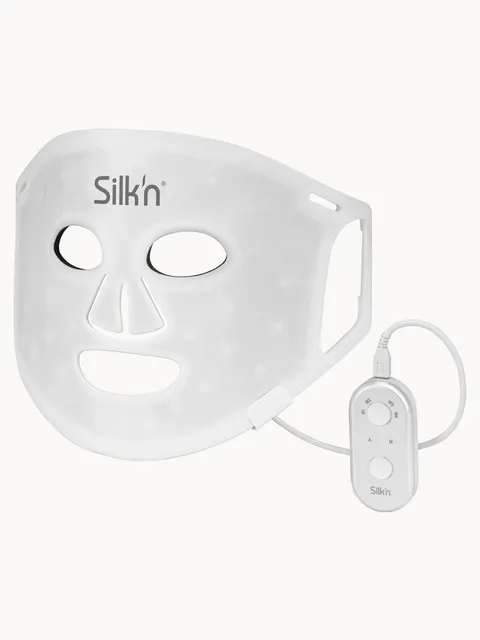
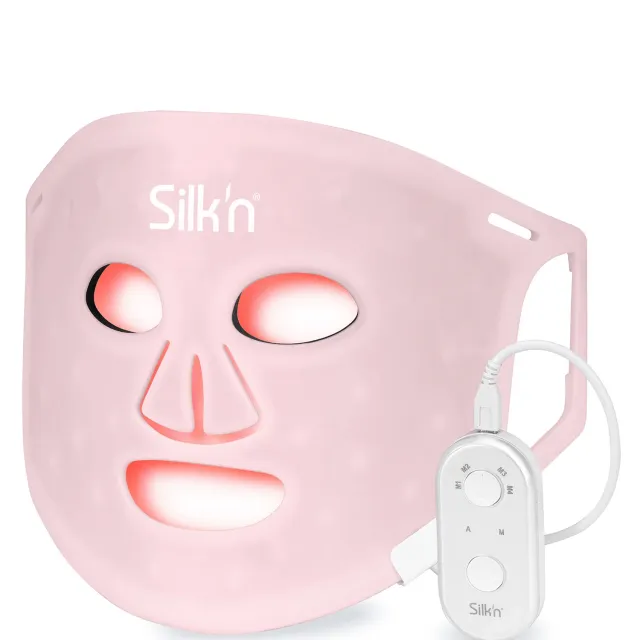
Silk’n Facial LED Mask 100
Silk'n
- • 100 LEDs in four colours (red, blue, yellow, purple)
- • No near-infrared
Honest caveat: The retailer page gives no wavelengths in nm, no irradiance, no session time and no near-infrared, so treat it as an experiment rather than a match for studied protocols.
£99.99
LOOKFANTASTIC · Amazon
Magnitone GetLit LED Tri Colour Face Mask
Magnitone London
- • Red, yellow and blue
- • 15-minute auto shut-off
Honest caveat: Only wavelength ranges are given, no near-infrared, and no irradiance, dose or study is published.
£73.99
Magnitone · Argos
Revolution Pro Miracle LED Face Mask
Revolution Beauty
- • Seven colours, 440 to 630nm
- • 15-minute sessions
Honest caveat: No near-infrared, irradiance, dose or eye-safety testing is published, and the rigid shell sits further from parts of the face.
£59.99
Revolutionbeauty
We may earn a commission if you buy through our links. How we choose ›
How strong is the research? What our grades mean ›
- Strong research
- Independent certification or lab data for the specific claim.
- Promising research
- The material is well supported, but there is no product-level testing.
- Early research
- Little independent research.
- Mixed research
- Research findings disagree.
- £
- Under £20
- ££
- £20 to £79
- £££
- £80+
Our picks at a glance
| Mask | Price | Wavelengths | Irradiance | Dose per session | Material | Eye protection | Cost per session | Grade |
|---|---|---|---|---|---|---|---|---|
| CurrentBody Skin LED Face Mask Series 2 | £399.99 | 633, 830, 1072nm | About 30 mW/cm2 (not confirmed on brand page) | About 18 J/cm2 (estimate) | Flexible silicone | Eye inserts included | About £1.54 | Promising |
| LED face maskOmnilux Contour Face | £348 typical price | 633, 830nm | Not published | Not published | Flexible silicone | Eye cutouts | About £1.34 | Promising |
| LED face maskThe Light Salon Boost LED Face Mask | £395 | 633, 830nm | Not published | 19.2 J/cm2 (brand) | Flexible silicone | Brand states eye-safety tested | About £1.52 | Promising |
| LED face maskPhilips ReAura LED Face Mask | See price on Amazon | 415, 630, 830nm | Not published | Not published | Flexible, detachable eye and neck parts | Soft eye cushions | About £1.35 | Promising |
| LED face maskShark CryoGlow LED Face Mask | £299.99 typical price | Red, blue, infrared (nm not published) | Not published | Not published | Flexible with straps | Eye cutouts, cooling under-eye pads | About £1.15 | Early |
| LED face maskBON CHARGE Red Light Face Mask | £275 | 630, 850nm | Not published | Not published | Flexible | Eye cutouts | About £1.06 | Early |
| LED face maskStylPro Wavelength LED Face Mask | £99.90 | 415, 633, 830nm | Not published | Not published | Flexible silicone | Eye cutouts, silicone eye pads | About £0.38 | Early |
| Silk'n Facial LED Mask 100 | £99.99 | 463, 592, 633nm | Not published | Not published | Flexible silicone | Eye cutouts | About £0.38 | Early |
| LED face maskMagnitone GetLit LED Tri Colour Face Mask | £73.99 | Red, yellow, blue (ranges only) | Not published | Not published | Rigid plastic | Eye cutouts | About £0.28 | Early |
| LED face maskRevolution Pro Miracle LED Face Mask | £59.99 | 440 to 630nm, seven colours | Not published | Not published | Rigid plastic | Eye cutouts | About £0.23 | Early |
Prices checked
Prices checked on brand and UK retailer pages in October 2026. Cost per session assumes five sessions a week for a year (260 sessions), which is typical of brand guidance; using it less often raises the cost. "Promising" here means the mask uses the red and near-infrared wavelengths studied in trials and the brand publishes enough to judge it; "Early" means missing key figures or no near-infrared.
Do LED face masks work?
Modestly, for some things. Most evidence comes from clinic devices, small trials and studies paid for by device makers. Here is how each claim stands:
| Claim | Grade | What the research shows |
|---|---|---|
| Fine lines and wrinkles (red and near-infrared) | Promising | Small controlled trials show modest improvements in fine lines, roughness and collagen density |
| Acne (blue and red) | Mixed | A Cochrane review of 71 trials found low-quality evidence and could not draw firm conclusions |
| Pigmentation and melasma | Early | Little evidence of benefit; blue light may worsen melasma in prone skin |
| Firmness and elasticity | Early | Industry-funded studies only |
| Redness and healing after procedures | Early | Small clinic studies |
Wrinkles and skin texture
The best-known controlled trial (Wunsch and Matuschka, 2014) gave 136 volunteers red and near-infrared light twice a week for 30 sessions. Compared with controls, they had better skin roughness and collagen density on ultrasound, and people rated their complexion as improved. The doses were around 9 J/cm2 per session, using clinic-style panels rather than home masks.
A 2023 study of a red LED mask in 20 women found less crow's feet depth and better firmness after three months of twice-weekly use. It was funded by the device makers (Dior and Lucibel) and had no control group.
Our grade: Promising. Expect subtle improvements in fine lines and texture after 8 to 12 weeks of consistent use, not the results of a clinic laser or injectables.
Acne
Blue light (around 415nm) targets acne bacteria, and red light may calm inflammation. The Cochrane review of light therapies for acne included 71 trials and 4,211 people. It found the evidence low quality, could not say whether light therapy beats placebo or standard creams, and noted over half the studies were industry-sponsored. Our grade: Mixed. Light should not replace treatments a GP or dermatologist has recommended.
Pigmentation
There is little good evidence that LED masks fade dark spots or melasma, and some research suggests blue light can trigger pigmentation in melasma-prone and darker skin. Our grade: Early. If pigmentation is your main concern, choose a red and near-infrared mask without blue, and keep using sunscreen.
How we graded
We checked each mask on a live UK brand or major retailer page in October 2026 and scored it on:
- Wavelength. Is it stated in nanometres, and does it match the ranges used in trials: about 630 to 660nm red and 810 to 850nm near-infrared for skin ageing, about 415nm blue for acne?
- Irradiance. Power delivered to the skin, in milliwatts per square centimetre (mW/cm2). Without it you cannot work out the dose.
- Dose. Energy per session, in joules per square centimetre (J/cm2), which is irradiance multiplied by time. Skin trials typically used roughly 4 to 20 J/cm2. More is not better: light therapy has a biphasic response, so too much can reduce the effect.
- Trials. Is there a study on this mask, or is the brand borrowing results from other devices? Who paid for it?
- Eye protection. Goggles, eye inserts, or a stated eye-safety test.
- UK seller. A named company with UK returns and a warranty.
No mask we found has independent, published irradiance testing, so none earns a "Strong" grade.
The masks reviewed
CurrentBody Skin LED Face Mask Series 2: best overall
The Series 2 combines red (633nm), near-infrared (830nm) and deep near-infrared (1072nm) LEDs in flexible silicone, with 10-minute sessions. Specification sites list irradiance at about 30 mW/cm2, which would give about 18 J/cm2 per session, inside the trial range; we could not confirm that figure on the brand's own page. Eye inserts are included. Caveat: CurrentBody's headline wrinkle figures come from its own commissioned testing, not an independent published trial of this mask.
Omnilux Contour Face: best established brand
Omnilux grew out of clinic LED panels and uses the two most studied wavelengths, 633nm red and 830nm near-infrared, in a flexible silicone mask. UK stockists state FDA clearance for wrinkles, and Omnilux suggests three to five 10-minute sessions a week. UK stockists list it at £348; Omnilux's own site sometimes runs much lower offers. Caveat: irradiance and dose are not published, and FDA clearance means a device is considered low risk, not that it works well.
The Light Salon Boost LED Face Mask: best for published dose
From a London LED clinic brand, the Boost uses 633nm red and 830nm near-infrared in medical-grade silicone. Unusually, it publishes a dose (19.2 J/cm2 per 10-minute session) and says it is tested to international eye-safety standards. Use three to five times a week. Sold at Cult Beauty, Liberty and Selfridges. Caveat: irradiance and the eye-safety standard number are not published, and £395 is a lot for modest results.
Philips ReAura LED Face Mask: best modular design
Philips' 3-in-1 mask has separate face, eye and neck parts, with red (630nm), near-infrared (830nm) and blue (415nm) light and 10-minute sessions. A good choice if you want to treat the neck or skip the eye area. Caveat: irradiance, dose and recommended frequency are not published on the pages we checked.
Shark CryoGlow LED Face Mask: best red plus blue, with cooling
Shark combines red, blue and infrared modes with cooling under-eye pads, in a flexible mask with adjustable straps. It suits people who want acne and ageing modes in one device. Caveat: no wavelengths in nanometres, no irradiance and no session dose are published, and its improvement figures come from Shark's own user studies.
BON CHARGE Red Light Face Mask: lower-cost red and near-infrared
At £275 it uses the standard 630nm red and 850nm near-infrared pairing in a flexible, hands-free design with 10-minute daily sessions. Caveat: no irradiance or device study is published, so you cannot confirm the dose.
StylPro Wavelength LED Face Mask: best budget mask
For about £99.90 the Wavelength uses the same three wavelengths as many premium masks (415nm blue, 633nm red and 830nm near-infrared) in flexible silicone, with silicone eye pads and 10-minute sessions. Sold at Lookfantastic and Sally Beauty. Caveat: irradiance and dose are not published, and its results come from a consumer perception study, not a clinical trial.
Silk'n Facial LED Mask 100: budget multi-colour
A flexible silicone mask with red (633nm), blue (463nm) and yellow (592nm) modes and 10-minute sessions. Lookfantastic lists it at £99.99; Silk'n's own UK price is higher. Caveat: no near-infrared, irradiance or dose figures are published, so it is a weaker match for wrinkle research.
Magnitone GetLit LED Tri Colour Face Mask: cheapest UK brand mask with red
A rigid one-size mask from a London beauty-device brand with red, yellow and blue light and 15-minute sessions, also sold at Argos. Caveat: only wavelength ranges (such as 620 to 750nm red) are given, there is no near-infrared, and no irradiance, dose or study is published.
Revolution Pro Miracle LED Face Mask: cheapest mask
Seven colours including 630nm red and 440 to 470nm blue in a rigid plastic mask, for £59.99 direct (often less at Superdrug). Caveat: no near-infrared, irradiance, dose or eye-safety testing is published, and a rigid mask sits further from some areas of the face, which lowers the dose.
Best budget LED masks under £100
If you want to try LED without spending hundreds:
- StylPro Wavelength (£99.99): the only budget mask we found with near-infrared (830nm) alongside red and blue, in flexible silicone.
- Silk'n Facial LED Mask 100 (£99.99 at Lookfantastic): red, blue and yellow, flexible, from an established device brand.
- Magnitone GetLit (£73.99): red, yellow and blue, rigid, from a UK brand.
- Revolution Pro Miracle (£59.99): seven colours, rigid, from a UK beauty brand.
None publishes irradiance, so treat them as experiments. If wrinkles are your main goal, a mask with near-infrared is the closer match to the research.
Red, blue or near-infrared: which colour for which concern?
| Light | Wavelength | Studied for | Our grade |
|---|---|---|---|
| Red | About 630 to 660nm | Fine lines, texture, redness | Promising |
| Near-infrared | About 810 to 850nm | Deeper collagen, healing | Promising (with red) |
| Deep near-infrared | About 1,070nm | Brand claims of deeper effect | Early |
| Blue | About 415nm | Acne bacteria | Mixed |
| Yellow, green, purple | 520 to 590nm | Redness, "brightening" | Early |
For wrinkles, choose red plus near-infrared. For acne, blue and red together, but keep using your prescribed treatments. Extra colours mainly add marketing value.
Omnilux vs CurrentBody
Both are flexible silicone masks with red and near-infrared light and 10-minute sessions, and both are widely sold in the UK.
| Omnilux Contour Face | CurrentBody Series 2 | |
|---|---|---|
| Wavelengths | 633, 830nm | 633, 830, 1072nm |
| Irradiance published | No | About 30 mW/cm2 on spec sites, not confirmed on brand page |
| Regulatory | FDA clearance stated by UK stockists | Not confirmed on pages we checked |
| Price | £348 (stockists) | £399.99 |
| Frequency | 3 to 5 times a week | Brand suggests regular use, often daily |
Our view: they are close. CurrentBody adds a third wavelength and more published specs; Omnilux has the longer clinic heritage and is often cheaper on offer. Neither has an independent published trial of the exact home mask. Pick on fit, price and returns.
Are LED masks safe for your eyes?
We cannot call any device safe, but the risk at home-mask power levels appears low for most people. The EU's scientific committee (SCHEER) found no evidence of direct harm from LEDs in normal use by healthy people, but flagged blue light (400 to 500nm) as a particular concern for children. The ICNIRP notes that high-intensity blue light can damage retinal cells in laboratory studies, though this has not been shown at typical exposures.
In 2019 Neutrogena withdrew its acne light mask after reports of visual effects and a theoretical risk for people with certain eye conditions or taking light-sensitising medicines (AOP).
To lower risk:
- Keep your eyes closed, and use eye inserts or goggles if supplied.
- Be cautious with blue light. It carries more theoretical eye risk than red.
- Speak to your optometrist or GP first if you have an eye condition (such as retinitis pigmentosa or macular disease), migraines triggered by light, epilepsy, or take light-sensitising medicines such as some antibiotics, acne tablets or St John's wort.
- Do not use an LED mask on children.
What to avoid
- "FDA approved" wording. Home LED devices may be FDA cleared, which means low risk, not proven effective; "FDA approved" is not used for these devices.
- "Medical grade" with no medical device status. In the UK, a device marketed to treat a condition should be registered and carry a UKCA or CE mark. Ask the seller.
- No wavelengths in nanometres. "Collagen-boosting red light" is not a specification.
- Big claims. The Advertising Standards Authority warns against "breakthrough" or permanent anti-ageing claims without robust evidence.
- Unbranded marketplace masks with no named UK seller, no returns and no stated specs.
- Using it more than directed. More time does not mean better results.
Who should skip an LED mask?
- People with eye conditions or light-triggered migraines or seizures, unless their specialist agrees.
- Anyone taking light-sensitising medicines, until they have checked with a pharmacist.
- People with active skin cancer or suspicious moles on the face.
- Pregnant women may prefer to wait, as there is little research.
- Anyone expecting results like clinic treatments: the effects are subtle.
If you mainly want light for joints or larger areas of the body, see our red light therapy panel guide, and for the wider research, our red light evidence page.
Bottom line
LED masks with red and near-infrared light have promising but modest evidence for fine lines and texture, mixed evidence for acne and little for pigmentation. The CurrentBody Series 2 is our top pick for its wavelengths and published specs, with Omnilux and The Light Salon Boost close behind. Under £100, the StylPro Wavelength is the only mask we found with near-infrared. Use it consistently for 8 to 12 weeks, protect your eyes, keep your sunscreen and prescribed treatments, and expect subtle change.
Frequently asked questions
Which LED light is best for wrinkles?
+
Red light (about 630 to 660nm) combined with near-infrared (about 810 to 850nm). These are the wavelengths used in the controlled trials that found modest improvements in fine lines and skin roughness. Blue light targets acne bacteria and does little for wrinkles.
Omnilux or CurrentBody: which is better?
+
They are close. Both use red and near-infrared in flexible silicone with 10-minute sessions. CurrentBody adds a 1072nm wavelength and more published specs; Omnilux has longer clinic heritage, FDA clearance stated by stockists and is often cheaper on offer. Neither has an independent trial of the home mask.
Is the Revolution LED mask any good?
+
It is a cheap way to try LED, at about £60, with 630nm red and blue light. But it has no near-infrared, publishes no irradiance or dose, and is a rigid shell, so it is a weaker match for the wrinkle research than flexible red and near-infrared masks.
How often should I use an LED mask?
+
Follow the maker: most suggest 10 minutes, three to five times a week, and some daily. Trials typically used two to five sessions a week for 8 to 12 weeks. Using it for longer than directed will not speed results and may reduce the effect.
Can LED masks damage your eyes?
+
The risk at home-mask power appears low for healthy adults, but blue light carries more theoretical risk. Keep your eyes closed, use any eye inserts or goggles, and speak to an optometrist first if you have an eye condition or take light-sensitising medicines. Neutrogena withdrew its acne mask in 2019 over these concerns.
Do cheap Amazon LED masks work?
+
Unbranded masks rarely publish wavelengths in nanometres, irradiance or dose, and often have no named UK seller or returns, so you cannot tell. If you want a budget mask, choose one from an established brand that states its wavelengths, such as the StylPro Wavelength.
Can you use an LED mask with retinol?
+
No trials have studied the combination. LED masks emit visible and near-infrared light, not UV, so the sun warnings on retinoids do not strictly apply. The main issue is irritation, so many people use the mask on clean skin and apply retinol afterwards or on alternate nights. Ask your dermatologist if you use a prescription retinoid.
Last updated