Home, Air & Renovation
Best Air Quality and CO2 Monitors UK (2026): Sensors That Actually Work
Quick answer
The most useful home air quality monitor is a CO2 monitor with a true NDIR sensor, which shows when a room needs fresh air. Our top pick is the Aranet4 HOME; the Sonoff AirGuard CO2 is the best budget option, and the Airthings View Plus adds particles and radon. HSE says CO2 consistently above 1,500 ppm means poor ventilation.
Our picks
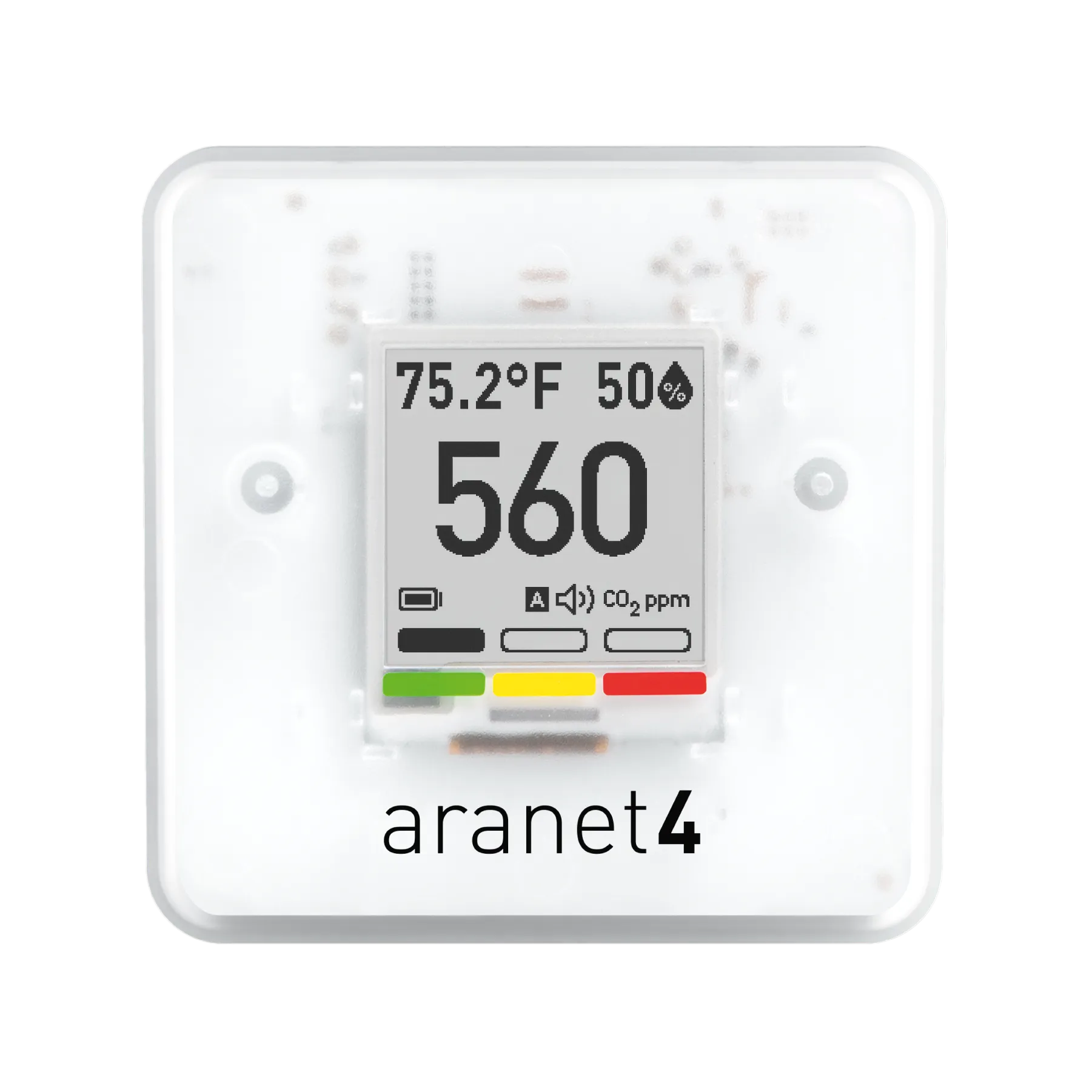
Aranet4 HOME CO2 Monitor
Aranet
- • True NDIR CO2 sensor
- • Up to 4 years on 2 AA batteries
Honest caveat: It measures CO2, temperature, humidity and pressure only, not particles or VOCs. UK pricing varies: we verified £178.80 including VAT at GMCI UK; the brand site does not list a UK price.
Aranet


Sonoff AirGuard CO2 Matter Air Quality Monitor
Sonoff
- • NDIR CO2 sensor, ±(50 ppm + 5%)
- • LCD screen and alerts
Honest caveat: We have not seen independent accuracy testing. It needs USB-C power and 2.4GHz Wi-Fi for the app; it does not measure particles or VOCs.
Sonoff
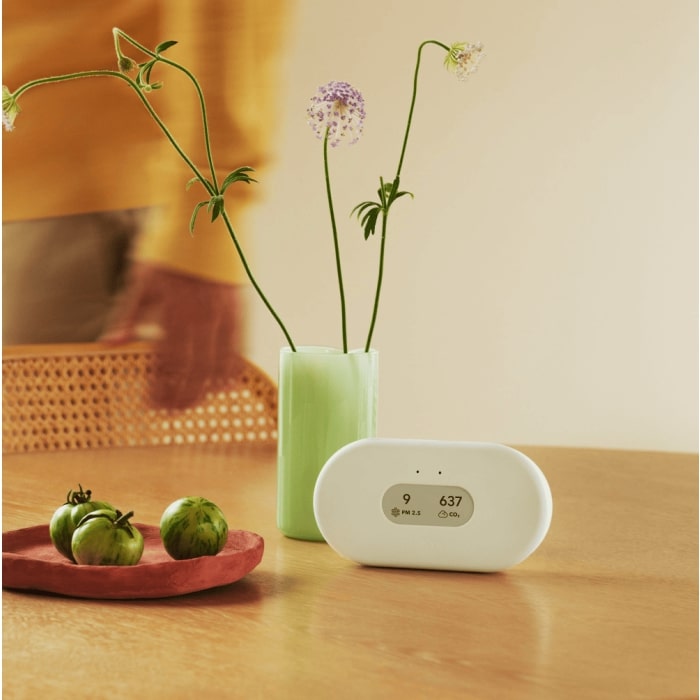
Airthings View Plus
Airthings
- • Radon, CO2 (NDIR), PM2.5, VOC, humidity
- • Laser particle sensor
Honest caveat: VOC readings are a relative total VOC score, not specific chemicals. The radon reading is a useful ongoing check but does not replace a validated three-month lab test if you need a formal result.
Airthings


Apollo Automation AIR-1 Air Quality Sensor
Apollo Automation
- • Sensirion SEN55: PM1 to PM10, VOC, NOx
- • CO2 sensor version £132.20
Honest caveat: It has no display and needs a USB-C power supply you supply yourself. The maker notes a 2 to 6°C temperature offset from internal heat, and the retailer page does not name the CO2 sensor model.
Apollo Automation
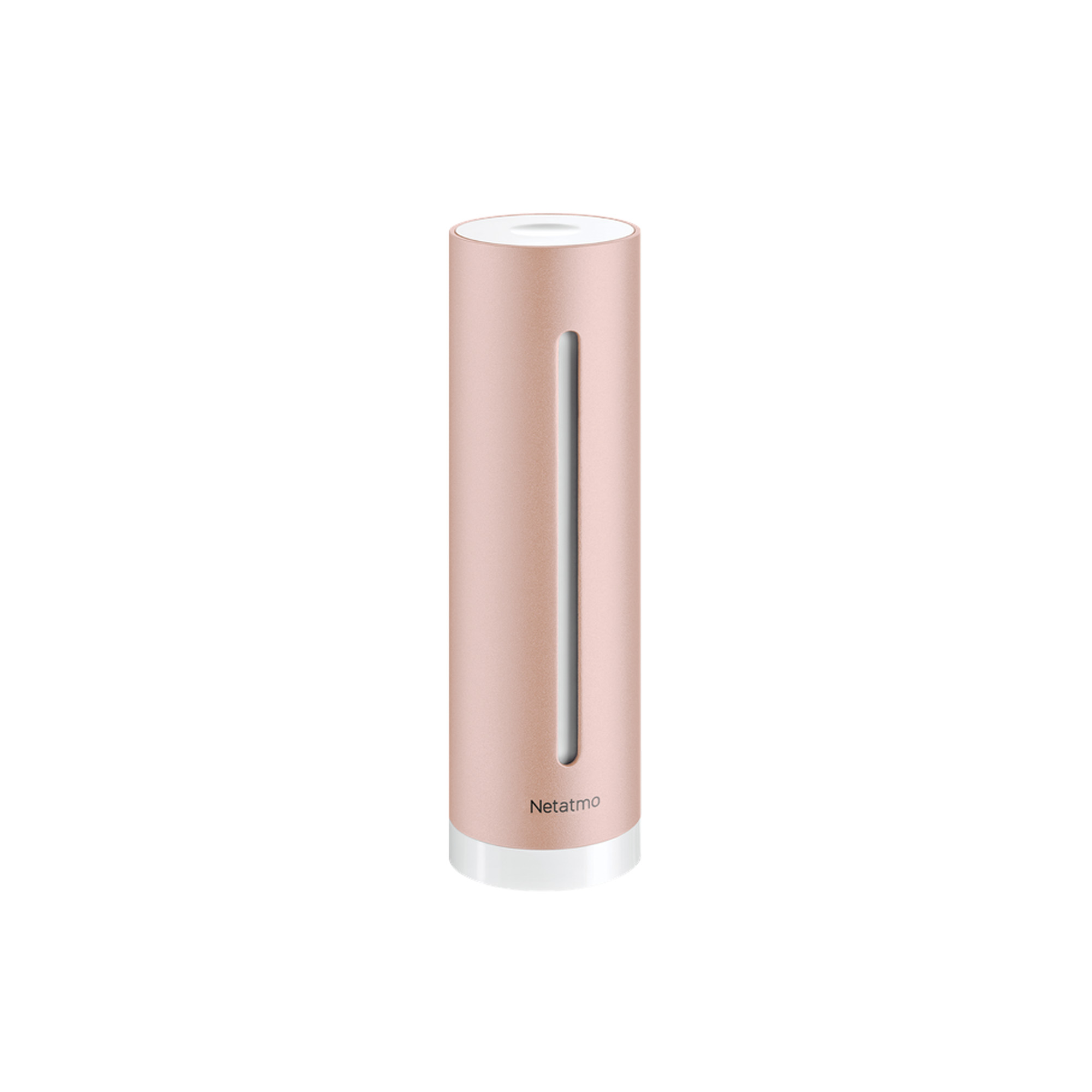
Netatmo Smart Indoor Air Quality Monitor
Netatmo
- • CO2, humidity, temperature, noise
- • App alerts and history
Honest caveat: Netatmo’s UK page does not state the CO2 sensor type, and the device has no screen or particle sensor, so readings are app-only. We rate it limited until the sensor type is confirmed.
Netatmo


Sonoff AirGuard PM2.5/PM10 Matter Air Quality Monitor
Sonoff
- • PM2.5 or PM10 plus temperature and humidity
- • LCD screen
Honest caveat: The retailer page does not say whether the sensor is laser-based or give accuracy figures, and we have not seen independent testing. Treat readings as a trend, not a precise number.
Sonoff
We may earn a commission if you buy through our links. How we choose ›
How strong is the research? What our grades mean ›
- Strong research
- Independent certification or lab data for the specific claim.
- Promising research
- The material is well supported, but there is no product-level testing.
- Early research
- Little independent research.
- Mixed research
- Research findings disagree.
- £
- Under £20
- ££
- £20 to £79
- £££
- £80+
What is the best air quality monitor in the UK?
For most homes, the most useful air quality monitor is a CO2 monitor with a true NDIR sensor (non-dispersive infrared, which measures CO2 directly), because CO2 tells you when a room needs more fresh air. Our top pick is the Aranet4 HOME, a battery CO2 monitor that runs for years and that independent testers rate highly. The best budget NDIR monitor is the Sonoff AirGuard CO2, and the best all-in-one is the Airthings View Plus, which adds particles and radon.
Be wary of cheap "6-in-1" monitors that claim to measure CO2, formaldehyde and VOCs for under £20. Many estimate CO2 from a VOC sensor rather than measuring it, and the formaldehyde readings on low-cost devices are rarely reliable.
Our picks at a glance
| Product | Best for | Material/key feature | Price | Evidence grade |
|---|---|---|---|---|
| Aranet4 HOME | Best overall CO2 monitor | NDIR CO2, 4-year battery, e-ink | £178.80 | Strong |
| Sonoff AirGuard CO2 | Best budget | NDIR CO2, LCD, smart-home alerts | £37.75 | Moderate |
| Airthings View Plus | Best all-in-one | NDIR CO2, laser PM2.5, radon, VOC | £259 | Moderate |
| Apollo AIR-1 | Best for Home Assistant | Sensirion SEN55 (PM, VOC, NOx) plus CO2 | £132.20 | Moderate |
| Netatmo Smart Indoor Air Quality Monitor | App-first homes | CO2, humidity, noise; no screen | £109.99 | Limited |
| Sonoff AirGuard PM2.5 | Cheap particle checks | PM2.5/PM10 display | £30.25 | Limited |
How we chose
We prioritised the sensor inside, not the number of readings on the box. We rewarded monitors that state an NDIR CO2 sensor, which is the type the Health and Safety Executive recommends, and laser (optical) particle sensors for PM2.5. We checked hands-on results from HouseFresh's tests where available and verified UK prices at the brand or a UK retailer in October 2026. "Strong" means a stated NDIR sensor plus independent testing; "moderate" means a credible sensor type with no independent test we could find.
What should an air quality monitor measure?
CO2 (carbon dioxide) is your best guide to ventilation. People breathe it out, so it builds up in closed rooms. HSE says levels consistently above 1,500 ppm in an occupied room indicate poor ventilation, and that about 1,000 ppm corresponds to roughly 10 litres of fresh air per second per person. HSE also stresses CO2 is a broad guide to ventilation, not a direct health limit. Aim to keep bedrooms and home offices below about 1,000 ppm where you can.
PM2.5 (fine particles) come from cooking, toast, candles, wood burners and outdoor pollution. Optical (laser) sensors are the practical choice for homes, though the UK Air Quality Expert Group notes their accuracy varies and high humidity can inflate readings, so kitchens and bathrooms are tricky places for them.
VOCs (volatile organic compounds) come from paint, cleaning products, air fresheners and new furniture. Home monitors show a "total VOC" or VOC index. The AQEG report says total VOC readings are rarely a well-defined absolute value and are best used for trends, not compared with health limits for specific chemicals. Treat a VOC spike as a prompt to open a window, not a diagnosis.
Formaldehyde is the one people often want to measure, but cheap sensors are weak. HouseFresh found only one device in its tests specifically measured formaldehyde (HCHO). If formaldehyde is a real concern, for example after a renovation, a lab-analysed passive sampler from a specialist is more reliable than a gadget.
Humidity matters too: high humidity drives condensation and mould. Most monitors include it.
Why NDIR matters for CO2
Many budget monitors show "eCO2" (estimated CO2), calculated from a VOC sensor. It rises and falls with cooking smells and cleaning sprays rather than with actual CO2 from breathing, so it can tell you a room is fine when it is stuffy, or the reverse. NDIR sensors measure CO2 directly by how much infrared light it absorbs. If a listing does not say NDIR (or name a known photoacoustic sensor such as Sensirion's SCD4x), assume it is estimating.
Our picks
Aranet4 HOME: best overall
The Aranet4 HOME uses a true NDIR CO2 sensor and runs for up to four years on two AA batteries, with an e-ink screen you can read at a glance. HouseFresh rates it the best portable monitor, and its size means you can check bedrooms, offices and classrooms. We verified £178.80 including VAT at GMCI UK.
Honest caveat: it measures CO2, temperature, humidity and pressure only, with no particle or VOC sensor.
Sonoff AirGuard CO2: best budget
The Sonoff AirGuard CO2 is the cheapest monitor we found from a UK retailer that states an NDIR sensor (accuracy ±50 ppm + 5%). It shows CO2 on an LCD and can alert you through Apple Home, Google Home, Alexa or Home Assistant.
Honest caveat: no independent accuracy test yet, it needs USB power and 2.4GHz Wi-Fi for the app, and it does not measure particles.
Airthings View Plus: best all-in-one
The View Plus combines an NDIR CO2 sensor, a laser particle sensor, radon, VOCs, humidity and pressure, which makes it the obvious choice in radon Affected Areas. HouseFresh picks it as its best radon-capable monitor.
Honest caveat: at £259 it is expensive, the VOC reading is relative, and for a formal radon result you still need a validated three-month test (see our radon guide).
Apollo AIR-1: best for Home Assistant users
The AIR-1 uses Sensirion's SEN55 module for PM1 to PM10, VOC and NOx, with a CO2 option, and runs locally with no cloud or subscription.
Honest caveat: it has no screen, needs your own USB-C power supply and a Home Assistant setup, and the maker notes a 2 to 6°C temperature offset.
Netatmo Smart Indoor Air Quality Monitor: also consider
Netatmo's monitor tracks CO2, humidity, temperature and noise with app history and modes for babies and asthma.
Honest caveat: the UK page does not state the CO2 sensor type, and there is no on-device screen or particle sensor.
Sonoff AirGuard PM2.5: also consider
The PM2.5 version is a cheap way to see particle spikes from cooking, candles or a wood burner.
Honest caveat: the sensor type and accuracy are not published; treat it as a trend indicator.
What to do when the numbers are high
- CO2 above 1,000 to 1,500 ppm: open a window or trickle vents, leave internal doors open at night, or run a mechanical extract fan. HSE says CO2 is a guide to ventilation, so fresh air is the fix.
- PM2.5 spikes: use the cooker hood on its highest setting and vent outdoors, avoid burning candles and incense, and consider a HEPA air purifier for persistent problems.
- VOC spikes: find the source (new furniture, paint, air fresheners, cleaning sprays) and ventilate during and after use.
- Humidity above 60%: dry clothes outdoors or in a vented dryer, use extractor fans, and see our damp and mould guide.
Bottom line
Buy a monitor for the job it does well. A true NDIR CO2 monitor, such as the Aranet4 HOME or the budget Sonoff AirGuard CO2, is the most useful single tool for checking ventilation at home. Add particle sensing if you cook a lot, burn wood or live near busy roads, and choose the Airthings View Plus if you also need radon. Skip cheap 6-in-1 gadgets that estimate CO2 and promise formaldehyde readings they cannot deliver.
Frequently asked questions
What is a good CO2 level indoors?
+
Outdoor air is around 420 ppm. HSE says CO2 consistently above 1,500 ppm in an occupied room indicates poor ventilation, and about 1,000 ppm corresponds to roughly 10 litres of fresh air per second per person. Many people aim to keep bedrooms and home offices below about 1,000 ppm. CO2 is a guide to ventilation, not a direct health limit.
What does NDIR mean on a CO2 monitor?
+
NDIR stands for non-dispersive infrared. The sensor measures CO2 directly by how much infrared light it absorbs. HSE recommends NDIR monitors. Many cheap monitors instead show eCO2, an estimate calculated from a VOC sensor, which can be thrown off by cooking smells or cleaning sprays and miss stuffy rooms.
Are cheap 6-in-1 air quality monitors accurate?
+
Usually not for CO2 or formaldehyde. Many under-£20 units estimate CO2 rather than measuring it, and low-cost formaldehyde sensors react to many other gases. Their particle readings can give a rough trend. For ventilation decisions, spend a little more on a monitor that states an NDIR CO2 sensor.
Can an air quality monitor detect mould?
+
Not directly. No consumer monitor detects mould spores reliably. What a monitor can do is show high humidity, the main driver of condensation mould, and poor ventilation through high CO2. Keeping humidity below 60% and ventilating well are the practical steps. Visible or recurring mould needs the moisture source found and fixed.
Where should I put a CO2 monitor?
+
Place it at head height in the room where people spend most time, away from windows, doors, vents and people's faces, so you measure the room rather than someone's breath. HSE gives similar guidance for workplaces. A bedroom is a good first place to check, as CO2 often rises overnight with the door shut.
Do I need a radon monitor as well?
+
Only if you live in a radon Affected Area or have an occupied basement. Check your postcode with a UKHSA Radon Risk Report. If testing is advised, use a three-month test from a validated laboratory. An all-in-one monitor with radon, such as the Airthings View Plus, is useful for ongoing checks afterwards.
Last updated