Supplements, Fact-Checked
Best Collagen Supplement UK (2026): Does It Work?
Quick answer
Collagen supplements show small skin benefits in pooled trials, but a 2025 meta-analysis found no effect in independent or high-quality studies. Joint evidence is early. If you want to try it, choose a simple hydrolysed powder with a stated dose, such as Planet Paleo Pure Collagen, and judge after 12 weeks.
Our picks

Planet Paleo Pure Collagen Powder (30 servings)
Planet Paleo
- • Single ingredient bovine collagen
- • 7.5g per serving
Honest caveat: The heavy-metal testing is the brand’s own claim; results are not published per batch on the page. Evidence for skin benefits is weak once industry-funded trials are set aside.
£22.99
planetpaleo.co

Ancient + Brave True Collagen
Ancient + Brave
- • 100% bovine collagen peptides
- • Approx 40 servings at 5g
Honest caveat: The brand cites its own study; independent high-quality trials show no clear skin effect. Collagen is an incomplete protein, so do not count it towards your protein needs like meat or whey.
£32
ancientandbrave.earth

Ancient + Brave Wild Collagen
Ancient + Brave
- • Marine Type I collagen peptides
- • Unflavoured
Honest caveat: Marine collagen is not proven to work better than bovine. Fish allergy sufferers should avoid it.
£34
ancientandbrave.earth
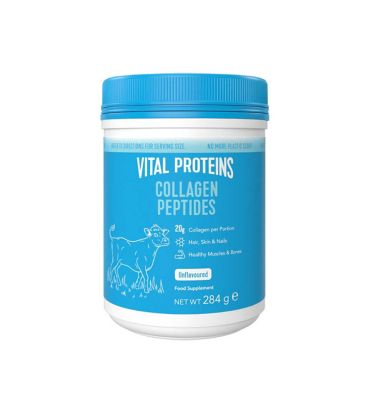
Vital Proteins Collagen Peptides Unflavoured 284g
Vital Proteins
- • 20g collagen per portion
- • Grass-fed bovine source
Honest caveat: Boots listed it as temporarily out of stock online when checked (find in store). No third-party testing claims on the listing.
£29.99
boots.com

Absolute Collagen Marine Liquid Collagen (14 sachets)
Absolute Collagen
- • 8,000mg marine collagen per sachet
- • Added vitamin C
Honest caveat: The vitamin C claim is about your body’s own collagen, not proof that drinking collagen improves skin. Contains fish, flavourings and sweetener.
£33.99
absolutecollagen.com
We may earn a commission if you buy through our links. How we choose ›
How strong is the research? What our grades mean ›
- Strong research
- Independent certification or lab data for the specific claim.
- Promising research
- The material is well supported, but there is no product-level testing.
- Early research
- Little independent research.
- Mixed research
- Research findings disagree.
- £
- Under £20
- ££
- £20 to £79
- £££
- £80+
Does collagen actually work?
Collagen is the main structural protein in skin, tendons and cartilage. Supplements contain collagen that has been broken into small pieces (hydrolysed peptides) so it dissolves easily. Your gut breaks it down further into amino acids and short chains before absorbing it, and your body decides where those go. The question is whether that makes a visible difference.
The headline studies say yes. Meta-analyses published in 2021 and in 2023 pooled randomised trials and found better skin hydration and elasticity with collagen than with placebo.
The catch is who paid for the trials. A 2025 meta-analysis of 23 trials split the studies by funding. Trials funded by supplement or pharmaceutical companies showed benefits. Trials without that funding showed no effect on hydration, elasticity or wrinkles, and the high-quality trials showed no significant effect either. The authors concluded there is currently no clinical evidence to support collagen for skin ageing. That does not prove it does nothing, but it does mean the marketing runs well ahead of the science.
What the evidence shows, claim by claim
| Claim | Our grade | Best evidence |
|---|---|---|
| Improves skin hydration and elasticity | Mixed research | Industry-funded vs independent trials, 2025; 2023 meta-analysis |
| Reduces wrinkles | Mixed research | 2025 meta-analysis |
| Eases osteoarthritis joint pain | Early | BJSM review of supplements for osteoarthritis |
| Thicker hair and stronger nails | Early | Small, mostly brand-funded studies |
Joints
A review of 69 trials of supplements for osteoarthritis in the British Journal of Sports Medicine found collagen hydrolysate among seven supplements with large short-term effects on pain, but the overall quality of evidence was very low and there was no sign of long-term benefit. That is a reason for curiosity, not confidence.
What can a label legally say?
In Great Britain, health claims must be on the nutrition and health claims register. There is no authorised claim for collagen itself improving skin. That is why so many products add vitamin C: "vitamin C contributes to normal collagen formation for the normal function of skin" is authorised. It describes your body's own collagen, not the powder in the tub. Collagen is sold as a food supplement under FSA rules, not tested and licensed like a medicine.
Our picks at a glance
| Product | Best for | Key feature | Price | Evidence grade |
|---|---|---|---|---|
| Planet Paleo Pure Collagen | Best value simple powder | One ingredient, brand states heavy-metal testing | £22.99 | Mixed research |
| Ancient + Brave True Collagen | Popular unflavoured bovine | 100% bovine peptides | £32 | Mixed research |
| Ancient + Brave Wild Collagen | Pescatarians | Marine peptides, nothing added | £34 | Mixed research |
| Vital Proteins Collagen Peptides | High-street brand | 20g per portion | £29.99 | Mixed research |
| Absolute Collagen Marine Liquid | Ready-to-drink sachets | 8,000mg plus vitamin C | £33.99 | Mixed research |
How we chose
Every collagen supplement sits on the same weak evidence, so we did not pretend one brand is proven to work better. Instead we judged the things you can check: a short ingredient list, a clearly stated dose, the source (beef or fish), any contaminant testing the brand discloses, and price per serving. We include budget and premium options across five brands, all on live UK pages.
Heavy metals and contaminants
Collagen comes from animal hides, bones and fish skin, which can carry trace metals such as lead. There are no UK limits specific to collagen supplements. Brands that state they test for heavy metals (Planet Paleo says it lab tests for heavy metals and pesticides) are a modest plus, but none of our picks publish batch results on the product page. If testing matters to you, ask the brand for a recent certificate of analysis.
The picks
Planet Paleo Pure Collagen: best value simple powder
One ingredient (grass-fed bovine collagen), 7.5g per serving, about 77p a day, and the brand states it tests for heavy metals and pesticides.
Caveat: that testing is the brand's own claim with no published results on the page.
Ancient + Brave True Collagen: popular unflavoured bovine
Pure Type I bovine collagen peptides from EU grass-fed herds that dissolve in hot drinks.
Caveat: the brand cites its own study; independent trials are less encouraging.
Ancient + Brave Wild Collagen: best marine option
Marine collagen with nothing added, for people who avoid beef.
Caveat: there is no good evidence that marine collagen works better than bovine, and it is unsuitable for fish allergies.
Vital Proteins Collagen Peptides: the high-street name
20g collagen per two-scoop portion, grass-fed bovine.
Caveat: Boots listed it as temporarily out of stock online when we checked; it may be in store.
Absolute Collagen Marine Liquid: best sachet
8,000mg marine collagen and vitamin C in a ready-to-drink sachet.
Caveat: about £2.40 a day at full price, with sweetener and flavourings.
Bovine, marine or bone broth?
- Bovine collagen (from cattle hides) is the cheapest and most common. Look for "hydrolysed" or "peptides" so it dissolves.
- Marine collagen (from fish skin and scales) costs more and is often marketed as better absorbed. We found no good evidence that it works better for skin than bovine.
- Bone broth contains some collagen-derived protein but the amount varies widely and is rarely stated, so it is better thought of as food than as a dosed supplement.
- Gelatine is collagen that has been cooked down less; it sets in cold liquids, which is fine for cooking but awkward in drinks.
Whichever you choose, the amino acids end up in the same pool in your body. Price per gram of collagen is a fairer comparison than the source on the front of the pack.
How long should you try it?
Most skin trials lasted 8 to 12 weeks, so judging collagen after a fortnight tells you little. Take a photo in the same light before you start, take it daily for 12 weeks, then compare. If you cannot see a difference, stop and keep the money. Be wary of brands that promise results "in days".
Who should be careful
- Pregnant or breastfeeding: there is little safety data; check with your midwife or GP.
- Fish, egg or shellfish allergy: check the source on marine products.
- Kidney disease or a protein-restricted diet: ask your doctor before adding concentrated protein.
- Vegans and vegetarians: all true collagen is animal derived; "vegan collagen" products contain other ingredients, not collagen.
- Counting protein: collagen lacks the essential amino acid tryptophan, so it is a poor main protein source.
What to look for
- Hydrolysed collagen peptides as the first (ideally only) ingredient.
- A stated dose per serving (most trials used 2.5g to 10g a day).
- Source clearly labelled: bovine, marine or porcine.
- Any disclosed contaminant testing, and a cost you would be happy to pay for a 12-week trial.
Bottom line
Collagen is unlikely to harm healthy adults, but the best independent evidence does not show it improves skin. If you want to try it, buy a plain, cheap powder, take it for 12 weeks and judge honestly. Sun protection, not smoking and enough protein and vitamin C from food have far stronger evidence for skin.
The flavoured collagen and vitamin C blend is excluded because it contains sweetener and flavouring. Its unflavoured ingredients have not been confirmed, so it is not a pick. Plain collagen peptides remain eligible under our selection policy.
Frequently asked questions
Does collagen actually work for skin?
+
The evidence is mixed. Several meta-analyses report better hydration and elasticity, but a 2025 analysis of 23 trials found the benefit only in studies funded by companies. Independent and high-quality trials showed no significant effect on hydration, elasticity or wrinkles. It may help some people slightly, but the claims run ahead of the science.
Is marine collagen better than bovine?
+
There is no good evidence that marine collagen works better than bovine. Both are mainly Type I collagen, broken down into amino acids and short chains during digestion. Marine is usually more expensive and unsuitable for fish allergies; bovine is cheaper. Compare price per gram of collagen and choose the source that suits your diet.
How long does collagen take to work?
+
Most skin trials lasted 8 to 12 weeks. If you try it, take a consistent daily dose for 12 weeks and compare photos taken in the same light before and after. If you cannot see a difference, stop. Be cautious of brands promising visible results within days, which no good trial supports.
Does collagen help joint pain?
+
Possibly a little, in the short term. A review of supplements for osteoarthritis found collagen hydrolysate among those with large short-term effects on pain, but the quality of evidence was very low and there was no sign of long-term benefit. Exercise, weight management and NHS-recommended pain relief have stronger evidence.
Is collagen safe to take?
+
For healthy adults it appears low risk at normal doses; side effects are usually mild stomach upset. Check the source if you have fish allergies, and ask your GP if you have kidney disease or are pregnant or breastfeeding, as there is little safety data. Some products may contain trace heavy metals, so prefer brands that disclose testing.
Why do collagen products contain vitamin C?
+
Partly because vitamin C is needed to make collagen, and partly for marketing: "vitamin C contributes to normal collagen formation" is an authorised health claim in Great Britain, while there is no authorised skin claim for collagen itself. The vitamin C claim describes your body's own collagen, not proof that the supplement works.
Last updated


