Food & Kitchen
Plastic-Free Tea Bags UK (2026): Which Brands Really Are, and What PLA Means
Quick answer
Most UK tea bags, including Yorkshire Tea, PG tips and Tetley, use PLA, a plant-based plastic. Which? lists Hampstead, Pukka and string and tag bags from Clipper and Twinings as genuinely plastic-free. The lowest-exposure option is loose leaf tea brewed in a teapot or stainless steel infuser, which has no bag at all.
Our picks


Brew Tea Co English Breakfast Loose Leaf Tea 113g
Brew Tea Co
- • No tea bag to shed particles
- • Whole rolled leaves, no dust
Honest caveat: Which? lists Brew’s tea bags as PLA, so buy the loose leaf, not the bags. Packaging and any infuser you use matter too: choose stainless steel rather than a plastic or nylon infuser.
Brew Tea Co
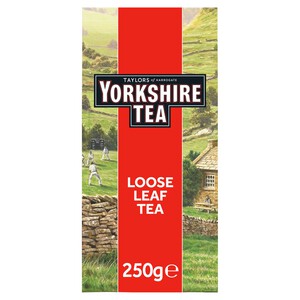
Yorkshire Tea Loose Leaf Tea 250g
Yorkshire Tea
- • About £3.45 for 250g at Ocado
- • Same blend as the bags
Honest caveat: You need a teapot or stainless steel infuser and a little more time. Yorkshire Tea’s bags are not plastic-free: the brand confirms they use PLA in place of polypropylene.
Yorkshire Tea


Hampstead Tea Organic English Breakfast Tea Bags
Hampstead Tea
- • Bags plastic-free, no PLA (Which?)
- • Certified home compostable bags
Honest caveat: Which? notes the envelopes on Hampstead’s Earl Grey and Green Tea & Jasmine have a thin plastic layer, though the bags themselves are plastic-free. No study has measured particle release from these specific bags.
Amazon · Hampstead Tea
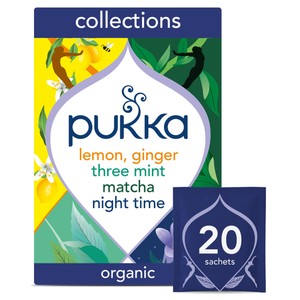
Pukka Organic Herbal Tea Collection (20 bags)
Pukka
- • Plastic-free bags (Which?)
- • Home compostable bags and string
Honest caveat: Which? says Pukka’s individual envelopes contain a very small amount of plastic, so the bag is plastic-free but the wrapper is not. Herbal blends are not suitable for everyone; check ingredients if pregnant or on medication.
Amazon · Pukka
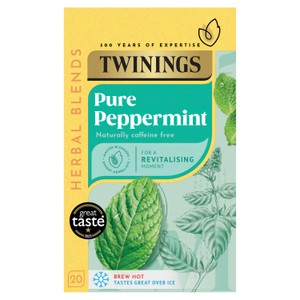
Twinings Peppermint Tea (20 string and tag bags)
Twinings
- • String and tag bags plastic-free (Which?)
- • Everyday Twinings bags are PLA
Honest caveat: Twinings uses two bag types, so check the box says string and tag before you buy; the retailer page does not state the bag material. We could not confirm envelope materials.
Twinings
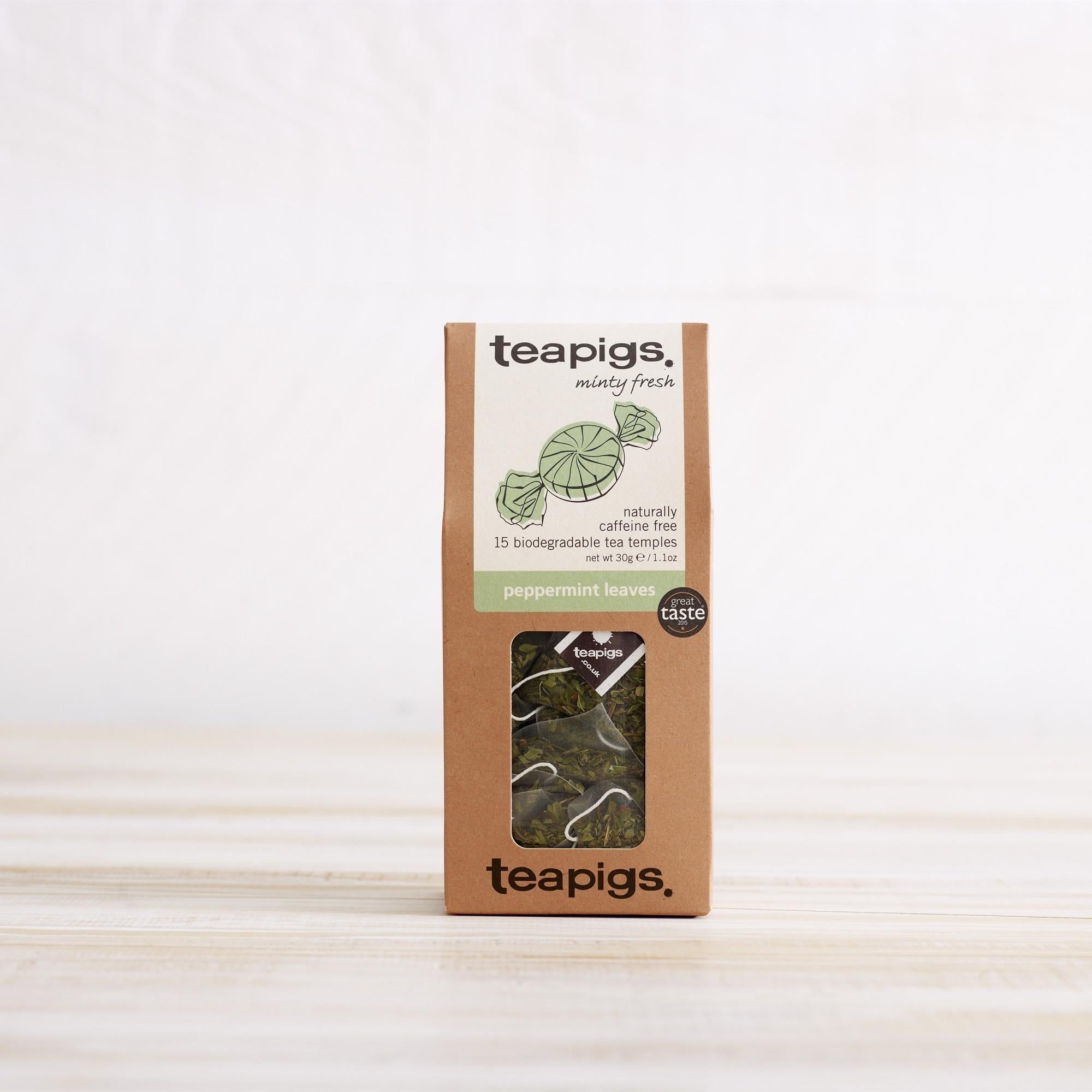
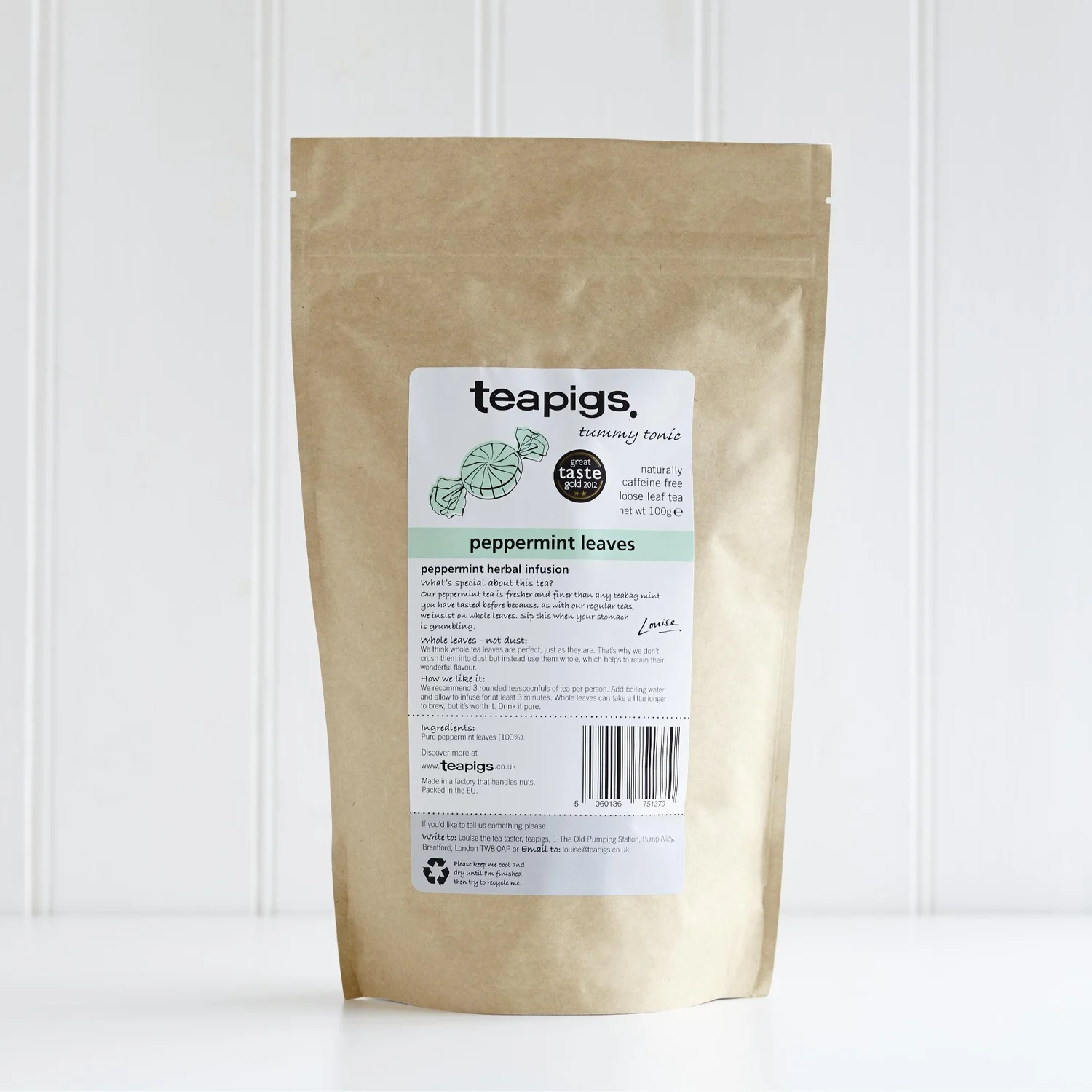
Teapigs Peppermint Tea (15 tea temples)
Teapigs
- • Cornstarch (PLA) mesh, not nylon or PET
- • Industrial compost only
Honest caveat: PLA is a bioplastic that only breaks down in industrial composting, and Which? says PLA bags can still shed microplastics. Teapigs advises food waste bins, not home compost. Teapigs sells loose leaf too, which avoids the mesh entirely.
Teapigs
We may earn a commission if you buy through our links. How we choose ›
How strong is the research? What our grades mean ›
- Strong research
- Independent certification or lab data for the specific claim.
- Promising research
- The material is well supported, but there is no product-level testing.
- Early research
- Little independent research.
- Mixed research
- Research findings disagree.
- £
- Under £20
- ££
- £20 to £79
- £££
- £80+
Which tea bags are plastic-free in the UK?
Fewer than most people think. According to a Which? investigation published in October 2025, most UK tea bags, including Yorkshire Tea, PG tips Original, Tetley black tea, Typhoo, Twinings everyday bags, Teapigs and nearly every supermarket own brand, are sealed or made with PLA (polylactic acid), a plastic made from plants. The bags Which? lists as genuinely plastic-free are Hampstead, Pukka, and the string and tag ranges from Clipper, Twinings and Dragonfly.
The lowest-exposure option of all is loose leaf tea brewed in a teapot or stainless steel infuser, because there is no bag to shed anything.
Our picks at a glance
| Product | Best for | Material/key feature | Price | Evidence grade |
|---|---|---|---|---|
| Brew Tea Co English Breakfast Loose Leaf | Best overall | No bag at all | £7 (113g) | Moderate |
| Yorkshire Tea Loose Leaf 250g | Best budget | No bag, same blend as the bags | £3.45 | Moderate |
| Hampstead Organic English Breakfast Tea Bags | Best plastic-free bag | No PLA or PP (Which?), home compostable | £3.99 (20) | Moderate |
| Pukka Organic Herbal Collection | Best herbal | Stitched bags, plastic-free (Which?) | £5 (20) | Moderate |
| Twinings Peppermint (string and tag) | Cheap herbal | String and tag range plastic-free (Which?) | £2.90 (20) | Limited |
| Teapigs Peppermint tea temples | Explained, not plastic-free | Cornstarch PLA mesh | £4.99 (15) | Limited |
How we chose
We started from the most recent independent brand survey, the Which? October 2025 table, then checked brand statements and current UK prices at brand sites and Ocado. We ranked loose leaf highest because it removes the bag entirely, then bags that avoid both polypropylene and PLA. No study has measured particle release from these exact products, so the best grade we give is moderate: the material evidence is clear, product-level testing is missing.
Do tea bags really release microplastics?
Some do, and in large numbers. In a 2019 McGill University study in Environmental Science & Technology, steeping a single plastic mesh tea bag (nylon or PET, the silky pyramid type) at 95°C released about 11.6 billion microplastics and 3.1 billion nanoplastics into one cup. Those numbers are for fully plastic mesh bags, not paper bags with a plastic seal, and the counting methods have been debated.
A 2024 study from the Universitat Autonoma de Barcelona in Chemosphere tested nylon-6, polypropylene and cellulose bags. All three released particles into the water, and human intestinal cells took them up in the lab. A 2025 review in Food Chemistry concluded that tea bags are the main source of micro and nanoplastics in tea, and that composite and "biodegradable" bags also release significant quantities, though results vary between labs because methods differ.
What we do not know is what these particles do in people at realistic doses. Lab cell studies show particles can be absorbed, but there is no human evidence of harm from tea specifically. This is a reasonable place to lower exposure because the swap is cheap and easy, not because harm has been proven.
Is PLA plastic? What "plant-based" tea bags really mean
Yes. PLA is a bioplastic usually made from corn starch or sugarcane. It replaced oil-based polypropylene as the heat seal in many brands from 2018 onwards:
- Yorkshire Tea says its bags now use "a plant-based plastic called polylactic acid, or PLA" instead of polypropylene.
- Clipper's heat-seal bags are a blend of abaca, plant cellulose and non-GM PLA, according to its 2018 launch announcement, even though the boxes say "plastic-free".
- PG tips switched to a corn starch based material in 2018.
- Teapigs tea temples are cornstarch mesh, which is PLA.
Which? says calling PLA bags "plastic-free" or "microplastic-free" is misleading, because PLA is still a plastic and can shed particles. PLA also only breaks down in industrial composting, not in a home compost heap. It is a better end-of-life story than polypropylene, but not a lower-exposure one by default.
Our picks
Brew Tea Co English Breakfast Loose Leaf: best overall
Loose leaf removes the bag, which is where the particle research points. Brew Tea Co's English Breakfast is whole rolled leaf with no dust, and it makes a strong, malty cup in a pot or steel infuser.
Honest caveat: Which? lists Brew's tea bags as PLA, so buy the loose leaf, not the bags. Use a stainless steel infuser, not a plastic or nylon one.
Yorkshire Tea Loose Leaf 250g: best budget
If you love Yorkshire Tea, its loose leaf gives you the same taste without the PLA bag, for about £3.45 at Ocado.
Honest caveat: you need a teapot or infuser and a minute more. Yorkshire Tea's own bags are PLA.
Hampstead Organic English Breakfast Tea Bags: best plastic-free bag
Which? lists Hampstead bags as plastic-free and certified home compostable, and the brand says it uses no PLA glue. It is the easiest swap for black tea drinkers who want a bag.
Honest caveat: Which? notes the envelopes on Hampstead's Earl Grey and Green Tea and Jasmine contain a thin plastic layer. No one has tested these bags for particle release.
Pukka Organic Herbal Collection: best herbal
Pukka's bags are stitched with organic cotton rather than heat-sealed, and Which? lists them as plastic-free and home compostable. The herbal collection is stocked widely.
Honest caveat: each bag sits in an envelope that, according to Which?, contains a very small amount of plastic. Check herbal ingredients if you are pregnant or take medication.
Twinings Peppermint (string and tag): cheap herbal option
Which? lists Twinings string and tag bags as plastic-free, while its everyday heat-sealed bags use PLA. The 20-bag peppermint is one of the cheapest herbal teas in a plastic-free format.
Honest caveat: check the box says "string and tag"; the retailer page does not state the bag material.
Teapigs tea temples: what PLA mesh means
We include Teapigs because its pyramids look like the nylon bags in the 2019 study but are not the same thing. They are cornstarch PLA, not nylon or PET.
Honest caveat: PLA is still plastic, needs industrial composting, and Which? classes Teapigs as PLA. Its loose leaf range avoids the mesh altogether.
What to avoid
- Silky nylon or PET pyramid bags, the type tested in the McGill study. Some premium and supermarket ranges still use them.
- Assuming "plant-based" or "biodegradable" means plastic-free. It usually means PLA.
- Plastic or nylon infusers and cold brew bottles for hot tea. Use stainless steel, glass or a ceramic teapot.
- Squeezing or stirring bags hard if you do use them; it may increase what comes off the bag, though this has not been measured precisely.
How do I switch to loose leaf without the hassle?
Use about one teaspoon (2 to 3g) per cup in a teapot or a large stainless steel infuser basket that sits in your mug. Brew black tea for three to five minutes, then lift the basket out. Empty leaves straight into the food waste caddy or garden compost. A 250g pack makes roughly 100 cups, so loose leaf is often cheaper per cup than branded bags.
Bottom line
The simplest way to avoid plastic in tea is loose leaf, such as Brew Tea Co or Yorkshire Tea Loose Leaf. If you prefer bags, choose brands Which? confirms are plastic-free: Hampstead for black tea, Pukka for herbal, or string and tag bags from Twinings and Clipper. Treat "plant-based" bags as PLA plastic, and skip silky nylon pyramids.
Frequently asked questions
Do PG tips tea bags contain plastic?
+
PG tips Original bags use PLA, a plastic made from plant starch, according to Which? in October 2025. PG tips replaced oil-based polypropylene with this corn starch based material from 2018. PLA is biodegradable in industrial composting but is still a plastic, and Which? says it can shed microplastics as it breaks down.
Are Yorkshire Tea bags plastic-free?
+
No. Yorkshire Tea says its bags now use PLA, a plant-based plastic, in place of polypropylene to seal the paper. About three quarters of the bag is natural fibre. If you want Yorkshire Tea without any plastic, buy Yorkshire Tea Loose Leaf and brew it in a teapot or stainless steel infuser.
How many microplastics are in a cup of tea?
+
It depends on the bag. A 2019 McGill study found one nylon or PET mesh bag released about 11.6 billion microplastics and 3.1 billion nanoplastics at 95°C. Paper bags with a plastic seal release far fewer, and loose leaf releases none from a bag. Counting methods vary, so treat exact figures with caution.
Is PLA safer than polypropylene in tea bags?
+
We cannot say it is. PLA is plant-based and composts industrially, which is better for waste, but it is still a plastic and the 2024 Barcelona study and a 2025 review found biodegradable and composite bags also release particles. For lower exposure, choose loose leaf or a bag Which? confirms is plastic-free.
Can I put tea bags in my home compost?
+
Only plastic-free bags certified home compostable, such as Hampstead and Pukka, break down in a home heap. PLA and polypropylene bags do not, according to Which?. With those, put them in your council food waste caddy or snip them open, compost the leaves and bin the empty bag.
Is loose leaf tea better than tea bags?
+
For plastic exposure, yes, because there is no bag to shed particles, as long as you brew in a teapot or stainless steel infuser rather than a plastic one. Loose leaf is often whole leaf, which many people find tastier, and can be cheaper per cup. It takes slightly more effort to brew and clear up.
Last updated