Food & Farming
Is Organic Food Worth It in the UK? Pesticide Data and research (2026)
Quick answer
Organic food is worth it for lower pesticide residues and higher animal welfare, both well documented. It is not clearly more nutritious, and lower cancer risk is only an observational link. In the UK, HSE testing found 51% of 2024 food samples had no detectable residues, so buy organic selectively: fruit eaten whole, bread and animal products.
Our picks
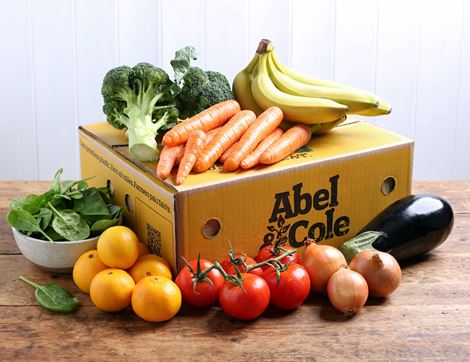
Abel & Cole Organic Fruit & Veg Box (Small)
Abel & Cole
- • Certified organic produce (Soil Association listed on site)
- • Small box: 2 fruit and 6 veg portions, customisable
Honest caveat: Organic certification is a farming-method audit, not a residue test on each box, and some naturally derived pesticides are allowed. Per kilo it costs more than supermarket produce, and a £3.50 delivery fee applies.
Abel & Cole
We may earn a commission if you buy through our links. How we choose ›
How strong is the research? What our grades mean ›
- Strong research
- Independent certification or lab data for the specific claim.
- Promising research
- The material is well supported, but there is no product-level testing.
- Early research
- Little independent research.
- Mixed research
- Research findings disagree.
- £
- Under £20
- ££
- £20 to £79
- £££
- £80+
What does organic actually mean in the UK?
Organic is a legally defined farming system. Certified organic food is grown without synthetic pesticides, artificial fertilisers or genetically modified ingredients, and organic animals must have more space, outdoor access and higher welfare. Farms and processors are inspected at least once a year by a certification body such as the Soil Association, which certifies around 70% of UK organic food.
Two things organic does not mean: pesticide-free (some naturally derived pesticides, such as copper-based sprays, are permitted) and lab-tested (certification audits the farming method, not each product).
What it claims
The case usually made for buying organic is that it:
- Has more nutrients and antioxidants.
- Exposes you to fewer pesticide residues.
- Is linked to lower disease risk, including cancer.
- Offers better animal welfare and fewer antibiotics in meat and dairy.
- Is better for soil, wildlife and the environment.
What the evidence shows
| Claim | Evidence grade | Best evidence |
|---|---|---|
| Fewer pesticide residues | Strong | Baranski 2014 meta-analysis; Smith-Spangler 2012 |
| More nutritious (vitamins, minerals) | Limited | Smith-Spangler 2012 |
| More antioxidants, less cadmium in crops | Moderate | Baranski 2014 |
| Lower cancer or disease risk | Limited | NutriNet-Sante, Baudry 2018 |
| Higher animal welfare | Strong (by standard) | Soil Association organic eggs |
Is organic food more nutritious?
Mostly not in ways that matter. A Stanford systematic review of 240 studies found little evidence that organic foods are significantly more nutritious than conventional ones (Smith-Spangler et al. 2012). A larger Newcastle University meta-analysis of 343 studies found organic crops had higher concentrations of antioxidants (polyphenols) and roughly half the cadmium, a toxic metal that builds up in the body (Baranski et al. 2014). Whether those differences change health is unknown, and some of that research was part-funded by organic sector bodies, which is worth knowing.
Does organic food have fewer pesticide residues?
Yes. This is the most consistent finding. Both the Stanford and Newcastle reviews found pesticide residues far less often in organic produce.
The more useful question for UK shoppers is how much residue is on conventional food in the first place. The Health and Safety Executive's 2024 monitoring report tested 3,482 samples of 29 foods:
- 51% had none of the residues tested for.
- 47% had residues within legal limits (maximum residue levels, or MRLs).
- 2% had residues above the legal limit.
An MRL is a trading standard, not a safety threshold: going over it usually means a pesticide was misused, and HSE risk-assesses every exceedance. It is also worth knowing that the government's independent advisory committee on residues (PRiF) closed on 30 June 2026; HSE continues to publish the monitoring results, including brand names.
Why not just use the Dirty Dozen list?
The "Dirty Dozen" is published by the US Environmental Working Group using US Department of Agriculture data on US produce. UK farming rules, approved pesticides and import mixes are different, so the list does not transfer neatly. The HSE tables are a better UK guide. In 2024 they showed, for example:
| Food (GB samples, 2024) | Samples tested | With any residue | With more than one pesticide |
|---|---|---|---|
| Grapefruit | 121 | 121 | 120 |
| Grapes | 108 | 102 | 97 |
| Bread | 216 | 215 | 101 |
| Bananas | 73 | 53 | 49 |
| Beans with pods | 96 | 58 (12 above MRL) | 36 |
| Beetroot | 96 | 3 | 0 |
| Garlic | 72 | 8 | 2 |
Source: HSE annual report for 2024. Note that citrus and banana residues are mostly in the peel, which you do not eat (unless you zest it).
Does eating organic lower cancer risk?
The headline study is NutriNet-Sante, which followed 68,946 French adults. The most frequent organic eaters had a 25% lower risk of cancer than the least frequent, but the absolute difference was 0.6% (Baudry et al. 2018). People who buy organic also tend to be wealthier, more active and less likely to smoke, and an observational study cannot fully separate those factors. We grade this as limited: interesting, not proof.
Is organic better for animals and the environment?
For animals, the standards are clearly higher. Organic laying hens, for example, live in flocks capped at 3,000 birds, compared with 16,000 under RSPCA Assured free range and no cap in caged systems (Soil Association). Routine preventive antibiotic use is not allowed. Environmental effects are more mixed: organic farms usually support more wildlife per hectare but can produce lower yields per hectare. That trade-off is outside the scope of this page.
Where buying organic matters most
If your budget is limited, these are the places where organic spending buys the most difference, based on the UK data above:
- Foods you eat whole and often, with frequent multiple residues: grapes, berries, and leafy salads where you eat the whole surface.
- Citrus if you use the zest (otherwise the peel protects the flesh).
- Bread and flour if you eat a lot of it: almost every conventional sample had a residue (within limits), so organic or wholemeal from organic flour is an easy swap.
- Eggs, chicken and pork for welfare reasons, where the gap between organic and standard systems is largest.
- Lower priority: root vegetables like beetroot, garlic and onions, which rarely carried residues in the 2024 data.
Whatever you buy, eating more fruit and vegetables matters far more than whether they are organic. Washing produce under running water also removes some surface residues.
Who might reasonably choose organic?
- Families who eat a lot of soft fruit and whole-surface produce and want lower residue exposure.
- People for whom animal welfare is a priority.
- Pregnant women and young children are often cited as groups where minimising pesticide exposure makes sense as a precaution, although there is no UK guidance telling them to buy organic.
Who should be careful?
- Anyone on a tight budget: do not cut back on fruit and vegetables to afford organic. Conventional produce in the UK mostly sits within legal limits.
- Anyone assuming organic means healthier junk food: organic crisps, biscuits and sweets are still ultra-processed.
If you want to buy organic: what to look for
- A certification logo (Soil Association, Organic Farmers & Growers or the UK organic code on the pack), not just the word "natural".
- Box schemes can cost similar to supermarket organic and let you choose what goes in.
Our pick at a glance
| Product | Best for | Key feature | Price | Evidence grade |
|---|---|---|---|---|
| Abel & Cole Organic Fruit & Veg Box (Small) | A weekly mix of certified organic produce | Certified organic, customisable contents | £19.75 plus delivery | Strong (certified organic) |
How we chose
We only list schemes where we could confirm organic certification and a current price on the retailer's own site.
Abel & Cole Organic Fruit & Veg Box (Small)
A long-running UK box scheme with certified organic produce and customisable contents, so you can weight it toward soft fruit and salad, where residues are most common. The small box holds 2 fruit and 6 veg portions for £19.75. Caveat: organic certification audits farming methods rather than testing each box, a £3.50 delivery fee applies, and per kilo it costs more than supermarket produce. Riverford is a well-known alternative (also certified organic), though we could not confirm its current prices online.
Bottom line
Organic food is worth it for lower pesticide residues and higher welfare standards, both of which are well documented. It is not meaningfully more nutritious, and claims that it lowers cancer risk rest on observational studies. Use the UK HSE residue data rather than the US Dirty Dozen, put your organic budget into fruit you eat whole, bread if you eat a lot of it, and animal products, and never let the price of organic stop you eating more fruit and vegetables.
Frequently asked questions
Is organic food healthier?
+
Not clearly in terms of nutrients. A review of 240 studies found little evidence organic food is more nutritious, though a later meta-analysis found more antioxidants and less cadmium in organic crops. The clearest difference is fewer pesticide residues. Whether that changes long-term health in people has not been proven in trials.
Does the Dirty Dozen apply in the UK?
+
Not directly. The Dirty Dozen is a US list from the Environmental Working Group based on US Department of Agriculture testing of US produce. UK rules, approved pesticides and supply chains differ. The HSE's annual pesticide residue reports, which list results food by food and include brand names, are a better guide for UK shoppers.
How much pesticide is on UK food?
+
In HSE's 2024 testing of 3,482 samples, 51% had none of the residues tested for, 47% had residues within legal limits and 2% exceeded a legal limit. Legal limits (MRLs) are trading standards rather than safety thresholds, and every exceedance is risk-assessed. Grapefruit, grapes and bread were among foods where residues were found in almost every sample.
Does organic mean no pesticides?
+
No. Organic farming bans synthetic pesticides but allows a limited list of naturally derived ones, such as copper-based sprays. Organic food can also pick up drift from neighbouring farms. Studies consistently find residues much less often in organic produce, but not never.
Which foods are most worth buying organic?
+
Based on UK testing, prioritise foods you eat whole and often that frequently carry several residues, such as grapes and soft fruit, plus bread if you eat a lot of it. Organic eggs, chicken and pork also bring much higher welfare standards. Root vegetables like beetroot and garlic rarely showed residues and are lower priority.
Is a veg box cheaper than supermarket organic?
+
Sometimes. Box schemes such as Abel & Cole start at around £15 to £20 a week plus delivery, and prices are often similar to supermarket organic for comparable produce. Customisable boxes let you put your organic budget where it matters most, such as soft fruit and salad.
Last updated